The Buddhist meaning of a dream with the abandoned classroom
Perspective: buddhist
Your Dream
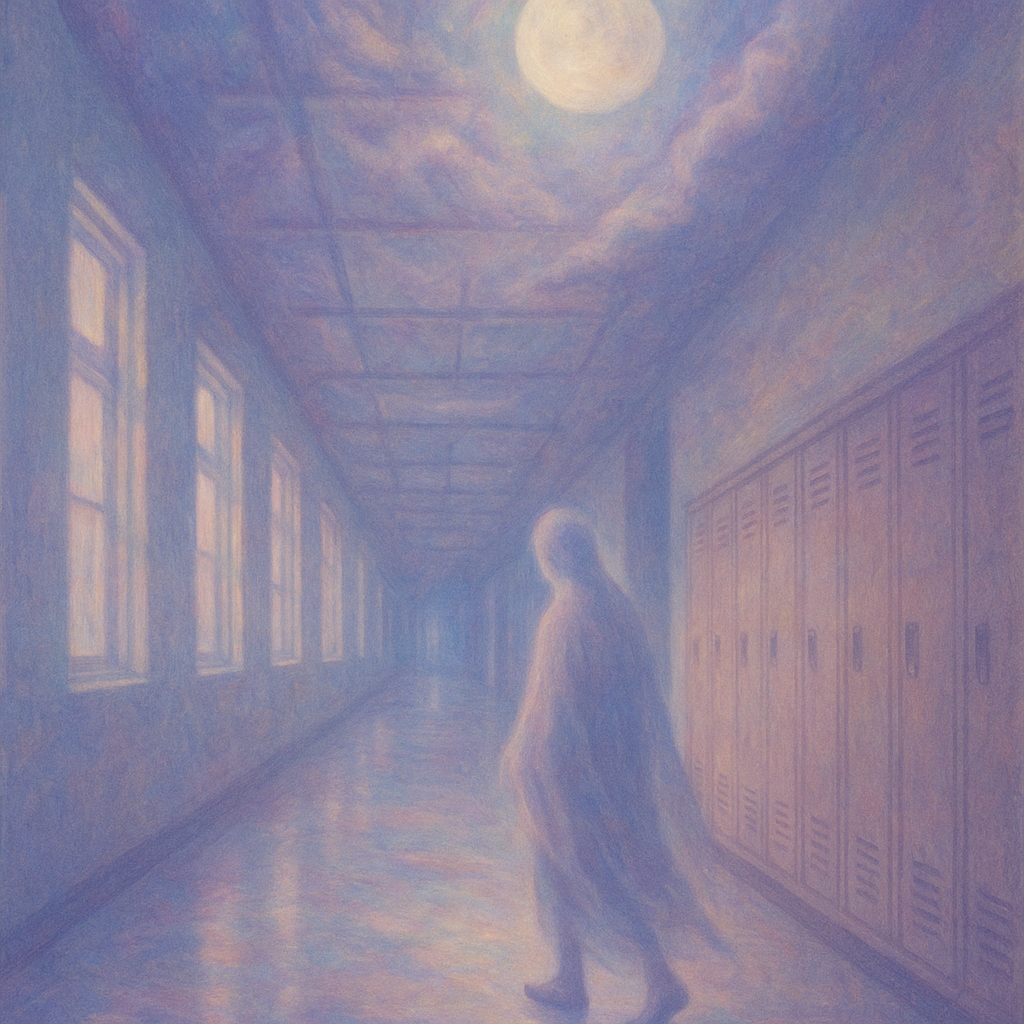
Last night, I dreamt I was wandering my old high school, only it was all wrong: the ceilings were much taller, and the linoleum squeaked under my shoes with every step, though I wasn't sure what I was even looking for. I pushed open a heavy red door and found myself inside a classroom I didn’t remember, but somehow knew had belonged to the music teacher—her old mug with a chipped handle was still on the cluttered desk, and I could smell a faint trace of stale coffee mixed with dust. The place looked like it had been left in a hurry: papers were strewn across the floor, some of them yellowed around the edges, and the chalkboard was smeared with ghostly notes and faint song lyrics. I started picking up the papers, mostly out of a weird sense of guilt, trying to stack them in uneven piles. My hands felt sticky, I think from the dust, or maybe the humidity of the room. The sunlight coming through the cracked window caught little particles in the air, almost like confetti. For some reason, there was a single blue plastic chair at the back of the room, the kind that always made the backs of your legs sweat. I sat down for a moment, listening to the quiet. Oddly, I could hear the faint hum of a vending machine out in the hallway, like someone had just bought a bag of chips. Then, out of nowhere, I remembered I’d forgotten to take the chicken out of the freezer for dinner, and that realization felt just as urgent and weighty as anything happening in the classroom. The dream started slipping away after that, but I can still picture the tiny coffee stain on the mug and the way the sunlight made the dust glow.
Your Dream, Revealed
A calm, guided space to explore what this dream may be reflecting back to you.
Dream Overview
This dream unfolds within the warped halls of your old high school, setting a scene that is at once familiar and disturbingly altered, with impossibly tall ceilings and squeaking floors. The emotional tone is marked by an uneasy nostalgia, as you wander searching for something undefined, accompanied by the persistent sense that you are out of place. The central tension lies in the juxtaposition of the abandoned music classroom’s remnants—old mug, scattered papers, lingering scents—and the urgent, mundane worry about forgetting to take the chicken out of the freezer. Key symbols, such as the chipped mug, the blue plastic chair, and sunlight illuminating the dust, each anchor moments of reflection and discomfort, grounding the dream in both sensory memory and unresolved feelings. There is an inner conflict between your impulse to tidy the chaos left behind and your simultaneous awareness of futility, as the classroom feels frozen in a hurried departure. The physical sensations—sticky hands, sweating legs—draw your attention to your body’s presence amid the emotional clutter. What makes this dream distinctive is the seamless fusion of personal history, forgotten responsibilities, and transient beauty, all filtered through a Buddhist lens of impermanence and attachment.
The dream opens with a wandering phase through a distorted high school, where everything is familiar but unsettlingly wrong. This sense of displacement builds tension, as you move from searching aimlessly to discovering the music classroom—a transition from open uncertainty to focused engagement. Inside the classroom, the chaos left behind becomes the new center of gravity: tactile details like the sticky hands and the act of stacking papers immerse you in a cycle of attempted control, guilt, and futility. The atmosphere briefly shifts when you sit in the blue chair, allowing a pause to take in the quiet and the beauty of sunlit dust, suggesting a fleeting respite. Finally, the narrative is abruptly disrupted by the urgent memory of the forgotten chicken, pulling you out of the reverie and signaling a return to daily concerns, as the dream’s images begin to dissolve.
Key Findings
• Your discomfort with the altered high school and its exaggerated features points to anxiety about personal change and the reliability of memory. • Picking up the yellowed, scattered papers signals a desire to impose order on past chaos or unfinished business. • The chipped mug and faint coffee smell evoke a specific, bittersweet attachment to a mentor or period in your life that feels abandoned. • The urgent, almost absurd intrusion of the frozen chicken responsibility highlights how everyday anxieties can eclipse deeper reflection. • Sitting in the blue plastic chair and noticing bodily discomfort suggests you are both seeking rest and wrestling with unease.
Symbol Interpretation
Tall Ceilings
This distortion suggests a sense of intimidation or feeling overwhelmed by memories that have grown larger than life.
Chipped Mug
The mug embodies imperfect nostalgia and the lingering impact of relationships that weren’t fully resolved.
Strewn Papers
These represent tasks, memories, or responsibilities left unattended or unresolved.
Blue Plastic Chair
The chair is a symbol of uncomfortable rest—a retreat that offers little true relief.
Forgotten Chicken
This mundane worry intrudes on deeper reflection, showing how daily anxieties persist even in spaces meant for nostalgia or introspection.
Sunlit Dust
This fleeting beauty hints at moments of clarity or acceptance amidst decay and neglect.
Emotional Landscape
There is an undercurrent of longing throughout the dream, as you wander spaces tied to formative years but find them altered beyond recognition. This is compounded by a subtle sense of guilt—manifested in your impulse to tidy the classroom—which is not just about the physical mess, but about unfinished emotional business. The tactile discomfort of sticky hands and the stifling chair reinforce a feeling of being physically and emotionally ensnared by these unresolved aspects. Yet, the dream also grants moments of quiet wonder, like watching the dust in the sunlight, which provide a gentle contrast to the otherwise heavy atmosphere. The sudden anxiety over the frozen chicken brings a jarring, almost comic relief, exposing how mundane worries can abruptly intrude on deeper emotional processing.
Psychological Insight
Your drive to organize the scattered papers suggests a persistent need to revisit and control past experiences, even when those experiences resist easy resolution. The classroom’s abandoned state, with its familiar yet altered artifacts, reflects a struggle between holding onto the past and confronting its inevitable decay. Sitting in the blue chair reveals a desire for rest in the midst of this struggle, but the discomfort prevents true relaxation, highlighting an ongoing tension between self-care and obligation. The intrusion of the forgotten chicken underscores a tendency for immediate, practical worries to hijack moments of introspection, perhaps as a way to avoid deeper emotional discomfort. The dream’s final impressions—lingering on the mug’s coffee stain and the glowing dust—suggest that, despite this avoidance, you retain an acute awareness of what lingers unresolved.
Spiritual Perspective
From a Buddhist viewpoint, the impermanence of the classroom and its objects is unmistakable: the chipped mug, yellowed papers, and fading chalk notes all testify to the transitory nature of material things and memories. The act of trying to restore order in a neglected space can be seen as a form of attachment—an attempt to hold onto and control what is, by nature, fleeting. The dream's mood reflects the tension between recognizing impermanence and the habitual grasping that arises from nostalgia and responsibility. The sudden, urgent return to present-moment concerns (the chicken in the freezer) echoes the Buddhist teaching of mindfulness, reminding you that awareness is continually pulled between past, present, and future.
Integrative Insight
This dream weaves together threads of nostalgia, discomfort, and fleeting beauty against a backdrop of impermanence, showing how your mind navigates the labyrinth of memory while being pulled back to daily obligation. The urge to tidy the classroom mirrors your wish to bring order to the past, yet the environment resists, reinforcing the lesson that some things are best accepted as they are. The moments of quiet wonder—like watching dust glow—invite you to notice beauty in transience, even as anxieties intrude. Ultimately, the dream hints that your deepest peace may come not from resolving every detail, but from accepting the shimmering dance between memory, responsibility, and letting go. Sometimes, the most meaningful clarity arrives when you simply sit and watch the dust in the sunlight.
Reflection Questions
- What unfinished responsibility or memory do you associate with the act of stacking the yellowed papers in the classroom?
- How does the sudden, urgent worry about the forgotten chicken mirror ways you interrupt your own self-reflection in waking life?
- When you recall sitting in the blue plastic chair, what emotions or bodily sensations stand out most, and how do they relate to moments of discomfort or rest in your current life?