Spiritual reflections on a dream about the train that never stops
Perspective: spiritual
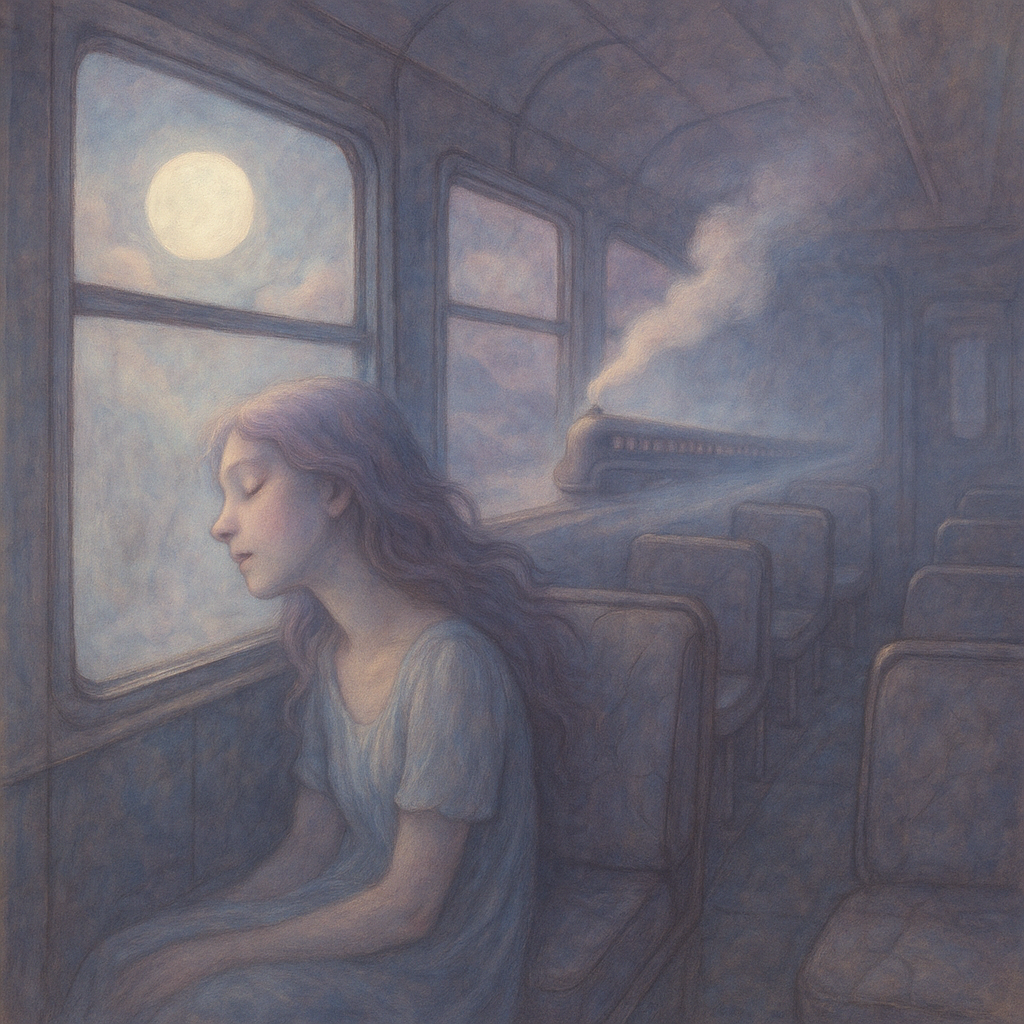
Your Dream
Last night I dreamt I was on a train that never stopped—one of those old, rumbling ones with cracked vinyl seats and sticky windows that fogged whenever you pressed your cheek against them. There was an odd, constant humming from above, maybe the lights, and it smelled faintly of cheap coffee and something metallic, like pennies rubbed together. We barreled forward through a misty countryside that looked a bit like the edges of where I grew up, though the fields kept looping, repeating the same knotted oak tree, the same aluminum-sided barn every ten minutes or so. I tried talking to the other passengers—a woman in a yellow raincoat, a man with a newspaper, an old couple silently holding hands—but whenever I started a conversation, my voice came out muffled, like I was speaking through cotton. No one replied. At one point, I realized I hadn’t punched my ticket, and I rummaged through a bag that seemed to only contain empty gum wrappers and the receipt from the grocery store (three bananas, milk, a box of crackers), but no ticket anywhere. The train never slowed, not even at stations. The doors would open for a split second and I could see people waiting, but no one got on or off. I kept thinking I’d miss my stop, but also, irrationally, that my stop would never come. I woke up weirdly tired, craving the kind of bad coffee they serve on trains.
Your Dream, Revealed
A calm, guided space to explore what this dream may be reflecting back to you.
Dream Overview
This dream unfolds aboard an unceasing train, rich with the textures and sounds of memory—a space defined by its relentless movement and sensory detail. The emotional tone is one of subtle alienation, as the dreamer is surrounded by others but cannot connect, their voice muffled and unheard. The central tension lies in the interplay between endless forward motion and the impossibility of arrival, underscored by the looping scenery and the elusive train ticket. The cracked vinyl seats, fogged windows, and metallic scent evoke nostalgia tinged with discomfort, suggesting a journey both familiar and unsettling. The vivid repetition of the same countryside features blurs the boundaries between past and present, echoing a longing for roots or resolution. Inner conflict surfaces in the frantic search for a ticket—proof of belonging or legitimacy—that remains frustratingly out of reach. The train's refusal to stop, even as stations flicker past, sharpens the sense of suspended transition, highlighting a fear of missing out or never arriving. What distinguishes this dream is the collision of sensory realism and surreal inertia, leaving the dreamer with a lingering, bodily craving for something as mundane yet evocative as bad coffee.
The dream begins with immersion in the train's environment: its age, sounds, and tactile sensations immediately set the tone of worn familiarity. As the train moves unstoppably through misty, repetitive countryside, the focus shifts to the dreamer's attempts to connect—speaking with other passengers, only to find their voice muffled and ignored. This marks a pivot from external observation to internal frustration, as the dreamer is confronted by their own invisibility within the group. The search for the missing ticket becomes a new phase, introducing anxiety and a sense of inadequacy, heightened by the bag that yields only empty reminders of daily life. The climax arrives as the train continues to bypass stations, never slowing, with doors that tease the possibility of escape or change but never allow it. The dream resolves not with arrival, but with a lingering craving for bad coffee, blending physical memory with emotional exhaustion.
Key Findings
• The train's endless journey and repeating scenery reflect a sense of cyclical progress that never reaches completion. • Attempts at connection with fellow passengers are thwarted by a muffled voice, revealing a core experience of isolation. • The missing ticket and the bag of empty wrappers suggest anxiety about legitimacy and the fear of being unprepared. • Doors that open briefly at stations but never allow boarding or exit highlight perceived missed opportunities and a sense of being trapped. • The persistent sensory details—the metallic smell, foggy windows, and hum—anchor the dream in embodied memory, intensifying its emotional impact.
Symbol Interpretation
The Train
For this dreamer, the train embodies a life path or spiritual journey that feels predetermined, unyielding, and without clear rest or arrival.
Cracked Vinyl Seats and Foggy Windows
These textures evoke nostalgia for the past, but their state of disrepair suggests unresolved issues or discomfort with where the dreamer has been.
The Woman in the Yellow Raincoat, the Man with a Newspaper, and the Silent Old Couple
These figures are familiar yet unreachable, representing aspects of connection or community that remain out of reach for the dreamer.
The Missing Ticket and Bag of Wrappers
The missing ticket symbolizes a deep-seated fear of lacking permission or validity to move forward or belong, while the empty wrappers evoke a sense of having consumed or wasted resources.
Repetitive Scenery: Oak Tree and Barn
These repeating landmarks reflect the dreamer's sense of being stuck in familiar patterns or unable to progress beyond formative places.
Cheap Coffee and Metallic Smell
This sensory detail grounds the dream in bodily craving and the bittersweet comfort of familiar discomforts.
Emotional Landscape
A quiet loneliness pervades the dream, expressed through the inability to be heard or acknowledged by other passengers—an ache for connection that remains unmet. The sensory world of the train is both comforting and alienating; the familiar discomfort of cracked seats and metallic smells stirs nostalgia, but also underscores a sense of entrapment. The repeated failure to find a ticket introduces a wave of shame or self-doubt, as if the dreamer is perpetually unprepared or not quite entitled to the journey they're on. The fleeting glimpses of stations and people waiting outside stir longing and frustration, as opportunities appear only to vanish instantly. Upon waking, the craving for bad coffee embodies the way this emotional fatigue lingers, a physical echo of spiritual depletion.
Psychological Insight
The endless train ride suggests a life rhythm that feels outside the dreamer's control, as if progress is happening but without agency or meaningful milestones. The muffled voice reflects an internalized belief that expressing needs or seeking connection will not yield understanding—a pattern that may extend beyond the dream. Searching the bag for a ticket, only to find evidence of consumption and routine, highlights a conflict between wanting to prove legitimacy and fearing that what one brings is never enough. The dreamer seems to avoid confronting what reaching a stop—or truly connecting—would require, perhaps preferring the inertia of the journey to the risk of change. Yet, the persistent sensory details and the looped landscape hint that the past, or unresolved parts of self, are quietly calling for attention, even as the dreamer barrels forward.
Spiritual Perspective
Within a spiritual framework, the dream's train could be seen as a metaphor for the soul's journey—a path that feels both guided and inescapable. The repeated, unchanging scenery evokes cycles of growth and return, a spiritual invitation to notice what lessons remain unlearned, rather than simply moving forward for its own sake. The search for a missing ticket can be understood as a longing for spiritual validation or belonging, a desire to be assured that one's journey is purposeful and recognized, even when the destination is unclear or unreachable. The dream's closing craving, for something as humble as bad coffee, may signal a spiritual hunger for simple, grounding comforts amid the larger existential questions raised by the journey.
Integrative Insight
This dream intricately weaves memory, longing, and frustration into a landscape where movement does not equal progress, and where connection is yearned for but unattainable. The heart of the dream lies in a paradox: the safety of the familiar is inseparable from the pain of feeling unseen and unprepared. The spiritual journey depicted here asks not for arrival, but for presence—an acceptance of the discomfort and repetition, and a gentle inquiry into what might be learned from these cycles. The missed stops and muffled voice are not failures, but invitations to turn inward and listen more closely to what is truly being sought. Perhaps the most haunting lesson of this dream is that what you crave, even in its most mundane form, is a signpost pointing you back to yourself.
Reflection Questions
- When you recall the sensation of your voice being muffled on the train, what current relationship or situation in your life echoes that sense of not being heard?
- What personal meaning do the repeating oak tree and barn—landmarks from a place like your childhood—hold for you, and how might they relate to places or patterns you return to in waking life?
- How does the anxiety of searching for a missing ticket, finding only empty wrappers and receipts, reflect your feelings about preparation, legitimacy, or worth in your spiritual or personal journey?