A dream of the market at night, seen from a Buddhist view
Perspective: buddhist
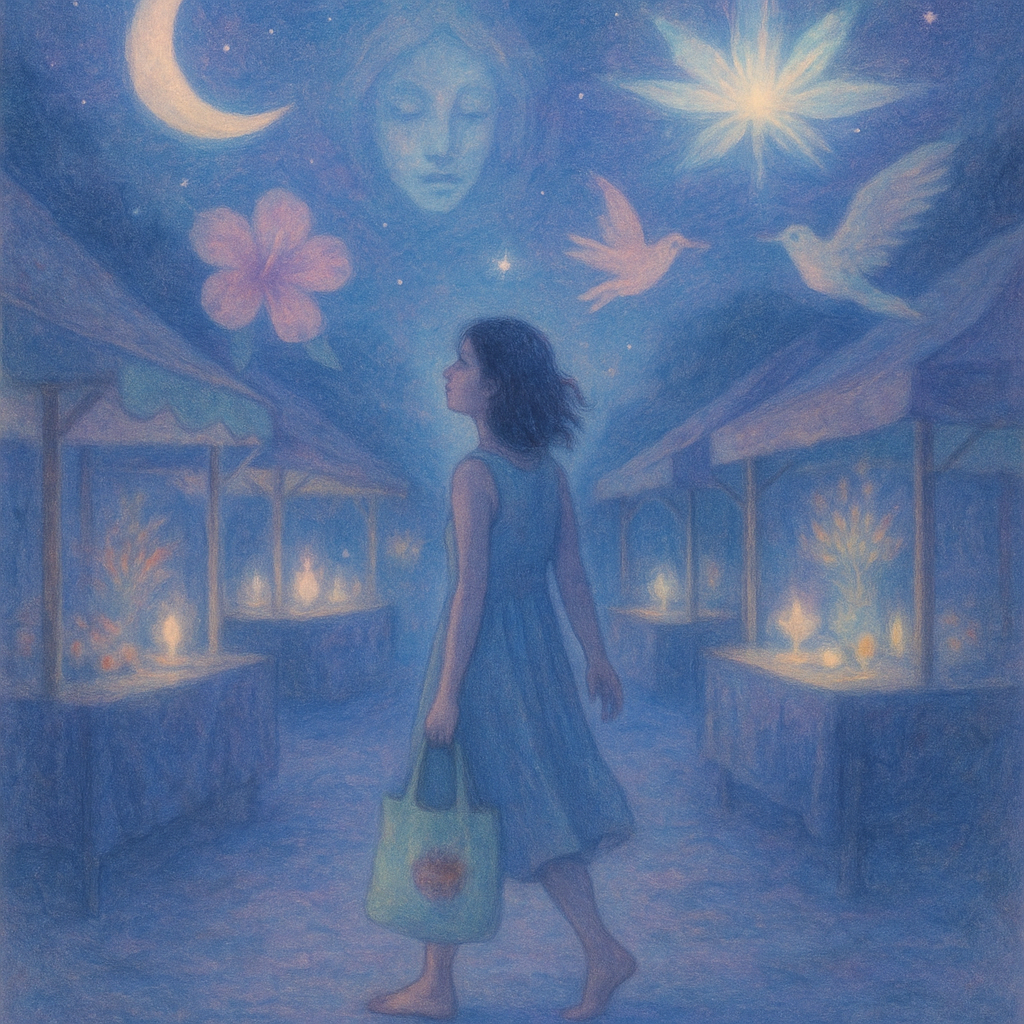
Your Dream
I was walking through a marketplace at night, barefoot and clutching a tote bag (the green one with the fading tomato stain). The stalls were open but nobody seemed to be selling anything. Instead, the vendors just smiled at me as I passed, as if they knew me, but didn’t want to interrupt. Bare bulbs hung overhead, their light looking yellow and thick, and I remember the shadows on the ground were all crisscrossed, like a net. The air smelled of ripe fruit—bananas going brown, maybe—and something sharp, like onions. I wandered between tables stacked with things I couldn’t quite name, though I tried to remember—a heap of shiny metal keys, a glass jar full of lemon peels, rows of old sneakers arranged by color. At some point, I found a stall that was selling only socks, and I felt this ridiculous urge to buy a pair, even though my feet in the dream weren’t cold. I tried to ask the vendor, an old woman in a blue cardigan, how much for the striped ones, but she just shook her head and offered me a plum instead. I bit into it, surprised at how warm it was, and sweet—juice spilling onto my chin. I woke up before I could pay or finish, and my tote bag felt heavier somehow, even after I woke up.
Your Dream, Revealed
A calm, guided space to explore what this dream may be reflecting back to you.
Dream Overview
This dream unfolds in a nocturnal marketplace, marked by both familiarity and a pervasive sense of estrangement. The emotional tone is quietly unsettled, with the dreamer barefoot and burdened by a tote bag stained and fading, suggesting unresolved traces from daily life. The central tension arises from the open stalls and friendly yet passive vendors, creating a subtle dissonance between invitation and inaction. Key symbols—bare feet, the green tote bag, crisscrossing shadows, and the unexpected exchange of socks for a plum—anchor the dream’s internal logic. There is an ongoing inner conflict between the urge to participate (buying socks) and the inability to complete a transaction or articulate needs. The dream is distinctive for its interplay of sensory detail (smells, lights, textures) and the theme of seeking something unnamed among the familiar-yet-strange wares. The narrative feels suspended, as if the dreamer is both recognized and held at a distance, resulting in a waking sense of increased burden.
The dream begins with the dreamer’s solitary navigation through a marketplace, the act of walking barefoot establishing an undercurrent of vulnerability from the outset. This initial phase is characterized by a sensory immersion—the thick yellow light, the mingled smells—which both illuminate and obscure, setting a mood of heightened, uneasy awareness. As the dreamer moves between stalls filled with unnamable items, there is a mounting sense of searching for something just out of reach, amplified by the vendors’ knowing smiles and lack of engagement. The narrative shifts at the sock stall, where the dreamer attempts to take action by expressing a desire, only to be redirected by the vendor’s silent refusal and unexpected offer. The final moment—biting into the warm, sweet plum—marks a sudden, visceral encounter with satisfaction that is both fulfilling and messy, yet leaves the dream unresolved, as the weight of the tote bag increases upon waking, suggesting unfinished business.
Key Findings
• The dreamer's barefoot walk through the market at night suggests vulnerability amid uncertainty. • The green tote bag with a fading tomato stain draws attention to emotional residue or unaddressed issues carried daily. • Vendors' silent, knowing smiles evoke a sense of being observed but not engaged, highlighting social or internal disconnect. • The urge to buy socks, despite warm feet, signals a desire for comfort or completion that is inexplicably deferred. • The plum, warm and sweet but messily consumed, marks an attempt to accept unexpected nourishment in place of practical solutions.
Symbol Interpretation
Bare feet
Embodies exposure and rawness, revealing the dreamer's openness or lack of protection in unfamiliar or ambiguous social situations.
Green tote bag with fading tomato stain
Represents lingering, possibly neglected, aspects of the dreamer’s history or identity that cannot be easily hidden or resolved.
Crisscrossed shadows
Suggests a subconscious sense of entrapment or limitation, a pattern of obstacles that are visible yet intangible.
Unnamed objects on tables
Reflects the dreamer's struggle to identify or articulate certain needs, memories, or desires.
Warm plum offered by the vendor
Signifies an invitation to accept unexpected experiences or forms of nourishment, even if they do not match the original quest.
Emotional Landscape
The dream’s emotional core is a persistent, low-grade tension, expressed through the dreamer’s exposed feet and the empty market that should be bustling with commerce. There is a quiet ache in being recognized (the vendors' smiles) but not truly met or helped, echoing feelings of social or existential isolation. The urge to buy socks, despite the lack of necessity, exposes a yearning for comfort or reassurance that remains unmet, highlighting a subtle anxiety about one's ability to care for oneself or complete simple tasks. The acceptance of the plum in place of socks introduces a moment of surprise and pleasure, but the messiness of the juice on the chin hints at the complications that come with accepting what is offered rather than what is sought. Upon waking, the increased heaviness of the tote bag leaves the dreamer with a lingering sense of burden, as if the emotional residue of the night persists into waking life.
Psychological Insight
The dreamer’s barefoot journey through the night market reflects a willingness to engage directly with uncertainty, yet also a vulnerability to unaddressed personal issues, as symbolized by the stained tote bag. The inability to name the objects on the tables, and the vendors’ refusal to transact, point to a deeper internal struggle with articulation—of needs, desires, or perhaps regrets—that remains unresolved. The strong yet inexplicable desire to buy socks, even when not physically needed, signals a psychological impulse to 'complete' or 'fix' something that cannot be directly addressed in the waking world. The vendor’s substitution of the plum for the socks may highlight a pattern of receiving what is available rather than what is consciously sought, challenging the dreamer to reconsider habitual patterns of expectation and acceptance. The final sensation of added weight upon waking hints at the psychological cost of these incomplete exchanges, subtly confronting the dreamer with the question of what truly needs to be carried forward, and what might be set down.
Spiritual Perspective
From a Buddhist perspective, the marketplace can be seen as a metaphor for samsara—a place of endless transactions, desires, and attachments. The dreamer’s barefoot state may echo the Buddhist ideal of directness and non-attachment, yet the continuing burden of the tote bag suggests that old stains and unresolved matters still cling, complicating the path toward equanimity. The crisscrossed shadows and the inability to complete the sock purchase may reflect the ways in which habitual patterns (samskaras) subtly shape experience, holding the dreamer in a net of unfinished business and longing, even amid attempts at mindful presence. The unexpected offering of the plum, accepted despite initial intentions, resonates with Buddhist teachings on openness to the present moment—embracing what arises, even when it is messy or unplanned.
Integrative Insight
This dream weaves together vulnerability, longing, and the tension between intention and acceptance. The marketplace is both an arena of possibility and a stage for unmet needs, with the dreamer moving through familiar territory yet unable to complete a simple transaction. The symbols of burden, exposure, and substitution suggest an ongoing negotiation between what is desired and what is actually available, echoing the Buddhist challenge of recognizing and releasing attachments. The gently confronting realization is that, despite mindful intention, some emotional weights persist, and true nourishment may arrive in unexpected forms. Sometimes, the things we clutch most tightly are the very things that keep us from moving lightly through our own nights.
Reflection Questions
- When you think of the green tote bag with its fading stain, what memory or feeling are you holding onto that might be weighing you down?
- How does your urge to buy socks—despite not needing them—mirror situations in waking life where you seek comfort or resolution that remains out of reach?
- What does it feel like to be offered something unexpected (like the plum) instead of what you ask for, and how do you respond to such moments in your daily experience?