The Neutral meaning of a dream with the flooded subway station
Perspective: neutral
Your Dream
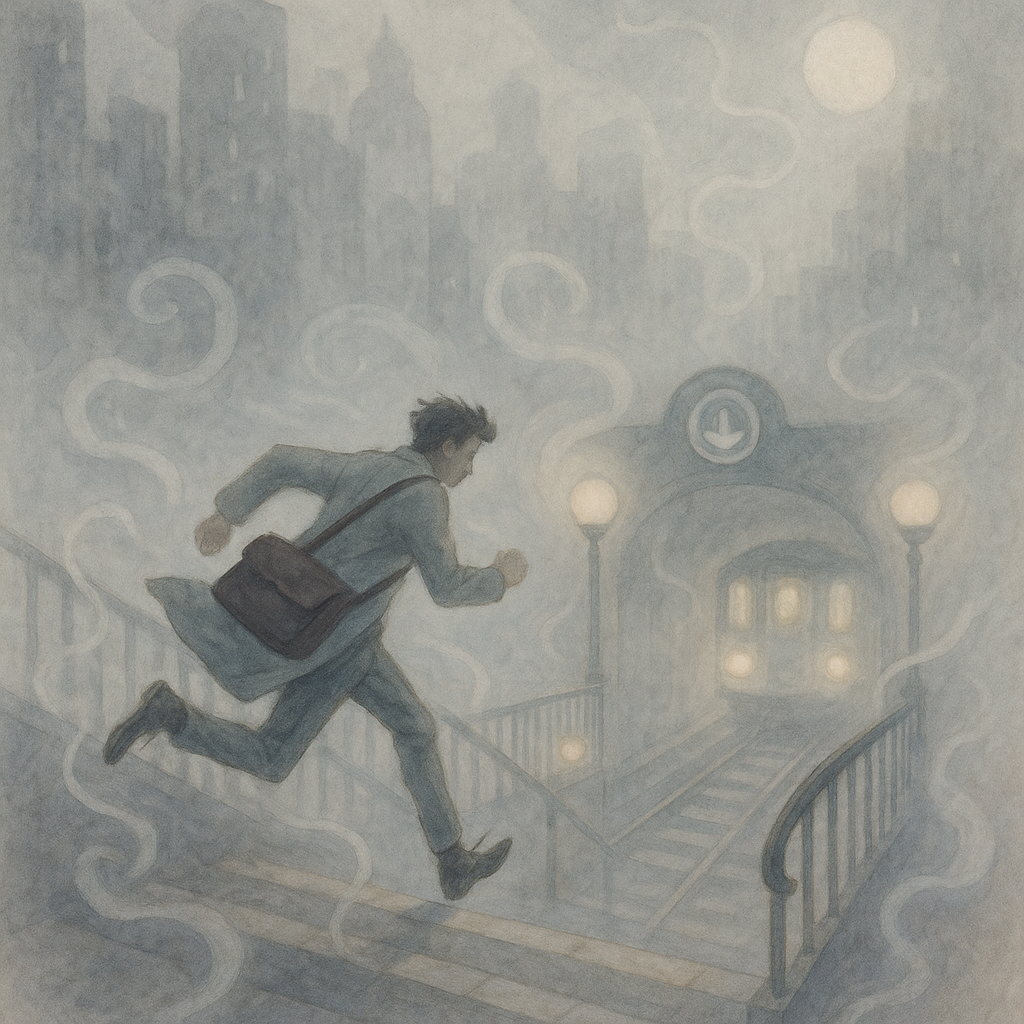
I’m running late for work, and the city feels especially gray this morning. I rush down into the subway, skipping two stairs at a time, my messenger bag thumping against my hip. As soon as I reach the lowest platform, I realize I’ve stepped into at least an inch of water. It’s strange—no one else seems bothered. People are standing on the yellow line, scrolling their phones as if there isn’t a shallow lake pooling around their ankles. I can feel the cold seeping into my socks. My shoes squish. The lights overhead flicker and catch on the surface of the water, turning everyone’s faces ghostly. Then there’s this noise, a kind of soft gurgle, and the water level starts to rise. For a second, I worry about my phone in my pocket—did I remember to zip it closed this morning when I grabbed my keys? I can’t remember. Water creeps to my shins, and my bag gets heavier, like it’s absorbing the flood. Instead of panic, though, I feel frustrated. I’m thinking about how long it will take for my shoes to dry, and whether I have socks at my desk. Someone behind me laughs, high and bright, and when I turn, the faces blur, dissolving in the reflection on the water. The train never comes.
Your Dream, Revealed
A calm, guided space to explore what this dream may be reflecting back to you.
Dream Overview
This dream unfolds in a city that feels unusually gray, amplifying a sense of heaviness and monotony before the action even begins. The urgency of running late for work sets an immediate undertone of pressure, but the descent into the subway introduces a more surreal, isolating tension. Water, unexpected and cold, invades the lowest platform, marking a shift from everyday stress to a deeper, more intrusive discomfort. The indifference of the crowd—people unmoved by the rising flood—creates an alienating contrast, accentuated by their ghostly reflections in the flickering light. The dreamer's attention to mundane worries, like wet socks and the state of their phone, grounds the strangeness in relatable frustration rather than fear. The moment when faces blur in the water's reflection hints at a dissolving connection with others or even with one's own identity in this stressful context. The train's absence at the end solidifies a sense of suspended movement, leaving the dreamer stranded in a world that feels both unresponsive and subtly menacing. What makes this dream distinctive is how it transforms everyday stress into a surreal tableau of isolation and unacknowledged discomfort.
The dream opens with a familiar rush—running late for work, city streets colored by an oppressive grayness, and a hurried descent into the subway. Urgency is punctuated by physical sensations: skipping stairs, a thumping messenger bag, and the jolt of cold water underfoot. When the dreamer reaches the lowest platform, the narrative shifts dramatically; the water, at first just an inconvenience, begins to rise, turning the mundane into the surreal. The crowd’s nonchalance in the face of the flood creates a jarring disconnect, the dreamer’s frustration growing as the water seeps into shoes and the bag grows heavier. Subtle dread replaces urgency as reflections distort faces and laughter echoes distantly, culminating in the absence of the train—action stops, leaving the dreamer suspended in unresolved discomfort.
Key Findings
• The dreamer's anxiety about being late is intensified by the city's oppressive grayness, suggesting a compounded sense of struggle. • The rising water on the subway platform represents a creeping problem that is both ignored by others and impossible for the dreamer to avoid. • Attention to small details—like the state of the phone, socks, and bag—suggests a preoccupation with managing the fallout of disruptions rather than preventing them. • The blurred, dissolving faces in the water's reflection point to a fear of losing one's sense of self or social belonging under pressure. • The absence of the train underscores a feeling of being stuck, unable to progress despite efforts and mounting frustration.
Symbol Interpretation
Gray City
Represents the dreamer's perception of their environment as dull, draining, or emotionally taxing.
Rising Water
Embodies intrusive, growing stress or emotion that is difficult to contain or ignore.
Messenger Bag
Symbolizes the weight of responsibilities, which accumulate stress and become harder to carry as the situation worsens.
Unconcerned Crowd
Highlights the dreamer's sense of alienation, feeling alone in their struggle while others remain disengaged.
Blurring Faces
Suggests an erosion of identity or connection, possibly under the pressure of relentless stress.
Missing Train
Represents a blocked path forward or a delay in achieving relief or resolution.
Emotional Landscape
The initial anxiety about being late is familiar and relatable, a thread that grounds the dream in everyday reality. Yet as the dream progresses, frustration becomes the dominant feeling, more pronounced than panic or fear. The dreamer’s focus on the small inconveniences—wet socks, phone, bag—reveals a coping mechanism: channeling emotional energy into manageable worries rather than confronting the overwhelming nature of the flood. Alienation emerges powerfully when the dreamer notices the crowd’s indifference; their isolation is deepened by the sense that no one else is affected or willing to acknowledge the rising problem. The final emotional note is resignation, a quiet but sharp sense of being stuck, as the train’s absence leaves the dreamer—and their frustration—without an outlet.
Psychological Insight
The dreamer demonstrates a strong drive to keep moving and remain functional, even as obstacles mount and the environment becomes increasingly hostile. There is a palpable avoidance of deeper panic; instead, the mind latches onto tangible, solvable problems—like the state of the phone or the need for dry socks—perhaps as a way to stave off feeling overwhelmed. The crowd’s indifference may mirror a deeper fear: that personal struggles will go unnoticed or unacknowledged, either by others or by the dreamer themselves. The blurred faces and the missing train point to a loosening grip on control and identity when under sustained pressure, raising the possibility that the dreamer feels adrift, unseen, or ineffective in their current life context. Most striking is the dreamer’s ability to tolerate frustration rather than collapse into chaos, though this endurance comes at the cost of feeling increasingly isolated.
Spiritual Perspective
With a neutral spiritual or belief system, the dream’s focus shifts to the very human challenge of coping with adversity in environments that feel indifferent or even hostile. The dream does not seek external solutions or mystical rescue; instead, it highlights the internal struggle to remain present and functional amid circumstances that cannot be controlled. The crowd’s disengagement and the train’s absence do not carry supernatural weight, but rather reflect a world that is simply unresponsive—a place where the burden of adaptation falls squarely on the individual. This perspective invites reflection on personal agency: how much can one adapt before adaptation itself becomes a source of isolation?
Integrative Insight
Taken together, the symbols and narrative point to a central realization: the dreamer is carrying a growing weight, both literal and emotional, in an environment that offers little acknowledgment or relief. Their strategy of focusing on small, manageable problems keeps panic at bay but may also prevent deeper engagement with the root sources of stress. The indifference of the crowd and the blurred reflections suggest a painful sense of invisibility, as if the dreamer’s struggles are both uniquely their own and yet unremarkable to the world around them. Most tellingly, the missing train forces a pause—a confrontation with the limits of endurance and the need to find meaning or connection even in stalled moments. The water may keep rising, but the dreamer’s awareness of their own frustration is the first ripple of potential change. In the gray light of this dream, frustration becomes a form of honesty.
Reflection Questions
- What current responsibilities or pressures in your waking life feel like they are slowly expanding, just beneath notice, until they become impossible to ignore?
- When was the last time you felt alone in your frustration, surrounded by others who seemed unaffected by a problem you found overwhelming?
- What would it mean for you to stop focusing on small, manageable worries for a moment and look directly at the larger discomforts you usually try to endure?