The Neutral meaning of a dream with the childhood backyard
Perspective: neutral
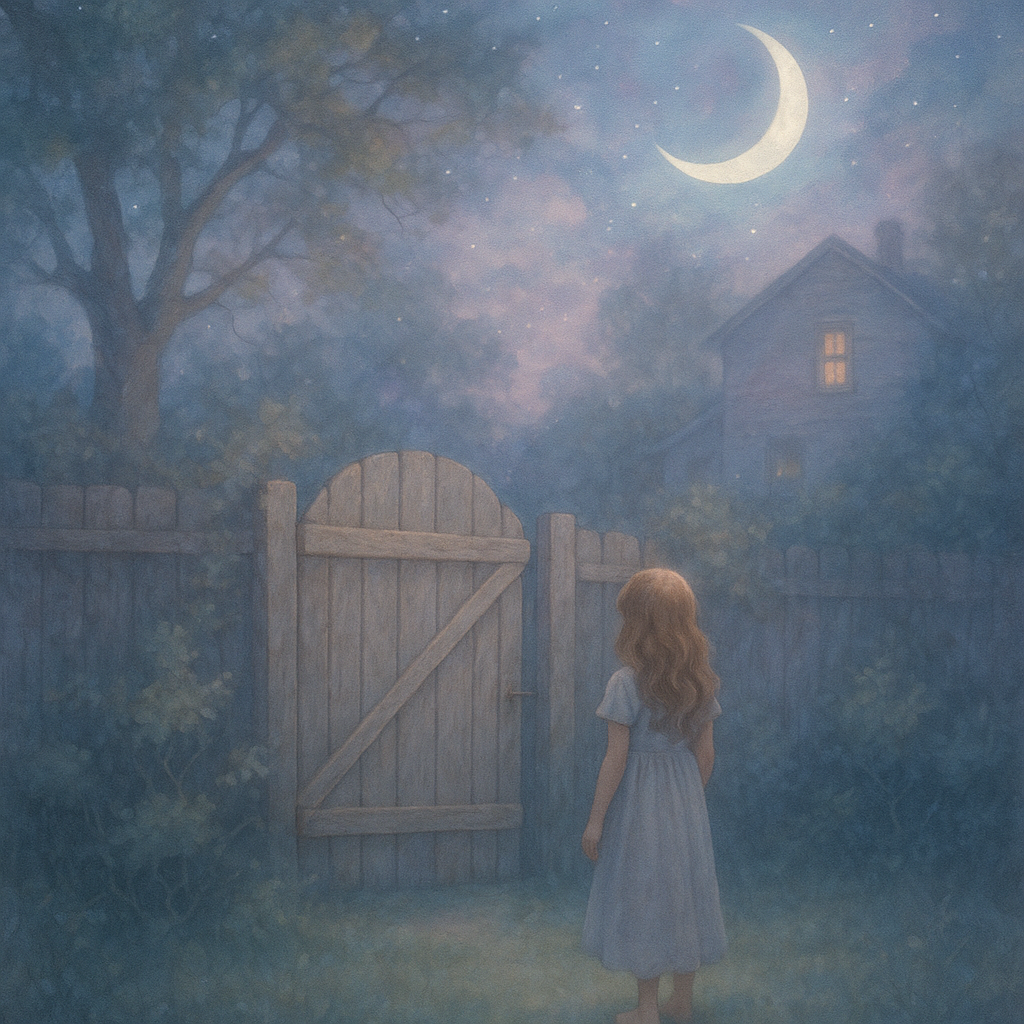
Your Dream
Last night I dreamed I was back in the backyard of my old house, the one we moved out of when I was eight. Everything was both exactly the same and completely different. The wooden gate still creaked, and someone had left a garden hose in a tangled green knot next to the lilac bushes. I could smell the damp dirt and mowing clippings, even feel the cool grass sticking to the bottoms of my feet. My brother was there, much smaller than he is now, running circles around a patch of dandelions. I tried to call out to him but my voice just kind of fell apart—like the words wouldn’t come out, or maybe my mouth was full of cotton. At some point, my mom appeared at the sliding door with a plate of peanut butter toast. She looked younger—her hair was shorter, and she wore that faded red sweatshirt she always used to paint in. I remember feeling a dull panic about school (did I forget my homework?), and I glanced down, expecting to see my backpack somewhere in the grass. Instead, there was just an old tennis ball, half-buried and split open, like it had been there for years. I wanted to pick it up, but my hand wouldn’t move, and then I woke up.
Your Dream, Revealed
A calm, guided space to explore what this dream may be reflecting back to you.
Dream Overview
This dream situates you in your childhood backyard, a space that straddles the line between nostalgia and unease. The sensory vividness—the cool grass underfoot, the scent of lawn clippings—anchors you in a place that is familiar yet subtly altered, underscoring a tension between memory and change. Key symbols, like the tangled garden hose and the half-buried tennis ball, suggest unresolved threads and forgotten fragments within your personal history. The presence of your brother and mother, both appearing younger, intensifies the dream's temporal dislocation, pointing to a longing for simplicity but also a discomfort with regression. Your inability to call out or move your hand injects a powerful sense of helplessness, counterbalancing the apparent comfort of home. The recurring motif of things being both as they were and not as they were hints at an internal struggle with accepting the past as it truly exists, rather than an idealized version. The subtle panic about school and the missing backpack introduce a layer of unfinished responsibility or fear of being unprepared. This dream stands out for the way it weaves physical sensations, emotional memory, and subtle paralysis into a single landscape that feels both safe and unreachable.
The dream unfolds in distinct phases, each marked by a shift in sensory and emotional atmosphere. It opens with immersion in the backyard, where the physical sensations—cool grass, damp dirt, and the creaking gate—establish a foundation of memory that is both inviting and unsettling. As your brother appears, the focus turns to movement and innocence; his circling the dandelions contrasts sharply with your own inertia and voicelessness, injecting a layer of longing and helplessness. The narrative pivots once your mother appears at the sliding door, offering a vestige of care from the past, but this moment is tinged with the realization that time has fundamentally altered these relationships. The final phase centers on your awareness of forgotten responsibilities, as anxiety about school and the search for your backpack give way to the strange, inert discovery of the tennis ball—a symbol of something left behind and no longer functional. Each shift deepens the sense that you are wandering through a landscape of memory that refuses to be neatly resolved.
Key Findings
• The backyard is rendered with intense sensory detail, highlighting both comfort and estrangement. • Your brother appears younger, introducing a sense of lost time or yearning for past connection. • You try and fail to speak, signaling a current or remembered feeling of voicelessness. • The missing backpack and old tennis ball reflect anxiety about unfinished tasks and the persistence of old wounds. • Your mother’s younger appearance and the peanut butter toast evoke care, yet also a longing for moments that can’t be relived.
Symbol Interpretation
The Backyard
This space embodies the tension between familiarity and change, serving as a container for old comforts that no longer fit easily.
Tangled Garden Hose
The tangled hose represents unresolved issues or emotions from your past that remain knotted and unattended.
Your Brother (Younger)
His childishness highlights your own desire for simplicity, but also brings up feelings of responsibility and distance.
Your Voice Failing
This represents a struggle to express yourself, especially in situations tied to vulnerability and the past.
Half-Buried Tennis Ball
The ball suggests an old, neglected part of yourself or a memory that remains only partially accessible, weathered by time.
Mom with Peanut Butter Toast
She is a symbol of nurturing and constancy, but her younger self also underscores the impossibility of returning to what is lost.
Emotional Landscape
The initial emotional tone is one of bittersweet nostalgia, sharpened by the vividness of the backyard and your bodily sensations. This comfort is quickly complicated by a growing sense of disorientation and loss, as you observe that everything is both familiar and different—an emotional echo of wanting to belong but not knowing if you do anymore. Your interaction with your brother introduces a wave of longing and frustration; his youthfulness is a reminder of what you cannot return to, and your inability to call out to him magnifies feelings of impotence and regret. The presence of your mother and the small gesture of peanut butter toast offer a momentary respite, a fleeting sense of being cared for, but this is undercut by the realization that you are only a visitor to this past, unable to change or participate in it fully. The dull panic about school and the paralysis when reaching for the tennis ball reveal deeper anxieties—about lost opportunities, incomplete tasks, and the fear of never quite catching up to who you hoped to be.
Psychological Insight
Your return to the backyard signals a deep need to revisit formative experiences and unresolved emotions, suggesting that some part of you is still searching for closure or understanding in childhood landscapes. The tangled garden hose and the inert tennis ball reflect areas of your life where energy has become blocked or where you feel unable to untangle old problems. The inability to call out or move your hand when reaching for the tennis ball points to a psychological paralysis when confronted with situations that echo past helplessness or voicelessness. The dream’s focus on both care (your mother’s toast) and anxiety (the school panic) reveals a divided self torn between the desire for nurture and the pressure of responsibility. The most gently confronting insight is that, even in dreams, you find yourself unable to act or speak in critical moments—a pattern that may quietly persist in waking life unless acknowledged.
Spiritual Perspective
Approaching this dream from a neutral stance allows for a clear-eyed exploration of how your mind weaves together memory, longing, and anxiety without assigning supernatural meaning or rigid interpretation. The dream's details—especially the sensory realism and the insistence on things being both unchanged and irrevocably altered—suggest a belief in the importance of integrating the past rather than escaping it. Your emotional responses to each symbol indicate a respect for the complexity of your own history, and an implicit trust that understanding these memories matters more than resolving them.
Integrative Insight
Taken together, the dream’s symbols and narrative dynamics highlight a struggle to reconcile comfort with helplessness, and memory with the impossibility of return. Your emotional landscape is textured by both longing for what was nurturing and the pain of being unable to recover or express it fully. The most striking realization is that the barriers you encounter—silent speech, frozen limbs, buried playthings—are not punishments, but invitations to acknowledge and honor the parts of your past that remain unresolved. You are not meant to fix or relive these moments, but to let yourself feel their weight and move forward with new understanding. The feeling of grass on your feet lingers: a reminder that the past lives on, not to entrap you, but to remind you that you have always belonged somewhere—even if that place has changed.
Reflection Questions
- When you try to call out to your brother but your voice fails, what current relationship or situation in your life feels similarly silenced or out of reach?
- The tennis ball you cannot pick up is old and broken—what responsibility, memory, or hope have you left half-buried, and what keeps you from reclaiming it?
- In what ways do you sense yourself standing at the threshold between comfort (the backyard, your mother’s toast) and anxiety (the missing backpack, school panic), and how do you respond when those needs conflict?