The Christian meaning of a dream with the quiet hospital corridor
Perspective: christian
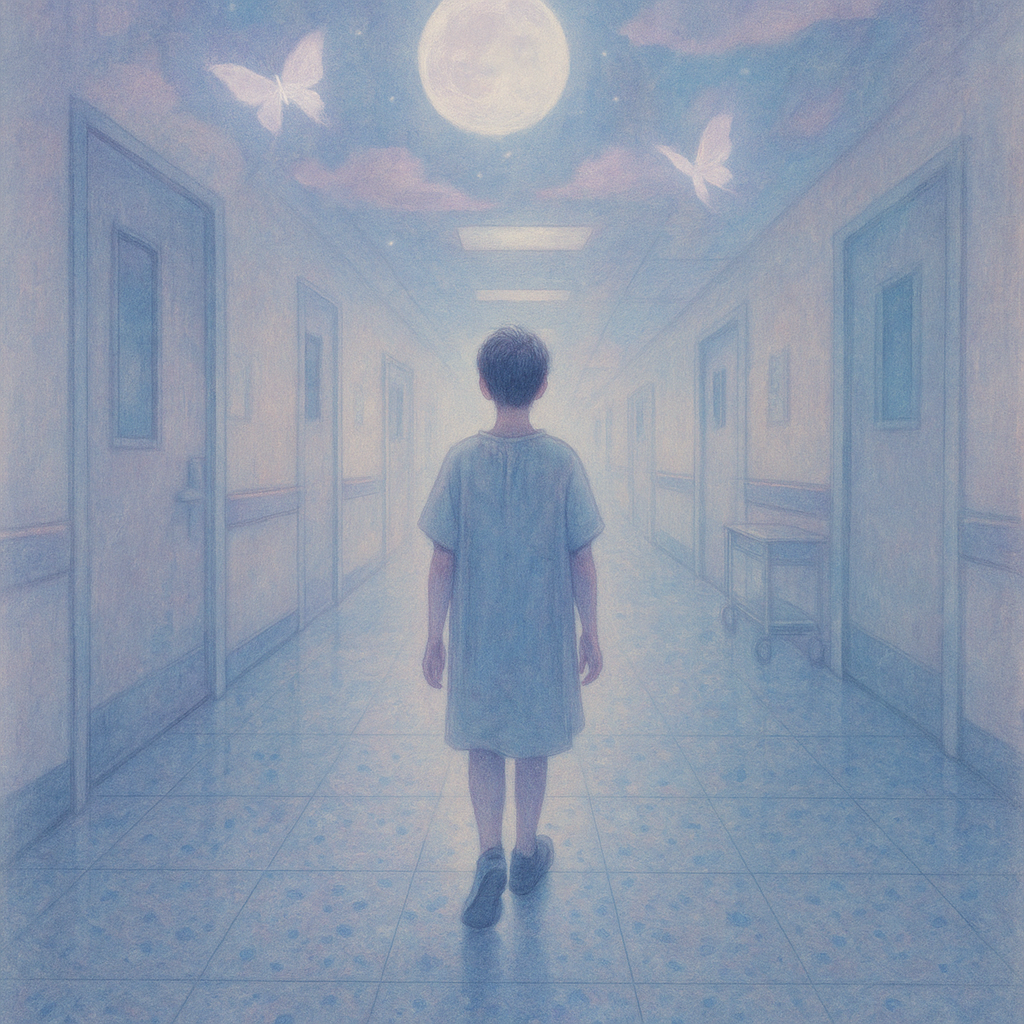
Your Dream
I am walking down a quiet hospital corridor, my shoes making a rubbery squeak with every step. The floor is that strange speckled tile, gray with flecks of blue, almost like the old kitchen in my mom’s house. It smells faintly of antiseptic and something else, maybe someone’s lunch from the staff room (I think I catch a hint of tomato soup). The lights are too bright overhead, but the hallway itself feels dim, as if the walls are swallowing the light. I’m carrying a clipboard—no, a single piece of paper, crumpled at the corner because I keep fiddling with it. My name is written at the top, but the rest is a blur. As I pass closed doors, I hear distant beeping, a muffled cough, someone laughing quietly. There’s a wheelchair tucked awkwardly against the wall, next to a vending machine with the humming sound that always makes my teeth itch. I keep walking, searching for the right room, but the numbers don’t make sense, skipping around, and suddenly I’m not sure if I’m supposed to be here at all.
Your Dream, Revealed
A calm, guided space to explore what this dream may be reflecting back to you.
Dream Overview
This dream unfolds in the liminal space of a hospital corridor, where sensory details—squeaking shoes, antiseptic smells, and humming machines—create a tactile sense of unease. The emotional atmosphere is marked by tension between familiarity and alienation, as the floor evokes childhood memories but the environment remains clinical and disorienting. The central tension emerges in the search for a 'right room' among illogical numbers, suggesting a deep uncertainty about one's current place or purpose. Key symbols like the crumpled paper with the dreamer’s name and the wheelchair by the vending machine anchor the narrative in themes of identity, vulnerability, and searching. There is an undercurrent of self-doubt and quiet anxiety, heightened by the sense that the dreamer’s presence in the corridor is ambiguous or even unauthorized. Closed doors with muffled sounds hint at unseen lives and possibilities, amplifying the dreamer’s isolation. The dream stands out for its interplay between sharp sensory impressions and the surreal logic of the setting, capturing a moment of personal questioning that feels both mundane and profound.
The dream begins with a careful, almost ritualistic progression down the hospital corridor, where every sound and smell is noted in detail. This initial phase is marked by a sense of cautious observation, as if the dreamer is both participant and witness to their own experience. As the dreamer becomes aware of the crumpled paper and the blurred name, the narrative shifts inward, focusing attention on the question of identity and the unease of carrying something that feels important but unfinished.
Passing the closed doors, the dreamer encounters a growing sense of exclusion and curiosity, underscored by the ambiguous noises—a cough, laughter, electronic beeping—seeping into the corridor. The vignette of the wheelchair and vending machine introduces a pause in the journey, manifesting a moment of discomfort that is both physical (the itching teeth) and psychological (the awkwardness of the wheelchair's position).
The final phase is marked by mounting confusion as the dreamer confronts the illogical sequence of room numbers. This culminates in a sudden realization of uncertainty: not knowing if they belong in this place at all. The narrative ends not with resolution, but with the lingering tension of search and self-doubt.
Key Findings
• The hospital corridor’s mix of brightness and dimness reflects the dreamer’s ambivalence about clarity and uncertainty in their waking life. • The crumpled paper with the dreamer’s name at the top highlights a struggle with self-recognition and the pressure of undefined expectations. • The nonsensical room numbers intensify a sense of disorientation and the fear of being out of place or unprepared. • The wheelchair and vending machine vignette suggests discomfort with passivity and the intrusion of minor irritations into moments of vulnerability. • The dreamer’s acute awareness of sounds and smells shows a heightened sensitivity to their environment, possibly mirroring vigilance in real life.
Symbol Interpretation
Hospital Corridor
A liminal zone between safety and exposure, echoing the dreamer’s experience of being in transition or awaiting resolution.
Crumpled Paper with Name
A tangible focus on identity, anxiety about incomplete self-understanding, and concern over personal roles or tasks.
Speckled Tile Floor
A bridge to childhood comfort juxtaposed with present uncertainty, highlighting a longing for familiarity amid strangeness.
Wheelchair and Vending Machine
Embodies vulnerability and the irritation of small, uncontrollable factors during moments of waiting or helplessness.
Nonsensical Room Numbers
Articulates a fear of being lost or without a clear role, and anxiety over failing to find one’s place.
Emotional Landscape
The dreamer’s heightened sensitivity to sensory details, such as the squeak of shoes and the humming vending machine, signals a state of vigilance mixed with vulnerability. This acute awareness is not just observational but tinged with anxiety, as if every detail might hold hidden meaning or threat. The emotional layer is further complicated by the nostalgic comfort of the speckled tile floor, which briefly evokes safety before being overridden by the sterile hospital setting.
There is a palpable unease in the way the dreamer interacts with the crumpled paper, fidgeting and noticing their name but unable to read the rest. This frustration reveals an emotional struggle with self-definition, and perhaps a fear of being misunderstood or overlooked. The laughter and coughs behind closed doors heighten feelings of exclusion, intensifying the dreamer’s sense of separateness from others who seem to have their own private worlds.
The dream’s emotional climax arrives as the dreamer confronts the nonsensical room numbers and questions their own legitimacy in the space. This moment is not just about being lost, but about feeling fundamentally unsure of one’s purpose or right to participate. The unresolved ending leaves a residue of longing—for guidance, belonging, and assurance.
Psychological Insight
The dreamer’s persistent search for the 'right room' amidst confusing numbers reflects a strong inner drive for order and meaning, even in chaotic or opaque circumstances. The act of carrying a crumpled paper with a blurred message suggests an internalized pressure to perform or fulfill expectations, even when the nature of those expectations is unclear. This hints at a psychological pattern of striving for clarity in the face of self-doubt.
Avoidance is subtly present in the dreamer’s decision to keep walking rather than confront the closed doors, which may represent opportunities or challenges that feel inaccessible or intimidating. The irritation at the humming vending machine and the discomfort of the wheelchair’s placement point to a tendency to be distracted or unsettled by minor but persistent anxieties, perhaps as a way of diverting attention from deeper uncertainties.
At the core, there is a motivational conflict between the desire to find one’s purpose (the search for the right room) and the fear of not belonging or being prepared (the illegible paper, the skipped numbers). This produces a quiet but persistent self-questioning, suggesting that the dreamer may be wrestling with transitions or choices in waking life that feel overwhelming or ambiguous. The dream does not resolve this tension, instead leaving it open for further reflection.
Spiritual Perspective
Within a Christian framework, the hospital corridor may evoke associations with waiting, testing, or being in a place of healing—settings where faith is often quietly examined or renewed. The search for the right room, complicated by illogical numbers, mirrors the spiritual experience of seeking guidance or divine purpose while encountering confusion or silence. The dreamer’s name, clear at the top of the page but followed by an unreadable message, resonates with the Christian idea of being known individually by God, even when one’s path or calling feels obscure.
The tension between familiarity (the kitchen-like floor) and alienation (the clinical hospital) might reflect the spiritual struggle to reconcile personal history with present uncertainty. The closed doors, with their muffled laughter and beeping, can be seen as reminders that not all answers or blessings are immediately accessible, yet the journey itself—marked by vigilance, discomfort, and searching—holds its own spiritual significance.
Integrative Insight
Drawing these threads together, the dream centers on the experience of searching for purpose and place while navigating feelings of disorientation and vulnerability. The interplay between childhood memory and present anxiety creates a backdrop where personal and spiritual questions mingle, suggesting that the dreamer’s longing for clarity is both practical and existential. The refusal of the dream to grant resolution mirrors the reality that some answers must be lived into, rather than found all at once.
Despite the discomfort and doubt, the dream affirms that being present in the corridor—even while uncertain—is itself an act of faith and courage. The most memorable truth arising from this dream is: Sometimes the only way forward is to keep walking, even when the numbers don’t add up.
Reflection Questions
- When you picture your name on that crumpled paper, what specific expectations or pressures come to mind from your waking life?
- How does the memory of your mom’s kitchen floor, in contrast to the hospital setting, reflect your current feelings about safety and change?
- What emotions arise when you realize the room numbers don’t make sense, and how do these connect to any recent situations where you’ve felt out of place or uncertain?