The Buddhist meaning of a dream with the hotel with no exit
Perspective: buddhist
Your Dream
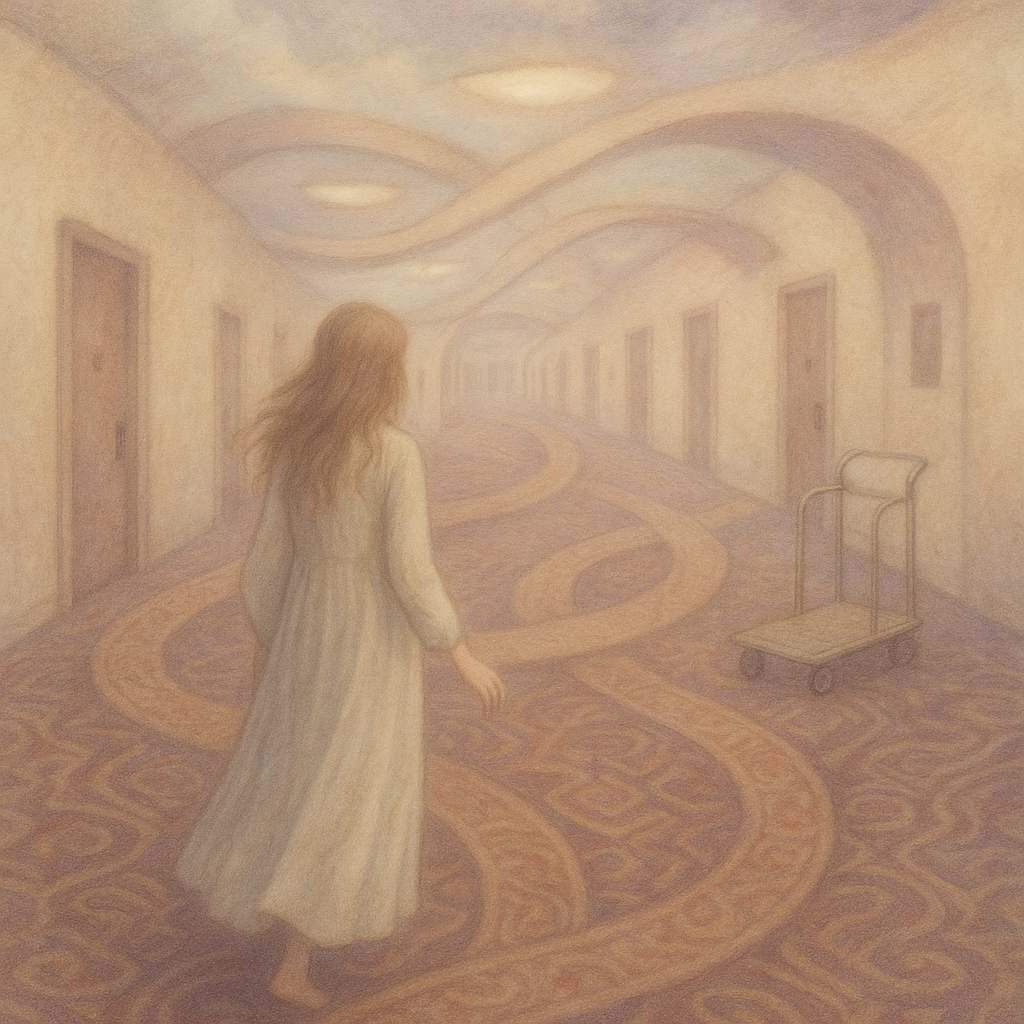
Last night I dreamed I was in this sprawling, impossibly large hotel. Endless hallways looped around, carpets in ugly brown and maroon patterns, the kind that get worn thin under luggage carts. I kept trying doors, hoping one would be the lobby, but they either led to more corridors or were locked tight. At one point, I paused to look at a faded map screwed to the wall, but the "You Are Here" dot was smudged out—just a faint red smear. I remember the fluorescent lighting buzzing overhead and my phone battery slowly dying in my hand. There was a vending machine by an ice machine (the ice bin was empty, of course), but I didn't have any cash. I could smell that slightly sour hotel air, some mix of cleaning products and old coffee. My shoes started to hurt, and I wondered if I’d ever get outside again—suddenly I was so thirsty, and I woke up with a dry mouth.
Your Dream, Revealed
A calm, guided space to explore what this dream may be reflecting back to you.
Dream Overview
This dream unfolds within an overwhelmingly vast hotel, marked by a sense of disorientation and the impossibility of finding an exit. The emotional tone is laced with growing frustration and a subtle undercurrent of despair, heightened by the endless, looping hallways and locked doors. The central tension revolves around the persistent search for orientation and relief, contrasted by the recurring barriers and the absence of clear guidance. Key symbols such as the smudged map, drained phone, and empty ice machine each serve as reminders of both material and existential depletion. The dreamer’s inner conflict is evident in the oscillation between tenacious searching and a creeping resignation, felt most acutely in the physical discomfort of aching feet and mounting thirst. What distinguishes this dream is its tactile detail—the sour air, the weight of tired shoes, the dying phone—that transforms a universal anxiety into a deeply personal landscape. The absence of money and the unusable amenities mirror a sense of personal inadequacy or lack, not just circumstantial misfortune. The Buddhist perspective may quietly underlie the dream’s circularity, evoking the wheel of samsara, but the emotional urgency is uniquely grounded in the dreamer's lived sensory experience.
The dream opens with a sense of curiosity and determination as you attempt to navigate the labyrinthine hotel, driven by the hope of finding an exit or at least some orientation. This initial phase is tinged with growing frustration as each door leads only to more corridors or is locked, undermining your sense of progress. The moment you pause at the faded map marks a turning point—a brief hope for clarity, immediately dashed by the smudged out 'You Are Here' dot, leaving you even more disoriented. As your phone battery drains and your cashless state becomes apparent, the narrative shifts toward scarcity, with the environment offering no solutions. The culmination arrives in the physical—painful shoes, dry mouth, and the overwhelming realization that relief is out of reach—prompting a visceral awakening. The progression from mental to physical discomfort is unrelenting, giving the dream a tightening, claustrophobic arc.
Key Findings
• The endless hallways and locked doors suggest a persistent feeling of being trapped within one's own routines or expectations. • The smudged 'You Are Here' dot on the map exposes a crisis of orientation, both literal and internal. • The phone battery draining and lack of cash point to anxieties about resource depletion and self-sufficiency. • The physical discomfort—hurting shoes and thirst—anchors the dream’s psychological struggle in bodily experience. • The sensory details (sour air, buzzing lights) intensify the sense of alienation and fatigue.
Symbol Interpretation
Endless Hallways
For this dreamer, the hallways represent the overwhelming complexity of life's demands or a situation with no clear resolution.
Locked Doors
Locked doors signify perceived barriers to progress, each failed attempt reinforcing a sense of exclusion or missed opportunity.
Smudged Map
The absence of a clear marker on the map reflects a personal uncertainty about one’s current life position or direction.
Dying Phone Battery
The phone’s dwindling power mirrors a fear of losing connection or support, symbolizing dwindling inner reserves.
Empty Ice Machine and Lack of Cash
The inability to access basic comforts or relief hints at feelings of deprivation or being unprepared for challenges.
Emotional Landscape
A persistent undertone of anxiety suffuses the dream, initially masked by your methodical search for the lobby. Each locked door and looping hallway chips away at hope, gradually yielding to frustration and a dawning sense of futility. The moment at the faded map encapsulates vulnerability: you are seeking orientation, only to face the void where guidance should have been, nudging you toward a quiet despair. The dying phone and empty ice machine expose a raw fear of depletion—not just of energy or resources, but of the ability to reach out or be helped. The final, bodily sensation of sore feet and thirst brings all these anxieties into sharp physical focus, making the emotional struggle inescapable even after waking.
Psychological Insight
The dream’s repeated attempts to find the lobby suggest a deep-seated desire for clarity, belonging, or a fresh start—yet every effort is thwarted, pointing to a possible internalized belief that solutions are always just out of reach. The smudged map and dying phone highlight an internal conflict between your need for orientation and an underlying fear that your own guidance systems are failing, leaving you to wander without direction. The lack of cash and empty amenities indicate a possible sense of inadequacy or unpreparedness, as if you fear lacking the resources—emotional, social, or material—to meet your needs. The growing discomfort in your feet and thirst reflect a tendency to push onward even when depleted, raising the question of whether you give yourself permission to rest or replenish. There is a quietly confronting insight here: your endurance is undeniable, but so is the toll it takes when you ignore your own needs.
Spiritual Perspective
From an Asian Buddhist perspective, the circular, endless nature of the hotel and its hallways can evoke the wheel of samsara, the cyclical wandering born of attachment and confusion. The absence of a clear 'You Are Here' marker, and the repeated search for an exit, echo the Buddhist theme of suffering arising from disorientation and clinging to the idea of a fixed destination. Yet, the dream’s vivid sensory details—thirst, aching feet, sour air—ground the experience in the body, reminding you that awakening is not just a mental act but an embodied one. The subtle confrontation with lack (no cash, empty machines) can be viewed through the Buddhist lens as an invitation to examine attachments and the roots of craving. In this context, your suffering is neither random nor insurmountable, but an opportunity for mindful inquiry.
Integrative Insight
The dream’s tangled hallways and dead ends are not just obstacles, but intimate portraits of your internal landscape—an honest mapping of confusion, longing, and resourcefulness under strain. Each unmet need, from orientation to comfort, invites you to notice where you habitually search outside yourself for relief, and where you might instead turn inward. The Buddhist resonance with cycles and craving offers gentle encouragement: the exit is not always a new hallway, but a new way of seeing where you already stand. There is a hard-won wisdom in your endurance, but also a quiet plea to attend to your own thirst before pressing on. The most memorable truth of this dream: sometimes, the only way out is to recognize you are already here.
Reflection Questions
- When in your waking life have you felt as if you were wandering endless hallways, unable to find your bearings?
- What personal resources or sources of support do you sense are 'running low' or inaccessible right now, as symbolized by your dying phone and lack of cash?
- How do you typically respond to physical or emotional discomfort—do you keep searching for an exit, or pause to acknowledge your needs?