Hindu reflections on a dream about the quiet hospital corridor
Perspective: hindu
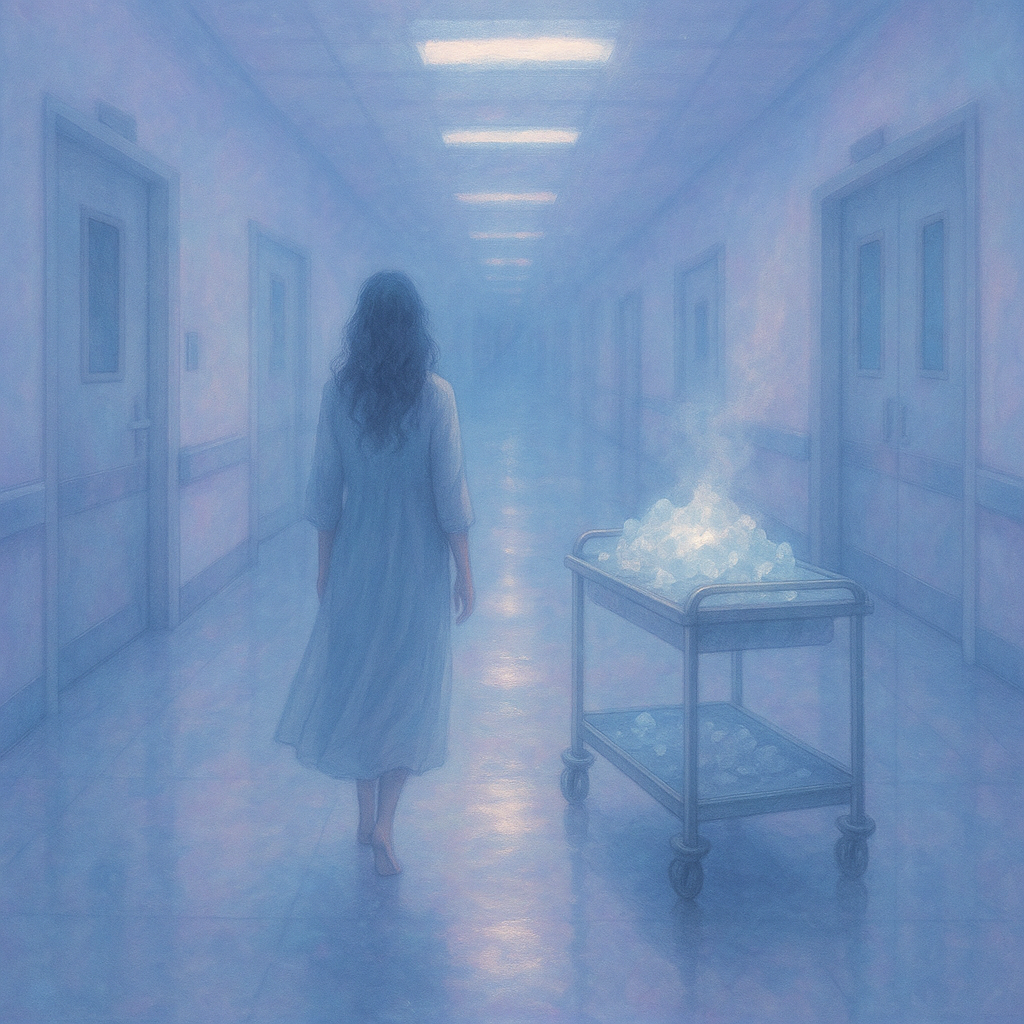
Your Dream
Last night I dreamt I was walking alone through a quiet hospital corridor, the kind with shiny floors and too-bright lights that hum overhead. It was eerily empty, except for a cart of half-melted ice chips abandoned beside a door. I remember thinking it was unusually cold, my arms prickling with goosebumps, even though I was just wearing my gray sweater from real life—the one with the stretched-out cuffs. Every footstep echoed weirdly, like the whole place was hollowed out. I paused by a blue plastic chair, noticing a stain on the seat shaped a bit like Australia. There was a soft, rhythmic beep coming from one of the rooms, but the door was closed. I hesitated, half-wanting to open it, but couldn’t bring myself to grab the handle. Instead, I just listened to the distant voices, muffled and indistinct. For some reason, I was carrying my grocery list, crumpled in my hand. I kept reading over the word “milk” scrawled at the top, as if I was afraid I’d forget it, even in a hospital. Just before I woke up, I caught a whiff of disinfectant mixed with something sweet, maybe vanilla, though I’m not sure why.
Your Dream, Revealed
A calm, guided space to explore what this dream may be reflecting back to you.
Dream Overview
This dream unfolds in the stark, sterile corridors of a hospital, a setting that evokes both vulnerability and the expectation of care. The emotional tone is one of low-grade anxiety, isolation, and a quiet alertness heightened by sensory details—the too-bright lights, humming, and cold. Central tension arises from the dreamer's solitary walk, surrounded by symbols of waiting and unresolved tasks, such as the abandoned cart of ice chips and the crumpled grocery list. The blue chair with its Australia-shaped stain hints at overlooked or misunderstood aspects of the dreamer’s life, while the closed door with rhythmic beeping embodies an unresolved curiosity or fear. The inner conflict centers on the urge to confront what lies behind the door versus the impulse to retreat, illustrated by the dreamer's hesitation. Distinctively, the dream weaves together the mundane (grocery list, gray sweater) with the unsettling (muffled voices, hollow echoes), suggesting a deep negotiation between routine responsibilities and unspoken anxieties. The juxtaposition of hospital sterility and the oddly sweet undertone of vanilla at the end adds a haunting, almost tender ambiguity to the experience.
The dream opens with a solitary walk through a hospital corridor, immediately establishing a mood of alienation and heightened self-awareness. This initial phase is marked by the interplay of sensory details—the cold air, the hum of lights, and the echoing footsteps—which reinforce the dreamer's sense of being both observed and alone. As the dreamer pauses by the blue chair and notices the Australia-shaped stain, the narrative shifts from movement to close inspection, suggesting a brief moment of interior reflection and meaning-making. The tension escalates near the closed door, where the beeping sound and muffled voices create a boundary between safety and the unknown; the dreamer's hesitation to open the door marks a turning point from passive observation to active avoidance. In the dream’s final phase, the focus shifts to the ordinary—the crumpled grocery list and the word 'milk'—blending mundane concern with the strangeness of the setting, before ending on a note of ambiguous comfort and discomfort with the scent of disinfectant and vanilla.
Key Findings
• The echoing footsteps and empty hallway emphasize a sense of isolation and introspection. • The closed door with the persistent beep suggests an unresolved issue that the dreamer is not ready to face. • The grocery list and fixation on the word 'milk' reveal ongoing concerns about everyday needs, even in unsettling contexts. • The blue chair’s stain, resembling Australia, points to the presence of overlooked or ambiguous meanings in familiar places. • The blend of disinfectant and sweet vanilla scent hints at the coexistence of anxiety and comfort within the dreamer's psyche.
Symbol Interpretation
Hospital Corridor
A personal space of vulnerability and surveillance, where the dreamer is exposed to both care and scrutiny.
Gray Sweater with Stretched-out Cuffs
A symbol of comfort that has seen better days, representing a worn familiarity that no longer fully protects.
Abandoned Cart of Ice Chips
A sign of interrupted care or neglected needs, possibly alluding to emotional needs left unaddressed.
Blue Plastic Chair with Australia-shaped Stain
A hint at overlooked or misinterpreted aspects of the self, with the odd shape suggesting ambiguous significance.
Crumbled Grocery List (with 'Milk')
A reminder of ongoing, basic needs and the persistence of daily responsibilities amid uncertainty.
Closed Door with Beeping
A boundary between known anxieties and the unknown, reflecting reluctance to confront a pressing internal issue.
Emotional Landscape
The emptiness of the corridor evokes a subtle loneliness, intensified by the absence of other people and the echo of the dreamer’s own footsteps. The coldness, described through physical sensation and the inadequate sweater, layers vulnerability over isolation, suggesting that the dreamer feels exposed even in situations that should offer protection. Noticing the blue chair’s stain provides a fleeting moment of curiosity and mild amusement, hinting at the dreamer’s capacity to find meaning or distraction in small details. The refusal to approach the closed door, despite the draw of the beeping inside, reveals an undercurrent of apprehension and the fear of confronting what is unknown or potentially painful. The act of clinging to the grocery list and rereading 'milk' in this context signals a need to anchor oneself with the familiar when facing anxiety, showing both resilience and a reluctance to fully engage with discomfort.
Psychological Insight
The dreamer's solitary journey suggests an ongoing negotiation with inner uncertainty or a challenge that feels too personal to share. Carrying the grocery list, especially fixating on 'milk,' reflects a persistent mental loop around basic needs and the fear of neglecting responsibilities, even when surrounded by more pressing or enigmatic concerns. Hesitation at the closed door marks a psychological impasse: the dreamer senses something important lies beyond but chooses avoidance, perhaps out of self-protection or doubt about their readiness. The detail of the abandoned ice chips and the empty corridor hints at a struggle with feelings of neglect—by self or others—and a tendency to leave emotional needs unattended. The mixture of disinfectant and vanilla at the dream’s end encapsulates the conflict between striving for safety or order and a desire for gentler, more comforting experiences, exposing a tension between control and softness in the dreamer’s internal landscape.
Spiritual Perspective
Within a Hindu context, hospitals may carry complex symbolism, embodying both the inevitability of suffering and the possibility of healing—two fundamental aspects of life’s cycles. The dream's focus on routine (the grocery list) and the mundane (milk) is notable given Hinduism's reverence for daily rituals and the sacredness of even ordinary acts; this juxtaposition within a clinical, impersonal environment suggests a search for continuity or sanctity in unfamiliar spaces. The hesitation at the closed door echoes themes of karma and dharma: the perpetual question of when to accept circumstances and when to act, reflecting a specifically Asian cultural respect for thresholds and the unseen. The dreamer’s attention to small but distinct details, like the stain's shape, aligns with an outlook that finds cosmic or personal significance in subtle signs, without needing overt explanations.
Integrative Insight
This dream reflects a deep tension between the comfort of the familiar and the looming presence of unresolved internal matters. The hospital corridor becomes a stage where everyday concerns and existential unease intersect, revealing the dreamer's unique way of holding onto routine even in unsettling situations. The refusal to open the door, set against the persistent need to remember 'milk,' points to a pattern of balancing avoidance with dutiful attention to what can be controlled. A gently confronting realization emerges: the dreamer is adept at tending to surface needs but hesitates to investigate deeper sources of anxiety. The most memorable truth here is that even in the quietest, most sterile corridors of the mind, the small, ordinary needs we carry can both anchor and distract us from what truly calls for attention.
Reflection Questions
- When you think of the closed door and the rhythmic beeping, what unfinished matter or decision in your life feels both urgent and daunting?
- How does your attachment to the grocery list—especially the word 'milk'—relate to your current efforts to maintain stability amid uncertainty?
- What might the Australia-shaped stain on the chair represent about the parts of yourself or your experience that you notice but rarely explore?