Dream of the train that never stops through a Other lens
Perspective: other
Your Dream
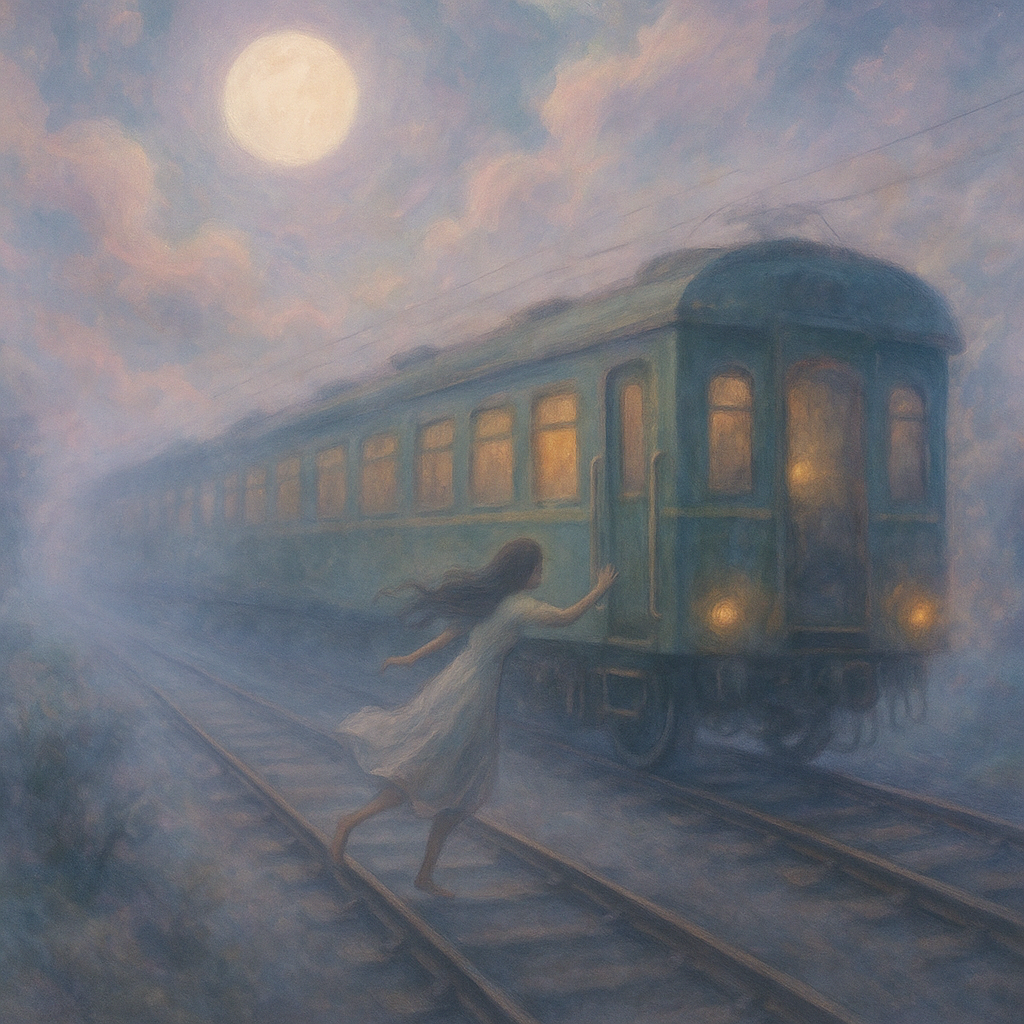
Last night I dreamt I was trying to board a train that never stopped. It was an old green train, the kind from those European movies, shuddering and clanging along a set of tracks that ran straight through my childhood neighborhood. I kept running alongside, matching its speed, but it was always just barely out of my reach. I remember my shoes slapping the pavement—my old sneakers with the frayed laces (I really should get new ones)—and the way the platform blurred past, the yellow paint looking almost melted in the late afternoon sun. People were standing inside the cars, pressed against the windows, but their faces were smudged somehow, out of focus. My mom was among them, waving a striped dish towel, the one she always uses to dry glasses. I tried yelling to her, but my voice wouldn’t come out right; it sounded muffled, like shouting underwater. The train whistle blew again and again, louder each time, making my chest vibrate. I remember desperately grabbing at the metal handle of a door, feeling the cold sting in my palm as it slipped away. Eventually, my legs were heavy and aching, and I had to slow down. The train chugged on, never slowing, and I just stood there, panting, watching the distant red light on the back of the last car pulse like a fading heartbeat.
Your Dream, Revealed
A calm, guided space to explore what this dream may be reflecting back to you.
Dream Overview
This dream unfolds along the familiar tracks of a childhood neighborhood, yet is dominated by an old green train that never stops, introducing a tension between longing and inaccessibility. The atmosphere is charged with urgency and frustration as the dreamer sprints after the train, their frayed sneakers and the blurred yellow platform grounding the experience in sensory memory. The smudged faces of passengers, including a mother figure waving a striped dish towel, lend a sense of emotional distance even within proximity. The motif of muffled voice and the relentless, vibrating whistle evoke a struggle to be heard or understood. The cold sting of the metal handle slipping away marks a moment of acute loss or missed connection. The dream's final image—a fading red light pulsing like a heartbeat—underscores a sense of irreversible passage. What distinguishes this dream is the intimate layering of nostalgia, effort, and unattainable reunion, all filtered through detailed, tangible recollections.
The dream opens with a kinetic urgency: the dreamer is immediately in pursuit of the train, running alongside familiar streets, suggesting a mixture of hope and anxiety. As the train clatters relentlessly forward, the sensory details—shoes slapping pavement, blurred yellow paint—pull the dreamer into a vivid, embodied experience of effort. Reaching the platform and seeing the smudged faces, especially the mother with her dish towel, creates a momentary hope for reunion, only to be thwarted by the inability to be heard or to grasp the handle. The train whistle's escalating volume and the cold sting of the slipping handle mark a phase shift from striving to the onset of despair or futility. The pace slows as the dreamer’s physical exhaustion takes over, culminating in a stationary, breathless moment watching the train, and ending with the image of the fading red light—a quiet, mournful acceptance.
Key Findings
• The old green train, resembling those from European films, evokes a longing for something both familiar and unreachable. • Running in worn sneakers with frayed laces highlights a sense of personal inadequacy or being unprepared for the pursuit. • The mother waving a dish towel through the smudged window illustrates a yearning for connection that remains frustratingly out of reach. • Repeated attempts to shout, met with a muffled voice, reveal a struggle to express urgent emotional needs. • The fading red light on the last car crystallizes a fear of permanent separation or loss.
Symbol Interpretation
Old Green Train
Represents a significant life transition or opportunity from the past that feels both alluring and forever just out of reach.
Frayed Sneakers
Symbolizes self-awareness of personal limitations, outdated tools, or reluctance to let go of the past.
Smudged Faces and Mother with Dish Towel
Embodies a longing to reconnect with loved ones or aspects of one's identity that feel blurred or inaccessible.
Muffled Voice
Reflects a sense of powerlessness or inability to communicate deeply held feelings.
Fading Red Light
Symbolizes the closing of a chapter or the gradual loss of something emotionally vital.
Emotional Landscape
A primary emotional undercurrent is longing, captured in the relentless chase after the train and the yearning to reach the mother. Frustration surfaces powerfully in the repeated, failed attempts to communicate, as the dreamer's voice is muffled and drowned by the whistle. There is a poignant sense of inadequacy connected to the old sneakers, as if the dreamer feels unprepared or unworthy to catch up with what is important. The moment of grabbing the cold metal handle but failing to hold on conveys acute disappointment and a fleeting hope slipping away. Finally, when the dreamer is left watching the train recede, a heavy, almost mournful acceptance settles in—a recognition of limits and the pain of watching something precious fade from reach.
Psychological Insight
The dreamer's relentless pursuit in worn sneakers suggests a deep-seated drive to reconnect with something meaningful from the past, despite feeling ill-equipped. The presence of the mother and the dish towel indicates a longing for comfort or approval from family, but the blurred faces and muffled voice point to a persistent sense of emotional disconnect. The train's refusal to stop, despite the dreamer's efforts, highlights a recurring internal conflict: the desire to reclaim or repair what feels lost versus the reality of irreversible change. The repeated failures—voice not working, handle slipping, shoes unfit—reflect both a fear of inadequacy and a possible avoidance of facing what cannot be changed. The dreamer’s eventual exhaustion and decision to stop chasing may reveal a subconscious recognition that some pursuits must be relinquished, no matter how deeply they are wanted.
Spiritual Perspective
Given the spiritual context of 'other,' the dream's landscape seems more rooted in personal meaning than in religious or mystical symbolism. The recurring motif of running after something unattainable—especially when filtered through the lens of one's formative environment—suggests a belief in the enduring importance of the past, but also an implicit acceptance of its untouchability. The fading heartbeat of the red light is neither a supernatural omen nor a prophecy, but a metaphor for the subtle, ongoing process of letting go, which may hold its own kind of quiet dignity.
Integrative Insight
This dream intricately weaves together the ache of nostalgia, the pain of missed connection, and the fatigue of unrelenting effort, all grounded in tactile memory. The dreamer’s attempts to bridge distance—with people, with the past, with self-understanding—are thwarted by a combination of external and internal barriers, resulting in both frustration and reluctant acceptance. Ultimately, the dream does not resolve in triumph or despair, but in a clear, almost gentle acknowledgement of what cannot be reclaimed. The most striking realization is that the dreamer’s longing and effort are real, but so too is the necessity of stopping, breathing, and watching the past recede. Sometimes, the hardest act of love is letting the train go.
Reflection Questions
- When you recall the feeling of your shoes slapping the pavement, what part of your current life feels like an exhausting pursuit with inadequate resources?
- How does seeing your mother through the smudged window, holding that familiar dish towel, echo moments in your waking life when emotional closeness has felt just out of reach?
- Reflecting on the fading red light at the end of the train, what is something you sense slipping away that you have not fully allowed yourself to grieve?