Dream of the mirror that shows someone else through a Christian lens
Perspective: christian
Your Dream
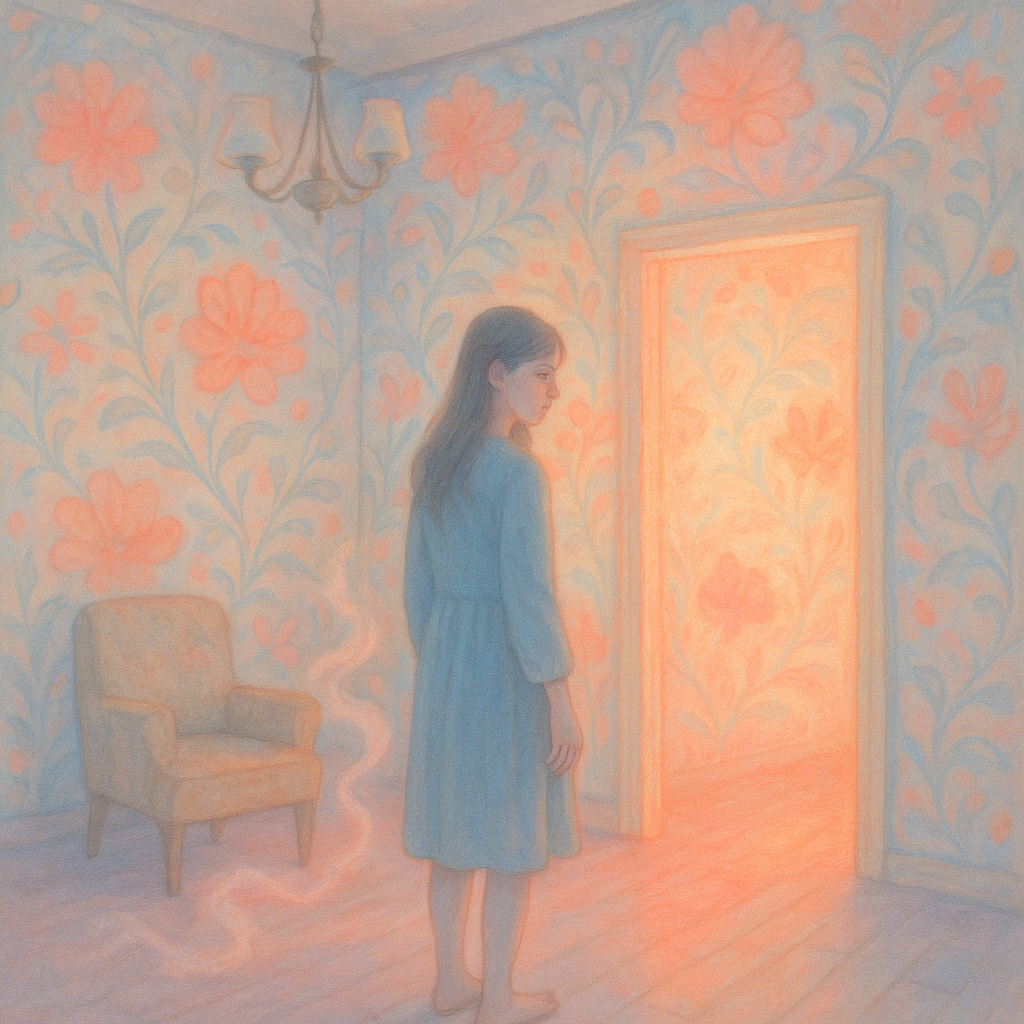
I’m in my grandmother’s old apartment—though, I realize halfway through the dream, it isn’t quite like I remember. The wallpaper is too bright, and the smell is all wrong, scented more like fresh paint than the usual musty lavender. I’m searching for something, I think it might be my blue scarf, the one I lost years ago, but whenever I open a drawer, it’s filled with broken teacups and dozens of rubber bands. The clock above the stove is running backwards, and my phone keeps buzzing in my pocket, but when I look it’s only the flashlight turning itself off and on. I end up in the tiny hallway, standing in front of the oval mirror on the wall. The frame is chipped, and dust gathers at the edges. I reach out to tidy a smudge, but when my hand gets close, the reflection isn’t of me. Instead, a young man’s face looks back—someone I don’t quite recognize, though his dark hair seems familiar in a way I can’t place. He looks startled too, blinking as if just waking up. His lips move, and I think he’s trying to say something, but no sound comes. I want to ask if he knows where my scarf is, or maybe just who he is, but my mouth feels glued shut. Then my foot goes cold—just for a second, as if I’d stepped in something wet. I look down expecting to see the cat’s water bowl, but there’s nothing there. When I look up again, the mirror is empty.
Your Dream, Revealed
A calm, guided space to explore what this dream may be reflecting back to you.
Dream Overview
This dream unfolds in the liminal space of your grandmother’s old apartment, which is both intimately familiar and disturbingly altered. The emotional tone is unsettled: nostalgia is tangled with disorientation, as nothing is quite as your memory insists it should be. The central tension arises from your search for a lost blue scarf—a quest for something both personal and irretrievable, continually thwarted by drawers filled with broken and irrelevant objects. Symbols of time and communication malfunction: the clock runs backwards, and your phone flickers uselessly. At the mirror, the most jarring rupture appears: your own reflection is replaced by a young man whose silent presence hints at a part of yourself or your history that feels unreachable. The dream’s inner conflict centers on your struggle to reconcile memory with the present, and to speak or connect where silence prevails. What makes this dream distinctive is its sense of almost-recognition: the feeling that answers or identity lie just out of reach, as if the apartment itself is holding its breath.
The dream begins with a subtle dissonance: you re-enter your grandmother’s apartment, only to find details disturbingly out of place. This sets the stage for the central search, where hope alternates with frustration as every attempt to retrieve your blue scarf reveals only broken or meaningless objects. The tension escalates as time and technology fail you—first, the backwards clock, then the phone’s useless buzzing—which strips away your sense of orientation and control. The most dramatic shift occurs at the mirror: reality bends as your own reflection is replaced by an unfamiliar young man, introducing a new layer of uncertainty and silent communication. The final movement is marked by a physical jolt—a cold foot, an expectation of contact unmet—culminating in the mirror’s emptiness and a sense of being left with more questions than answers.
Key Findings
• The apartment’s altered details signal a profound mismatch between memory and lived reality. • The search for the blue scarf repeatedly leads to frustration and the discovery of broken teacups and rubber bands, suggesting an inability to recover what feels lost. • Temporal and technological disturbances—the backward clock and malfunctioning phone—amplify feelings of disconnection and inability to communicate. • The encounter with a familiar yet unrecognizable reflection in the mirror points to an unresolved or unexamined aspect of self. • The sudden chill and empty mirror at the end suggest an abrupt withdrawal from self-examination, leaving questions unanswered.
Symbol Interpretation
Grandmother’s Apartment
This space represents both comfort and the discomfort of returning to a past that cannot be perfectly reclaimed.
Blue Scarf
The scarf embodies something personally significant that has been lost—perhaps a sense of security, warmth, or identity.
Broken Teacups and Rubber Bands
These items evoke fragmentation and the attempt to hold things together with inadequate means.
Backwards Clock
This reversal of time highlights a longing to undo or revisit the past, as well as the impossibility of doing so.
Mirror and Silent Young Man
This figure may symbolize an unfamiliar or repressed aspect of self, or a generational echo you sense but cannot communicate with.
Sudden Cold Foot
This fleeting physical sensation signals vulnerability and awareness of absence, as you expect something tangible but find nothing.
Emotional Landscape
There is a deep current of longing running through the dream, most visible in your search for the blue scarf—a lost object that feels charged with personal meaning. The repeated frustration at finding only broken teacups and rubber bands evokes a sense of helplessness and resignation, as if the past or what’s been lost is irretrievable. The altered state of the apartment, especially the wrong scent and brightness, stirs unease: familiar comfort is haunted by the awareness that things can never be exactly as they were. The silent, unfamiliar face in the mirror brings a jolt of anxiety and confusion, intensifying your isolation; you’re confronted with a part of yourself or your history that remains inaccessible. The cold sensation at your foot just before the mirror empties leaves a residue of vulnerability and unfinished business, as if the dream aborts just before a crucial revelation.
Psychological Insight
Your persistent search for the blue scarf, despite mounting evidence it cannot be found, suggests an unwillingness to accept certain losses or changes. Opening drawers and finding only broken items and rubber bands may reflect a psychological tendency to revisit old wounds or memories, hoping for repair but encountering only fragments. The disruptions of time and communication hint at an underlying struggle: you may fear being unable to reconnect with important aspects of your past, or with parts of yourself that feel remote. The mirror scene exposes a confrontation with the unknown within you; the young man’s startled silence mirrors your own difficulty articulating questions or needs, perhaps especially in moments of self-doubt. The experience of your mouth feeling 'glued shut' is telling: there may be things you feel unable to express, either to yourself or to others, particularly regarding identity or family history.
Spiritual Perspective
The setting of your grandmother’s home and the presence of generational echoes—such as the unfamiliar young man—resonate with Christian themes of lineage, memory, and the search for belonging. The altered apartment and the sense of something missing may reflect the Christian understanding that earthly homes are impermanent, and that comfort is not always found in the things or places we expect. The silence and emptiness at the end of the dream can be seen as an invitation to seek meaning beyond immediate recognition or understanding, acknowledging that faith sometimes involves living with unanswered questions and trusting in what is unseen.
Integrative Insight
This dream weaves together loss, memory, and the unsettling realization that the past cannot be perfectly recovered—no matter how hard you search, some things remain broken or just out of reach. The interplay between familiar comfort and unfamiliar dissonance reveals your struggle to reconcile who you were, who you are, and who you may become. The silent exchange at the mirror is especially powerful: it asks you to face the unfamiliar within yourself, even when words fail and answers elude you. Stepping away from the mirror into emptiness, you are left not with resolution, but with the awareness that some questions will linger until you choose to voice them. The dream leaves you with this: Sometimes the greatest clarity comes not from finding what’s lost, but from daring to confront what is strange within yourself.
Reflection Questions
- What aspects of your past feel both comforting and uncomfortable to revisit, as reflected in the apartment’s altered details?
- When have you found yourself searching for something lost, only to encounter fragments or reminders of brokenness instead?
- How do you respond when faced with an unfamiliar or silent part of yourself—like the young man in the mirror—and what keeps you from asking the unspoken questions?