Dream of the house with too many doors through a Buddhist lens
Perspective: buddhist
Your Dream
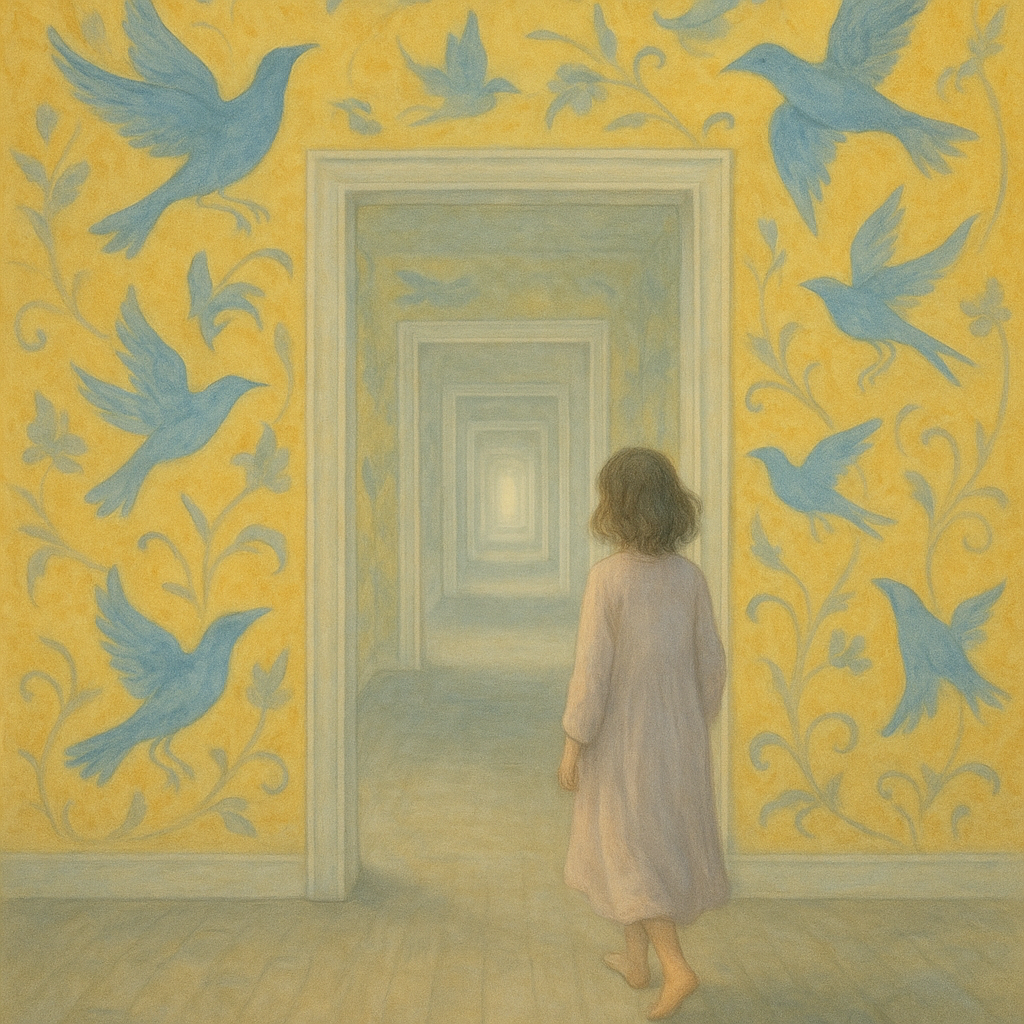
Last night, I wandered through a house that felt a little like my grandmother’s, but also not at all—maybe it was the wallpaper, bright yellow with strange blue birds. What struck me was the endless number of doors. Every wall had at least three, some right next to each other, their handles cold under my hand. I kept opening them, expecting closets or maybe a bathroom, but sometimes they led to more hallways, or rooms that shouldn’t have fit inside the house. There was a room with all my old coats from high school hanging in a neat row, and another where the floor was just wet grass, like a lawn but inside. I remember becoming frustrated, because I just wanted to find the kitchen and make tea—I could almost smell the bergamot from the Earl Grey tin, the one I actually have in my real kitchen. But every door just made me more lost. At one point, I heard the washing machine running somewhere, muffled, and thought I should probably check it, but I never found that room.
Your Dream, Revealed
A calm, guided space to explore what this dream may be reflecting back to you.
Dream Overview
This dream unfolds in a house that carries a ghost of familiarity—echoes of a grandmother’s home—yet is rendered uncanny by dissonant details like the vivid yellow wallpaper with blue birds. The emotional tone shifts between nostalgia, confusion, and mounting frustration as the dreamer moves through a labyrinth of endless doors, each promising but denying resolution. The central tension arises from the dreamer’s repeated attempts to find the kitchen—a place of comfort and intention—while being thwarted by the proliferation of doorways and improbable rooms. Key symbols such as the old coats from high school, the room with wet grass, and the ever-muffled washing machine add personal layers, evoking memory, dislocation, and missed responsibilities. The inner conflict is palpable: a longing for simplicity and ritual (making tea) collides with the complexity of the environment and the sense of being lost. What makes this dream distinctive is its fusion of the domestic and the surreal, where intimate details from the dreamer’s life are woven into an ever-expanding, impossible architecture. The dream’s insistence on searching, not finding, underscores a restless need for orientation amid the familiar made strange.
The dream begins in a space that feels familiar but is subtly altered, setting a tone of subtle unease. The initial act of wandering is exploratory, marked by curiosity as the dreamer notices the peculiar wallpaper and abundance of doors. As the dreamer moves from room to room, opening doors that lead to more hallways or impossible spaces, the tone shifts to frustration; the act of opening doors becomes less about discovery and more about desperation. The appearance of the old coats and the room of wet grass marks a phase where memory and reality blur, intensifying the dreamer's disorientation. The narrative peaks in emotional intensity with the urgent but thwarted pursuit of the kitchen and the unreachable washing machine, ending in unresolved searching and a sense of being trapped in cycles.
Key Findings
• The endless doors, with their cold handles, highlight a persistent search for clarity or direction that becomes self-defeating. • The room lined with old high school coats signals a confrontation with past identities, neatly arranged yet closed off. • The indoor lawn with wet grass marks a boundary collapse between safety and exposure, inviting both wonder and discomfort. • The nearly tangible scent of Earl Grey tea anchors the dreamer’s longing for comfort and routine amid chaos. • The muffled sound of the washing machine, unreachable, points to unattended responsibilities and ongoing cycles left incomplete.
Symbol Interpretation
Endless Doors
A proliferation of choices or questions that undermine the dreamer's desire for simplicity and orientation.
Bright Yellow Wallpaper with Blue Birds
A dissonant blend of cheerful and unsettling, echoing the dreamer's mixed feelings about the house’s familiarity and strangeness.
Old High School Coats
A curated archive of the dreamer’s past selves, accessible but ultimately static and uninhabited.
Room with Wet Grass
An intrusion of the uncontrolled natural world into domestic space, unsettling the dreamer’s sense of boundaries.
Earl Grey Tea
A sensory anchor for comfort and intention, representing what is real and desired amid the unreality.
Muffled Washing Machine
A persistent, low-level anxiety about unfinished duties or cycles that run in the background of the dreamer's life.
Emotional Landscape
Nostalgia is present but uneasy, rooted in the house’s resemblance to the grandmother’s, tinged by the alien details that prevent real comfort. The act of opening cold-handled doors evokes both hope and mounting irritation, as each attempt to find the kitchen is subverted. The coats from high school trigger a brief moment of self-awareness, possibly regret or longing, as the dreamer confronts vestiges of their younger self. Encountering the room with wet grass introduces vulnerability, an unexpected exposure that disrupts any sense of domestic safety. The persistent inability to complete simple rituals, such as making tea or checking the washing machine, compounds the dreamer’s frustration and leaves a residue of helplessness.
Psychological Insight
The dreamer’s repeated opening of doors suggests a habit of searching for certainty or comfort through external means, even when the process itself becomes overwhelming. The presence of the old coats indicates an awareness of past identities that are acknowledged but not integrated, suggesting that the dreamer may be compartmentalizing aspects of their history without fully engaging with them. The room with wet grass breaks the illusion of control, pointing to a fear of unpredictability or of boundaries being crossed in waking life. The unattainable kitchen and tea ritual highlight the dreamer’s desire for grounding and routine amid chaos, yet demonstrate how this desire is continually disrupted by internal complexity. The muffled washing machine stands as a quiet but insistent reminder of unfinished business, hinting at a tendency to leave emotional or practical cycles unresolved.
Spiritual Perspective
From a Buddhist perspective, the house of endless doors evokes the mind’s tendency to proliferate possibilities and attachments, creating its own labyrinth of desire and aversion. The frustration of not finding the kitchen mirrors the suffering that arises when clinging to specific outcomes, such as the comfort of tea or the completion of chores. The dream’s refusal to provide a clear destination or resolution encourages a letting go—a gentle confrontation with the futility of seeking lasting satisfaction in external circumstances. The presence of old coats and the intrusion of wet grass speak to the impermanence and fluidity of identity, inviting a more compassionate, non-grasping relationship to both past and present selves.
Integrative Insight
This dream draws the dreamer into a vivid confrontation with the limits of control, the allure of memory, and the persistent longing for comfort in a shifting inner landscape. The interplay of familiar and strange, order and chaos, past and present, exposes the dreamer’s habitual search for resolution—yet the dream gently insists that some cycles remain open, some rooms forever just out of reach. The emotional restlessness and unfinished rituals point to a deeper need for acceptance of uncertainty and imperfection, rather than endless striving. Ultimately, the dream’s most potent lesson is that peace is not found in the next opened door, but in pausing amidst the confusion and allowing the present moment to be enough. Sometimes, the act of searching itself is where you truly meet yourself.
Reflection Questions
- Which door in your waking life do you keep opening, hoping it will finally lead to the comfort you seek?
- What part of your past—like those high school coats—do you keep neatly stored but rarely allow yourself to inhabit or examine closely?
- How do you respond when important routines or intentions, such as making tea or completing a chore, are continually interrupted or left unfinished?