Dream of the flooded subway station through a Spiritual lens
Perspective: spiritual
Your Dream
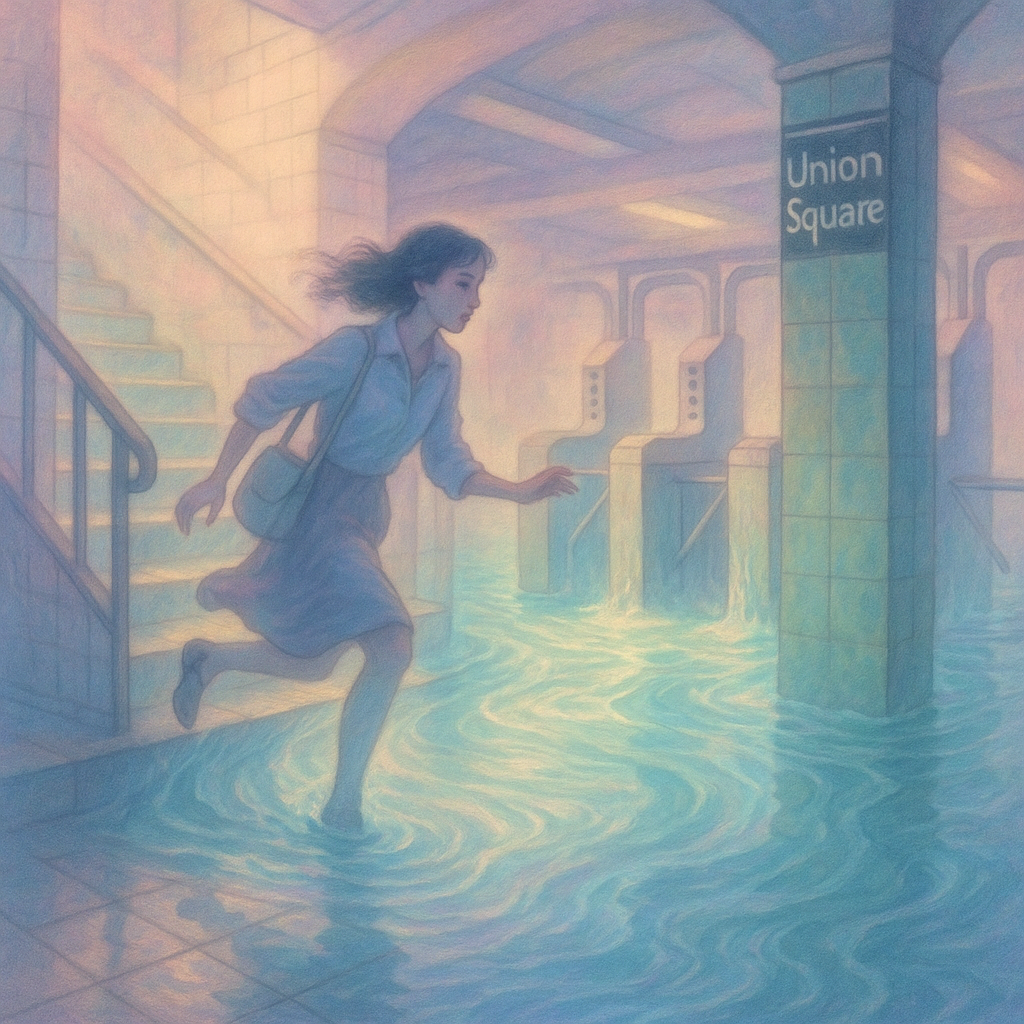
Last night I dreamed I was running late for work, trying to catch the subway at Union Square. When I got down the stairs, water was already pooling over the tiles, seeping out from under the turnstiles. I remember the metallic smell—almost like blood—and this weird humming echo from the tunnels. I wanted to turn back, but somehow I still swiped my MetroCard (which didn’t work, of course, even in the dream) and ducked under the bar. It got deeper fast, up past my ankles, dark and cold. I was clutching my lunch bag—the blue one I always use, even though the zipper’s broken. There were other people standing on benches or wading through the water, but no one looked at anyone else. I tried to call someone for help, but my phone kept slipping from my wet hands, and then the screen went black. That’s where it ended, I think.
Your Dream, Revealed
A calm, guided space to explore what this dream may be reflecting back to you.
Dream Overview
This dream unfolds in the familiar but unsettling setting of Union Square, layering the ordinary stress of running late with surreal and sensory disruptions. The initial rush to catch the subway is quickly upended by the unexpected presence of water flooding the station, with a metallic, almost bloody scent that sharply intensifies the atmosphere. The dreamer’s central tension is the urge to proceed toward work despite worsening obstacles and a growing sense of danger. Key symbols, such as the blue lunch bag with its broken zipper and the malfunctioning MetroCard, anchor the dreamer’s persistence and vulnerability within a world that refuses to cooperate. The inner conflict emerges most clearly as the dreamer chooses to go forward even when turning back seems logical, highlighting a complicated relationship with responsibility and personal boundaries. The presence of silent, disconnected commuters amplifies a sense of isolation within collective struggle. What makes this dream distinctive is the collision of routine and rupture—a daily commute made alien and threatening—forcing the dreamer to confront feelings that are usually submerged by habit.
The dream begins in a recognizable rush—running late for work, pushing through an everyday anxiety that is immediately relatable. This phase is marked by urgency and hope for normalcy as the dreamer heads down the subway stairs, intent on catching the train. The narrative shifts abruptly as water appears, flooding the familiar space and transforming it from a site of routine into one of crisis; the metallic scent and humming echo signal a transition from anxiety to dread.
As the water deepens, the dreamer’s actions become more desperate but also strangely resigned—swiping the MetroCard despite knowing it won’t work, then ducking under the turnstile. This middle phase is defined by a stubborn continuation in the face of rising chaos, with the lunch bag as a physical anchor to the everyday self. The presence of other commuters, silent and isolated, marks a third phase where connection is possible but unavailable, heightening the dreamer’s sense of being alone together in adversity.
The climax arrives with the failed attempt to summon help, the phone slipping and screen going black as the water closes in. Here, the narrative shifts from resistance to helplessness, with agency seeping away along with the last link to the outside world. The dream ends not with resolution but with interruption—a lingering uncertainty shaped by the blackout of communication and the unresolved threat.
Key Findings
• The act of swiping a MetroCard that doesn't work, yet proceeding anyway, reveals a pattern of pushing forward despite knowing systems are failing. • The pooling, metallic-smelling water rising quickly over the tiles signals a sudden, overwhelming emotional current that is both alarming and inescapable. • Holding onto the familiar blue lunch bag, even with its broken zipper, suggests a clinging to comfort or routine despite its inadequacy in crisis. • The inability to connect with others in the flooded station, paired with failed attempts to use the phone, highlights a deep fear of isolation when most in need. • The detail of the cold, dark water and echoing hum points to an undercurrent of dread—perhaps about what lies beneath surface routines.
Symbol Interpretation
Flooded Subway
Represents overwhelming, unprocessed emotions breaking through daily structure.
Broken-Zipper Blue Lunch Bag
Symbolizes holding onto personal comforts or old habits, even when they are no longer fully functional.
Malfunctioning MetroCard
Represents attempts to navigate life’s obstacles with tools or strategies that no longer suffice.
Other Commuters
Embodies the shared yet silent struggle, and the paradox of feeling alone in a crowd.
Humming Echo from Tunnels
Signals a background anxiety or warning—an atmosphere of unease that can’t be ignored.
Phone Slipping and Going Black
Represents the breakdown of communication and the fear of being unable to reach out in distress.
Emotional Landscape
The emotional core of the dream is a mix of urgency, dread, and a muted grief, first evinced by the dreamer’s rush to catch the subway. This urgency is quickly overtaken by a chilling wave of helplessness as the environment becomes hostile and unmanageable—the water is not just inconvenient but invasive and frightening, carrying the metallic, bloody smell that intensifies anxiety.
As the dreamer clings to the blue lunch bag, there is a palpable sense of seeking comfort from the familiar in the midst of chaos, but the broken zipper introduces a subtle note of futility. The presence of others should offer safety in numbers, yet their avoidance amplifies the dreamer’s loneliness, underscoring the pain of being unseen when most vulnerable.
The failed attempt to use the phone becomes a final, poignant moment of emotional collapse—the hope for rescue or connection slips away as the screen goes black. This ending evokes a sense of emotional exhaustion, as if the dreamer is left suspended in their own unmet need for support and recognition.
Psychological Insight
The dreamer’s persistence in pushing forward—swiping the MetroCard despite knowing it’s useless—hints at an ingrained drive to fulfill obligations even when circumstances are unworkable. There is a deep conflict between responsibility and self-preservation, visible in the choice to proceed rather than retreat as the water rises.
Holding onto the lunch bag, despite its brokenness, suggests a reluctance to let go of familiar routines or personal comforts, even when they are not truly protective. This may reflect a wider tendency to rely on habits or coping mechanisms that no longer serve the dreamer in moments of real crisis.
The lack of eye contact among the commuters and the inability to connect by phone point to a psychological fear of isolation—of being left to face overwhelming challenges alone. The dream gently but firmly confronts the dreamer with the reality that, in some situations, old solutions and silent endurance are not enough—there is a need to reimagine how to seek help or allow oneself to step back.
Spiritual Perspective
From a western spiritual perspective, the dream’s setting in a public, urban space reflects the intersection of collective experience and personal journey. The water’s rise through the subway may be seen as a symbolic escalation of emotional or spiritual unrest that cannot be contained by daily rituals or routines.
Within a spiritual framework, the failure of communication (the phone going black) can be interpreted as a moment of enforced stillness—an invitation, however uncomfortable, to turn inward when external solutions fail. The dream does not offer transcendence, but it does create a liminal space where the dreamer is called to witness their own vulnerability and longing for connection.
The metallic, blood-like scent is a stark reminder of embodiment and mortality, grounding the dream’s challenges in lived, sensory experience rather than purely abstract or mystical terms.
Integrative Insight
This dream weaves together the pressures of daily responsibility with the unpredictable floods of emotion that sometimes break through carefully maintained routines. The dreamer’s journey from urgency to helplessness highlights the limits of familiar strategies, especially when the world itself seems to resist order or connection. The recurring breakdowns—of the MetroCard, the lunch bag, the phone—invite a reckoning with the need to adapt and find new forms of support.
There is a confronting realization here: persistence alone cannot overcome all obstacles, and isolation in crisis is both a personal and collective wound. By placing the dreamer in a submerged, echoing station, the dream asks what must be released in order for genuine help and renewal to enter. The most memorable lesson: when the usual ways fail and the waters rise, it is time to reconsider how—and with whom—you move forward.
Reflection Questions
- When you pushed forward despite knowing the MetroCard wouldn't work, what fear or hope kept you moving instead of turning back?
- What does the blue lunch bag—with its broken zipper—represent for you in this season of your life, and why do you hold onto it even in crisis?
- How did you feel about the other commuters’ silence and lack of eye contact, and what does this reveal about your own needs for connection or support right now?