Dream of the broken elevator through a Islamic lens
Perspective: islamic
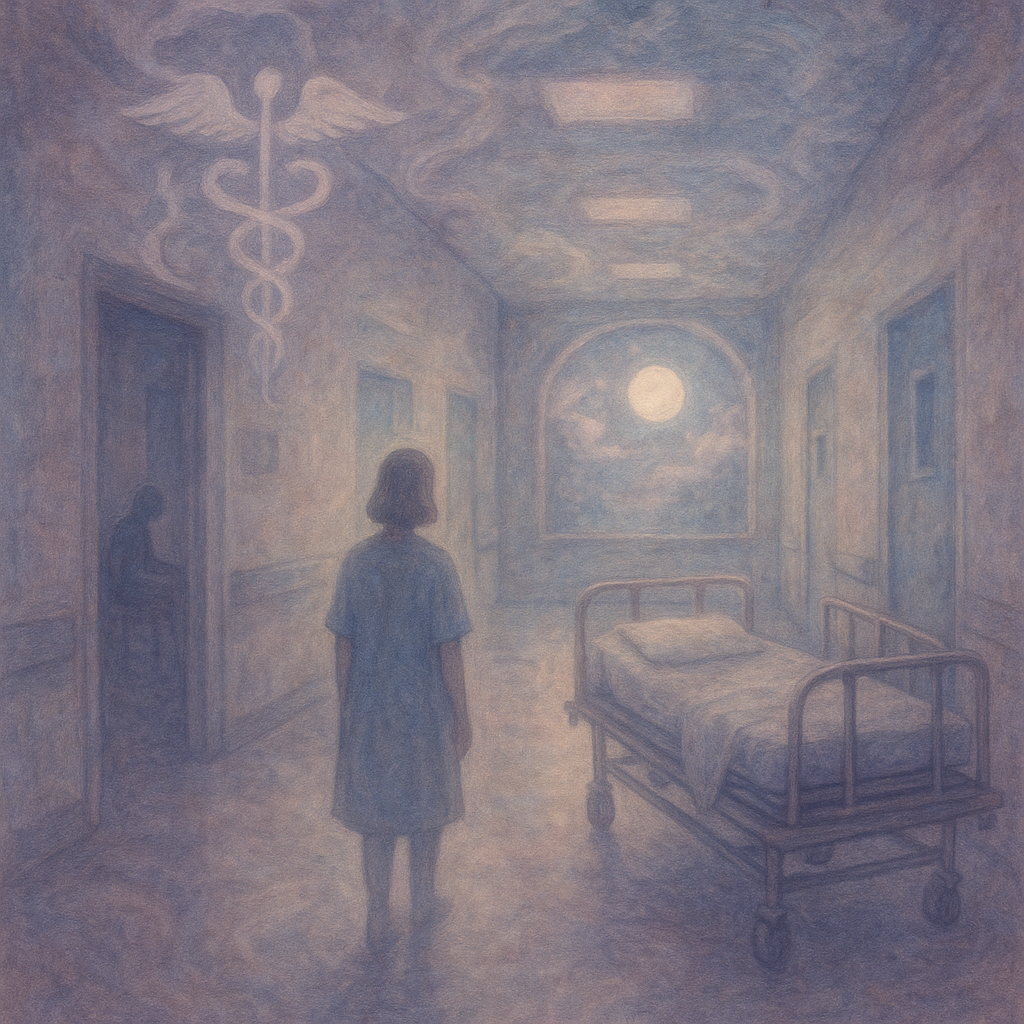
Your Dream
Last night I dreamed I was in a hospital, but not for any particular reason. I don’t remember being sick—just there, like maybe I worked there or was visiting someone. The place was kind of dim and smelled faintly of that overly clean, lemony stuff they use in public bathrooms. I had this thin plastic badge on a lanyard around my neck, and it kept flipping backwards so the picture faced my chest. I kept fussing with it while I looked for the elevator. When I found the elevator—just tucked in beside some vending machines—it was taped up with bright orange “OUT OF ORDER” signs, the kind with little cartoon lightning bolts. There was a crowd of people waiting anyway, like they didn’t believe it was really broken. I pressed the call button out of habit, and the doors opened about six inches, just enough to see the empty, echoey shaft inside. The air coming out was cold, and honestly, it smelled like metal and old socks. No one seemed shocked by this. Some lady with big purple glasses kept pressing the button and muttering, like maybe if she was stubborn enough, the elevator would magically work. I remember I glanced down at my hands and realized I was holding a bag of clementines—those little cuties in the netted bag, which I never actually buy in real life. I tried to give one to the lady, but she just shook her head without looking at me. I ended up peeling one while waiting, but the skin came off in tiny frustrating flakes, not in one nice spiral like it should. Eventually, I decided to take the stairs, but the dream kind of dissolved before I made it.
Your Dream, Revealed
A calm, guided space to explore what this dream may be reflecting back to you.
Dream Overview
This dream unfolds in the dim, sterile environment of a hospital, yet the dreamer lacks any sense of illness or clear purpose for being there, setting a tone of ambiguous belonging. The recurring struggle with the backward-facing badge introduces an undercurrent of identity uncertainty or a desire for recognition that goes unfulfilled. The elevator scene, with its bright orange warnings and skeptical crowd, captures a communal hopefulness tinged with denial, illustrating a collective reluctance to accept limitations. The dreamer’s attempt to offer a clementine—a fruit they never purchase in waking life—highlights a moment of quiet generosity that is quietly rebuffed, deepening the sense of disconnect. The act of peeling the fruit with difficulty adds a tactile frustration, suggesting small, persistent obstacles to satisfaction or ease. The absence of shock among the crowd at the broken elevator, and the eventual decision to take the stairs, point to a muted resignation and a private shift toward self-reliance. The subtle sensory details—the lemony cleaner, the metallic chill—root the dream in physicality, making every moment feel both mundane and unsettling. What makes this dream distinctive is how the ordinary is suffused with subtle resistance and a longing for movement, all experienced in a strangely communal, yet isolating, space.
The dream’s opening frames the dreamer in passive observation: present in the hospital, unsure of purpose, fussing with their badge and seeking direction. This passive tension crescendos at the elevator, where the crowd’s skepticism and ritual pressing of the button create an atmosphere of collective inertia and muted absurdity. The discovery of the clementines and the unsuccessful attempt to share them marks a subtle shift toward private, individualized action and an effort to bridge the emotional gap with others, which is quietly refused. Peeling the fruit, with its unsatisfying, fragmentary progress, becomes a small, embodied struggle—an inward turn as communal hope falters. The final decision to seek the stairs signals a movement away from group stasis toward solitary initiative, though the fading of the dream before reaching the stairs leaves resolution suspended, maintaining the dream’s core sense of unfulfilled transition.
Key Findings
• The badge that constantly flips backward reflects a struggle with self-presentation or being seen authentically. • The out-of-order elevator, despite clear warnings, draws a crowd unwilling to accept its dysfunction, suggesting shared denial or misplaced hope. • The attempt to give away a clementine, met with rejection, signals a desire for connection that goes unreciprocated. • Peeling the clementine in tiny flakes conveys frustration with small, repetitive obstacles that stymie progress. • The decision to take the stairs, even as the dream dissolves, marks a turn toward self-directed action after communal stasis.
Symbol Interpretation
Hospital
The hospital represents a space of ambiguity—neither belonging fully as patient, staff, nor visitor—mirroring feelings of liminality or being between defined roles.
Plastic Badge on Lanyard
This badge suggests a fragile or unstable sense of identity, especially in environments where roles are supposed to be clear.
Out-of-Order Elevator
The elevator stands for an anticipated but blocked means of progress or change, surrounded by collective denial.
Bag of Clementines
The clementines embody a wish for warmth and a simple gesture of kindness, met with frustration and rejection.
Woman with Purple Glasses
She symbolizes stubbornness and the persistence of hope in the face of obvious barriers, while also representing the closed-off responses of others.
Stairs
The stairs represent an alternative, perhaps more demanding, path to progress, chosen after communal options fail.
Emotional Landscape
A quiet frustration threads through the dream, present in the repeated adjustment of the badge and the uncooperative elevator, suggesting a persistent but muted desire to be recognized or to move forward. The dreamer’s generosity—offering a clementine to the woman—meets with indifference, deepening a sense of emotional invisibility. The tactile resistance of the clementine peel is a microcosm of the dream’s emotional landscape: effort met with unsatisfying results, echoing the blocked elevator and the ambiguous hospital role. There’s a communal numbness, too, as no one is surprised by the elevator’s emptiness, hinting at a shared resignation or avoidance of discomfort. The faint hope at the end—the decision to take the stairs—carries a subtle emotional risk, as if the dreamer is preparing to act alone in the absence of external validation.
Psychological Insight
The dreamer’s ambiguous role in the hospital, coupled with the elusive badge, points to a struggle with self-definition or the wish to be seen clearly in an environment of uncertain expectations. The crowd’s denial of the elevator’s dysfunction reflects a psychological tension between accepting uncomfortable truths and clinging to the hope that things might work out if only one tries harder. The act of giving away a clementine and being rejected suggests a yearning for reciprocal connection, yet the dreamer remains on the periphery of group dynamics, perhaps hesitant to assert needs more directly. The peeling process, slow and unsatisfying, mirrors a sense of being thwarted by the small frustrations of daily life—progress that doesn’t come easily or cleanly. The unresolved climb toward the stairs may signal a readiness to take personal responsibility, even if the outcome is unclear, rather than waiting for collective solutions that never arrive.
Spiritual Perspective
From a Middle Eastern and Islamic context, hospitals can evoke themes of fate, healing, and the fragility of human effort before God’s will. The lack of sickness and the absence of clear purpose in the hospital may subtly echo the idea of being tested in unexpected ways, where one’s role and intentions are not always transparent. The dreamer’s act of offering fruit—a gesture of sadaqah (charity)—is met not with gratitude but with silent refusal, perhaps reflecting an unspoken lesson about the limits of human control and the importance of sincere intention regardless of outcome. The persistent waiting for a broken elevator, despite clear signs, could be read as a communal reluctance to accept qadar (destiny), pressing onward in hope even when an alternative path (the stairs) is available but demands more effort and personal resolve.
Integrative Insight
This dream distills a moment in which the dreamer finds themselves in a liminal, in-between space—recognized neither as patient, visitor, nor staff, marked by a badge that refuses to display their identity. Their willingness to reach out, through the simple act of sharing fruit, is met with indifference, intensifying a sense of isolation even in a crowd. The failed elevator, and the crowd’s denial, mirror moments in life when obvious obstacles are ignored and hope is invested in futile efforts, while the quiet decision to take the stairs signals a hard, necessary turn toward personal agency. Beneath the surface, this dream gently confronts the dreamer with the question of whether they are waiting for permission from others to move forward, or whether they are prepared to claim their own direction. Sometimes, the hardest step is not peeling away the obstacles, but walking away from a broken system entirely.
Reflection Questions
- When have you felt, in waking life, that your true identity or role was hidden or overlooked—like your badge flipping backward in the dream?
- What situations have you encountered where you, or those around you, kept waiting for a solution that you knew deep down was not coming, as with the elevator crowd?
- How do you respond when your efforts to connect or help—like offering the clementine—are quietly refused or ignored?