Christian reflections on a dream about the mirror that shows someone else
Perspective: christian
Your Dream
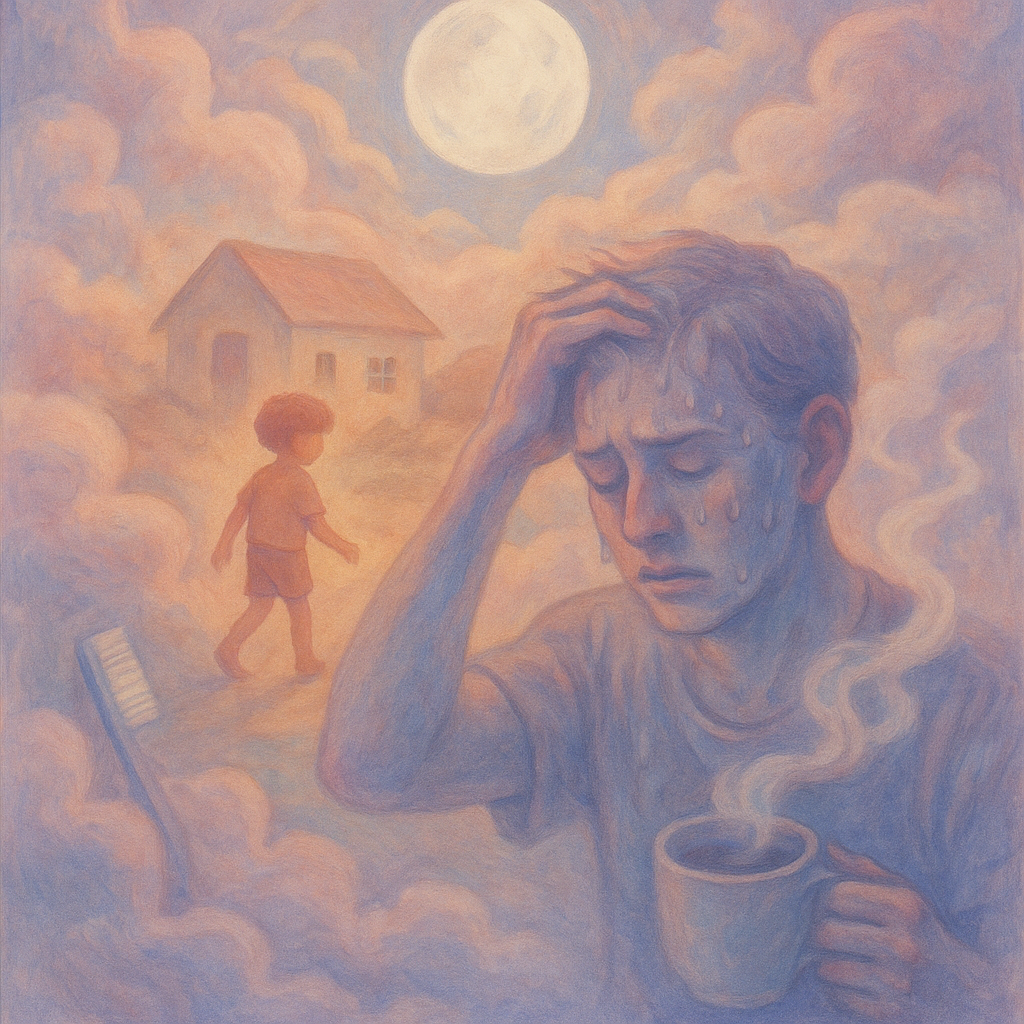
I woke up sweating this morning, the dream felt so much more real than usual—it’s still echoing in my mind, even though I already brushed my teeth and made coffee. In the dream, I was back in my childhood house, the one with the rough beige carpets and that weird humming refrigerator in the kitchen. It was night. I remember the window in the hallway looked completely black, no reflection at all, just a void. There was a big, gold-framed mirror on the wall between the bathroom and my old bedroom. That mirror isn’t actually there in real life, but in the dream it fit so perfectly that I didn’t question it. I remember needing to check if I still had toothpaste on my face, for some reason, maybe because I’d just brushed my teeth before bed in reality. I looked in the mirror and at first I just saw the usual—a tired version of myself in a crumpled gray t-shirt. But as I leaned closer, rubbing my cheek, my expression stayed still. It should have moved with me, but it didn’t. My own reflection’s eyes weren’t mine; they were hazel, not dark brown, and the hair was a little lighter and shaggier. It was subtle, almost easy to miss, except it felt completely wrong. I blinked, expecting it to reset, but the person in the mirror just stared back, mouthing something I couldn’t hear. For a second I thought maybe it was my cousin, or someone I’d seen on the street recently—sometimes my brain pulls random faces and I just go along with it. The bathroom light above the mirror hummed faintly and the glass felt cold when I touched it with my fingertips, like it had been left outside overnight. Suddenly, behind the mirror-person, my mother appeared—she looked younger, wearing the blue sweater she used to favor in the late nineties. She smiled, but in that way where you know she’s about to scold you for leaving crumbs on the couch. The dream ended when I tried to speak, but my voice came out sounding like someone else’s, deep and unfamiliar. I woke up with my heart racing, convinced for a second that I’d see that stranger reflected in my bathroom mirror.
Your Dream, Revealed
A calm, guided space to explore what this dream may be reflecting back to you.
Dream Overview
This dream revisits the childhood home, layering memory with the unsettling new presence of the gold-framed mirror and the void-like black window. The emotional tone is one of acute unease, heightened by the sweat and racing heart upon waking, as if the dreamer’s body recognizes something deeply unresolved. Central tension builds around the shifting identity in the mirror, where the familiar self is replaced by a subtle but unmistakable stranger. The humming appliances and cold glass create a sensory immediacy, reinforcing the realism that lingers into waking life. The appearance of the dreamer’s mother, younger and poised between warmth and reproach, introduces a second axis of memory and judgment. The inability to speak with one’s own voice at the end of the dream signals a fracture in self-recognition and agency. What makes this dream distinctive is its slow, methodical layering of distortions onto the ordinary—turning the most familiar spaces and faces into sources of quiet dread.
The dream unfolds in phases, beginning with the dreamer’s return to their childhood home, where sensory details evoke a foundation of comfort and familiarity. This quickly turns as the dreamer’s attention is pulled to the newly-appeared gold-framed mirror, a subtle but crucial disruption to the known environment. The act of checking for toothpaste—an ordinary, almost silly concern—grounds the dream in present-day habits, yet what follows is a chilling shift: the mirror’s reflection resists the dreamer’s control, its changes nearly imperceptible but deeply disquieting. Tension peaks as the reflection mouths silent words, amplifying a sense of isolation and uncertainty. The dream’s final phase introduces the dreamer’s mother, whose presence brings both nostalgia and apprehension, and culminates in the loss of the dreamer’s own voice—ending the sequence with a jolt of existential estrangement.
Key Findings
• The mirror’s reflection subtly morphs into a stranger, evoking anxiety about authenticity and self-perception. • The childhood home—especially the rough carpets and humming fridge—anchors the dream in early formative experiences. • The mother’s appearance, younger and about to scold, signals unresolved feelings around parental approval and childhood mistakes. • The black, empty window stands out as an absence of reflection or perspective, suggesting uncertainty about what lies beyond the self. • Losing one’s voice at the end of the dream crystallizes a fear of being unable to express true identity.
Symbol Interpretation
Gold-framed mirror
This mirror is a threshold between self-recognition and self-doubt, inviting scrutiny and discomfort rather than reassurance.
Altered reflection
This figure embodies the fear of losing touch with one’s core self or becoming unrecognizable even in private moments.
Childhood home
The house stands for foundational aspects of identity and the weight of past experiences still echoing into adulthood.
Black window
The window’s void hints at the unknown or repressed aspects of self that remain inaccessible, even as the dreamer seeks clarity.
Mother in blue sweater
Her presence suggests that the dreamer’s self-perception is still partly shaped by memories of parental judgment or affection.
Unfamiliar voice
This symbolizes a loss of agency or fear of being overtaken by an unfamiliar identity.
Emotional Landscape
The dream’s emotional core is a blend of nostalgia, anxiety, and a subtle, creeping dread. The initial warmth of revisiting a childhood space is undermined by the off-kilter presence of the mirror and the black window, which inject a note of alienation. Anxiety mounts as the dreamer’s own reflection becomes subtly but unshakably wrong, triggering a fear that something essential has shifted beyond repair. The arrival of the mother, both comforting and critical, layers in an old ache for approval, tinged with the shame of remembered childhood transgressions. The final emotional rupture comes with the loss of voice—a moment of profound vulnerability, as if the dreamer’s ability to assert their own reality has been stripped away.
Psychological Insight
This dream lays bare a conflict between the desire for self-understanding and the fear of what may be discovered. The dreamer’s attempt to confirm something trivial (toothpaste on the face) becomes a pretext for a deeper confrontation with self-image—one that quickly spirals out of control. The altered reflection and the black window both hint at aspects of the self that feel inaccessible, alien, or even threatening. The mother’s return, younger and poised to scold, suggests an internalized voice of judgment that still colors the dreamer’s self-assessment, even in adulthood. The inability to speak with one’s own voice marks the point where internal confusion becomes externalized, leaving the dreamer momentarily adrift between competing versions of self.
Spiritual Perspective
Given the Christian context, the dream’s tension between recognition and estrangement may echo themes of self-examination and spiritual accountability. The mirror, in this light, is not just a literal object but also a metaphor for the ‘examined life’—a call to reflect honestly on one’s true self, even when it feels uncomfortable or alien. The mother’s presence, familiar yet tinged with judgment, can be seen as a reminder of the ways parental (and perhaps divine) expectations shape the dreamer’s conscience. The inability to speak with one’s own voice might resonate as a fear of losing the clarity or authenticity of one’s witness, or feeling out of step with the self God knows and loves.
Integrative Insight
Bringing these threads together, this dream reveals a poignant struggle: the desire to return to the safety of childhood certainty clashes with an adult awareness that the self has changed—sometimes in ways that feel strange or even unwelcome. The altered reflection, the black window, and the unfamiliar voice all point toward a season of questioning: who am I, really, when I look past habit and memory? The presence of the mother crystallizes the tension between seeking approval and fearing reproach, suggesting that old patterns of self-judgment still have power. Ultimately, this dream invites the dreamer to accept the discomfort of growth, even when it means meeting a stranger in the mirror. Sometimes, the process of recognizing yourself requires walking through the uneasy spaces where memory, identity, and expectation collide.
Reflection Questions
- When you think about the stranger in the mirror, what recent changes or choices in your life come to mind—especially those that feel both subtle and unsettling?
- How does your mother’s younger, familiar-yet-critical presence in the dream echo ways you still seek approval or brace for judgment, even in small daily habits?
- What do you imagine lies beyond the black window’s void, and how might facing that unknown part of yourself challenge or free you?