Buddhist reflections on a dream about the broken elevator
Perspective: buddhist
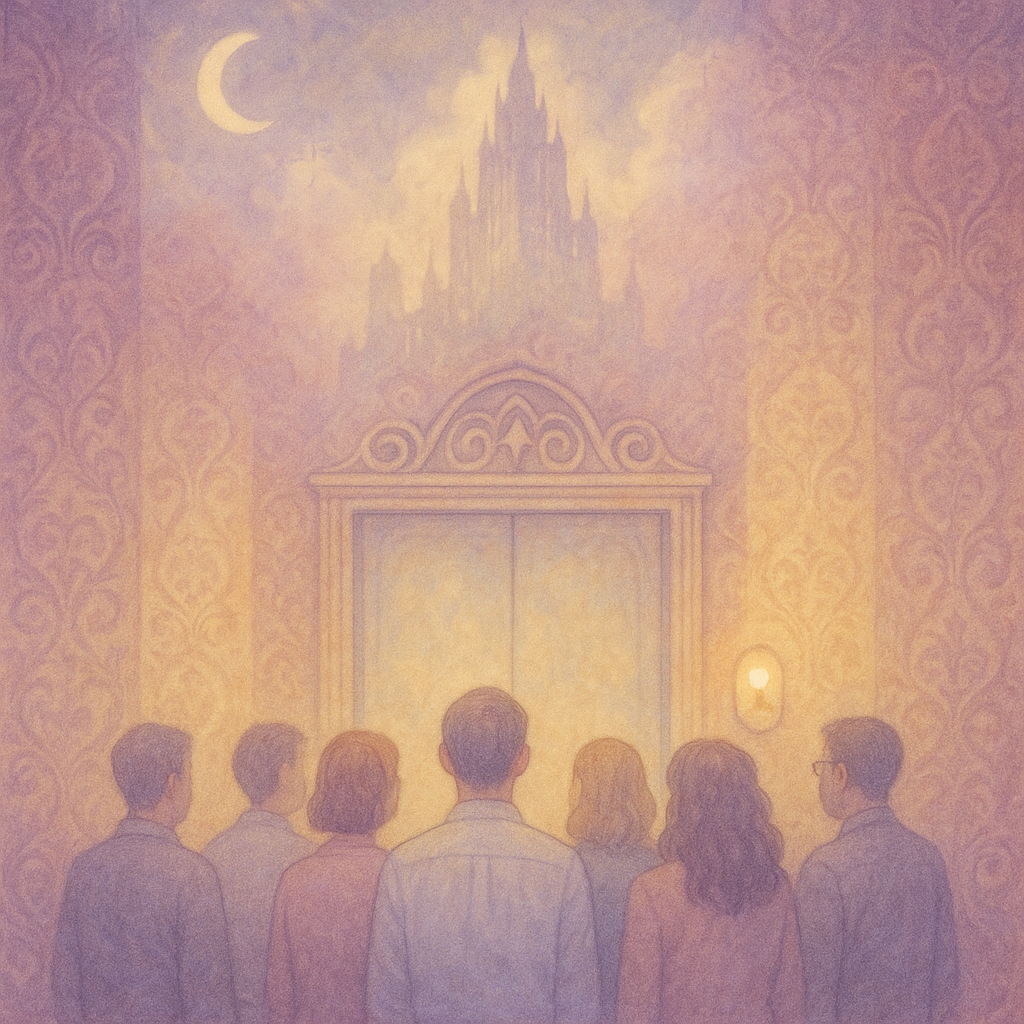
Your Dream
I’m waiting for the elevator with a bunch of people from work, even though the building is much taller and grander than our real office—I think we’re in some old hotel with velvet wallpaper, yellow with age. There’s background noise, indistinct chatter, a cough, the electric hum of lights overhead. The elevator arrives and the doors jerk open. It makes a clanging noise I feel in my teeth. Everyone pushes in, too many of us, and I get squeezed right against the metal rail, someone’s shoulder pressed tightly against mine. The buttons inside are glowy and red, not numbers but odd little symbols—maybe astrological signs, or something from a video game. I hesitate, then push the one that looks like a triangle. The doors close and nothing happens. The air thickens. Someone sighs. Suddenly, the elevator lurches upward a few inches, then shudders to a stop so violently I almost lose my grip on the rail. There’s a weird scraping noise from somewhere below, like metal dragging on stone. I can smell sweat, cheap cologne, and a faint scent of vending machine coffee—a detail that’s odd, because I don’t think anyone is holding a cup. Someone tries pressing more buttons, but the light on the panel just flickers and dies. I notice a guy next to me digging in his pocket, pulling out a half-eaten granola bar, and I have an urge to laugh at how normal and small that is, but my mouth is dry. There’s a murmured argument about whether we should push the call button or bang on the door. After a while the lights begin to flicker, and I remember I’ve left something important in the break room (my phone charger, I think, though it might be my lunch, wrapped in tinfoil). The elevator starts to feel uncomfortably hot. I keep thinking: this shouldn’t happen, not in this building, not with all these people. I feel embarrassed, even though I haven’t done anything wrong—like someone’s going to blame me for choosing the wrong floor. The dream blurs here and I’m never sure, waking up, if the doors ever open again.
Your Dream, Revealed
A calm, guided space to explore what this dream may be reflecting back to you.
Dream Overview
This dream unfolds in a heightened version of a familiar work environment, transposed into the surreal grandeur of an aged hotel with velvet wallpaper, hinting at both nostalgia and unease. The emotional tone is tense and claustrophobic, intensified by the crowding of coworkers and the sensory overload: the electric hum, clanging elevator, and mingled scents. Central tension arises from the elevator’s malfunction and the ambiguous, glowing symbols on its panel, which replace familiar numbers with a cryptic code. There is a palpable inner conflict between the urge to act—pressing the triangle button—and the fear of blame or making a mistake in front of colleagues. The moment of almost-laughter at the granola bar, quickly stifled by dryness and embarrassment, underscores an acute awareness of vulnerability and social expectation. This dream stands out for its blend of the mundane (office personalities, vending machine coffee) and the bizarre (an elevator that refuses to function, a building that seems both old and impossibly tall), creating a liminal space where everyday anxieties are amplified. The persistent feeling that "this shouldn’t happen" in such a grand setting points to a deeper struggle with perceived competence and responsibility. The unresolved ending—never knowing if the doors open—leaves a residue of uncertainty, mirroring the dreamer’s ambivalence about agency and escape.
The dream’s opening is marked by anticipation and unease: waiting for the elevator in a space that is both familiar (coworkers) and unsettlingly ornate (aged hotel). The arrival of the elevator introduces a jarring sensory shift—the metallic noise, the crowding—and escalates the emotional intensity. Inside the elevator, the dreamer’s hesitation at the panel crystallizes the central conflict: the pressure to act with uncertainty about consequences. As the elevator lurches, stalls, and the air thickens, the narrative shifts from anticipation to crisis, with small details (the granola bar, the smell of coffee) punctuating the growing sense of absurdity. The dream’s final phase is marked by a blurring of time and agency—the lights flicker, heat rises, and the dreamer’s thoughts spiral around blame, embarrassment, and the unreachable object left behind, culminating in an unresolved sense of stasis.
Key Findings
• The dreamer’s sense of responsibility is heightened by the ambiguous elevator buttons, suggesting anxiety about decision-making in unfamiliar situations. • Physical sensations—the clanging noise, heat, and crowding—intensify feelings of being trapped and scrutinized among peers. • The abnormal setting (a grand old hotel instead of the actual office) amplifies feelings of displacement and self-consciousness. • Small, mundane details like the granola bar and missing charger stand out sharply, providing brief, almost absurd relief from the underlying tension. • Lingering embarrassment and fear of blame, despite inaction, reflect a deeper pattern of self-monitoring and anticipation of judgment.
Symbol Interpretation
Elevator
It embodies the dreamer’s experience of progress being stalled in a collective setting, under pressure to perform or choose correctly.
Glowing, Symbolic Buttons
They represent unfamiliar challenges or decisions, where the rules are unclear and there is fear of making a misstep.
Crowded Coworkers
The presence of colleagues under stress becomes a source of discomfort, reflecting social anxiety and hyperawareness of others’ perceptions.
Hotel with Velvet Wallpaper
This setting evokes a sense of faded grandeur and unfamiliarity, hinting at nostalgia or the pressure of living up to expectations.
Granola Bar
This small, ordinary object becomes an anchor to reality, but also highlights the absurdity and stress of the situation.
Missing Phone Charger or Lunch
This forgotten object stands for worry about unfinished business or lost resources, and a fear that something vital is inaccessible.
Emotional Landscape
The predominant emotion is a tense self-consciousness, beginning with the crowding at the elevator and intensifying with each sensory intrusion—the clang, the press of bodies, the thickening air. Embarrassment surfaces unexpectedly, not because of any action, but from the mere possibility of being blamed for choosing the wrong symbol—a subtle, persistent anxiety about being seen as responsible for group discomfort. There is a fleeting, almost comic relief in the sight of the granola bar, but it is quickly overtaken by the dryness of the dreamer’s mouth, signaling how even moments of levity are stifled by the situation’s pressure. The remembered loss of the charger or lunch introduces a thread of regret and distraction, suggesting that the dreamer’s mind seeks escape or solace in small, concrete concerns when overwhelmed. The unresolved ending leaves a residue of vulnerability and unspoken longing for resolution, echoing the dreamer’s real-life uncertainty about being able to find a way out or be understood.
Psychological Insight
The dreamer appears caught between a desire for agency—choosing a button, considering action—and a paralytic worry about making the wrong choice in front of others. The lack of familiar cues (numbers replaced by symbols) intensifies a fear of failure in a setting where competence is expected but the rules are obscure. The crowd of coworkers amplifies the sense of scrutiny, turning what might be a private dilemma into a public ordeal, and the dreamer’s internalization of blame hints at a longstanding habit of self-monitoring. The urge to laugh at the granola bar, almost immediately quashed, suggests that the dreamer craves moments of authenticity or relief but feels constrained by the environment. The lingering questions about forgotten objects reflect a mind that retreats to manageable, tangible worries when faced with larger, ambiguous threats—a form of psychological self-soothing that doesn’t resolve the underlying tension.
Spiritual Perspective
From a Buddhist perspective, the entire dream is saturated with dukkha—the pervasive dissatisfaction and discomfort inherent in ordinary life. The elevator’s stasis, the oppressive heat, and the unresolved escape reflect the mind’s habitual struggle to find control and certainty, and its suffering when these are denied. The ambiguous symbols and the grand, decaying hotel evoke the illusory nature of fixed meaning and permanence, inviting reflection on the tendency to grasp at clarity where none exists. The moment of almost-laughter at the granola bar, and the fixation on lost objects, can be seen as fleeting reminders of mindfulness: small, vivid experiences that arise amid confusion, pointing to the possibility of presence even in discomfort.
Integrative Insight
Layered beneath the dream’s tension and embarrassment is a poignant recognition of how the search for certainty—whether in pressing the right button, not being blamed, or retrieving lost objects—often leads to suffering when the world refuses to cooperate. The interplay between the grand, unfamiliar setting and ordinary workplace anxieties reveals how the mind magnifies both the importance of its decisions and the fear of being exposed. Yet, in the midst of discomfort, the dream offers flashes of humor and ordinary detail, reminding the dreamer that even in stasis or confusion, the present moment is alive with sensation and complexity. The unresolved ending is not just a source of anxiety, but also an invitation to accept uncertainty as part of the journey. Sometimes, the most honest answer is not knowing whether the doors ever open.
Reflection Questions
- When you hesitated before pressing the triangle symbol, what was the exact thought or fear that held you back, and how does this resemble moments of indecision in your waking life?
- What feelings arose when you noticed the granola bar and felt the urge to laugh—was this a moment of relief, discomfort, or both, and what does it reveal about your need for normalcy during stressful times?
- As the lights flickered and the heat rose, your mind returned to the forgotten object in the break room—what does this detail suggest about where your attention goes when you feel trapped or powerless?