A Islamic take on the dream of the quiet hospital corridor
Perspective: islamic
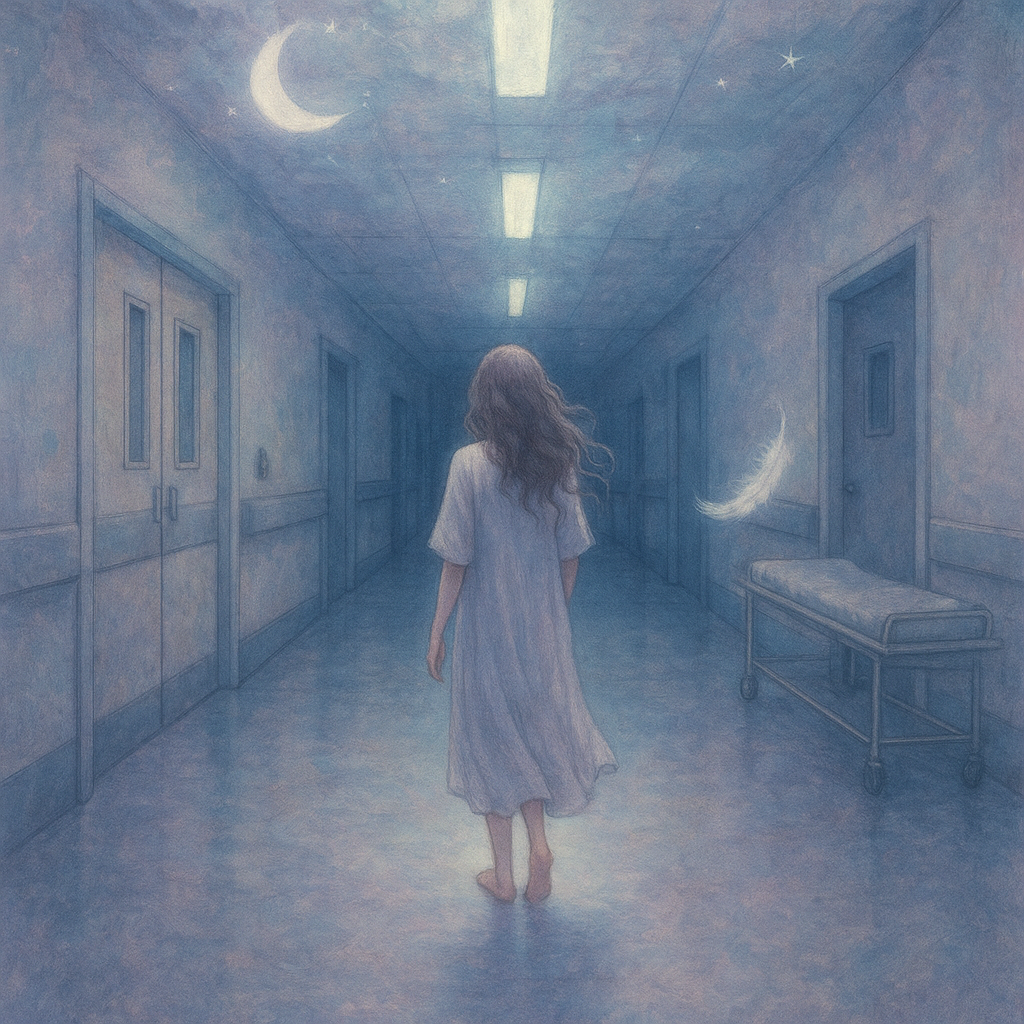
Your Dream
I dreamt I was wandering a hospital corridor late at night, barefoot for some reason, the cool linoleum numb beneath my feet. Everything was quiet except for the faint hum of fluorescent lights overhead and the slow beep of a monitor drifting from a distant room. The walls were a dull off-white with scuff marks at ankle height, like someone had dragged heavy equipment along them. I kept passing empty rooms, the doors open just enough to glimpse tangled sheets or stacks of plastic water pitchers—like the kind I used to use after my wisdom teeth surgery, oddly enough. Somehow, I understood I was looking for someone, though I don’t remember who. My throat felt tight, anxious, but my body moved as if in syrup, slow and heavy. When I finally heard footsteps behind me, I turned, but woke up before seeing anyone.
Your Dream, Revealed
A calm, guided space to explore what this dream may be reflecting back to you.
Dream Overview
This dream unfolds in a deserted hospital corridor at night, setting a stage of sterile unease and liminality. The barefoot wandering, with the sensation of numb linoleum, introduces vulnerability and a disconnect from comfort or protection. The faint hum of fluorescent lights and the slow beep of a monitor emphasize a mechanical, almost suspended atmosphere, amplifying the sense of being in-between states. Passing empty rooms with glimpses of tangled sheets and water pitchers evokes memories of personal vulnerability, specifically linked to a time of physical recovery. The central tension is the search for an unidentified person, underscored by the dreamer's anxious throat and syrupy movement, suggesting both urgency and paralysis. The scuffed walls hint at a history of others' burdens dragged through the same space, deepening the feeling of collective but unspoken suffering. The moment of hearing footsteps behind, followed by abrupt waking, crystallizes the unresolved longing and fear of what—or who—might be pursued or avoided. The distinctiveness lies in how the dream merges personal medical memory with existential searching, rendered in sensory detail and a quietly pressing atmosphere.
The dream begins with a sensory immersion: the dreamer is immediately aware of being barefoot, the texture of the corridor floor, and the silence broken only by mechanical sounds. This establishes a slow, almost suspended momentum that colors the rest of the experience. As the dreamer wanders, the landscape is repetitive yet charged: empty rooms, glimpses of objects from the past, and a growing awareness of searching for someone undefined. This phase is marked by increasing internal tension, as the environment remains static while the dreamer's anxiety grows. The narrative shifts with the approach of footsteps behind, introducing a moment of sudden suspense and possibility. The dreamer turns, ready to confront or discover, but awakens at the climax, leaving the search unresolved and the presence unseen. Each phase deepens the sense of waiting, searching, and nearing a threshold that remains just out of reach.
Key Findings
• Bare feet on cold linoleum signal a raw exposure and lack of preparation for the environment. • Empty rooms with tangled sheets and water pitchers link current searching to a past experience of physical recovery. • The search for an unknown person suggests unresolved longing or unfinished business. • Scuff marks and distant beeping monitor hint at the presence and suffering of others, even in absence. • Waking upon hearing footsteps behind encodes both anticipation and avoidance of confrontation.
Symbol Interpretation
Bare feet
A state of exposure and unshielded vulnerability, perhaps feeling unready or unguarded in confronting inner issues.
Hospital corridor
A transitional space often associated with healing, uncertainty, and waiting, reflecting the dreamer's in-between emotional state.
Tangled sheets and water pitchers
Echoes of past vulnerability, illness, or recovery—memory embedded in objects that signify prior helplessness.
Scuff marks at ankle height
Residual traces of previous struggles—other people's burdens—suggesting the dreamer is not alone in difficulty.
Footsteps behind
A presence both sought and feared; unresolved matters or emotions that are catching up.
Emotional Landscape
The initial sensation of cold, numb linoleum under bare feet highlights a raw, physical vulnerability that mirrors a deeper emotional exposure. The silence and faint, distant noises evoke a feeling of isolation, underscoring the dreamer’s sense of being singular in their struggle. Passing through empty rooms with tangled sheets and water pitchers introduces nostalgia tinged with discomfort, as these objects recall a time of dependency and healing. The anxiety tightens in the dreamer’s throat, signaling an internalized fear or anticipation that is not fully articulated. The final jolt of hearing footsteps behind elicits a subtle dread mixed with hope—the possibility of connection or confrontation that is so intense it interrupts sleep. The emotional current throughout is one of quiet desperation, underscored by the weight of unfinished business and a longing that remains unnamed.
Psychological Insight
The act of wandering barefoot in a hospital at night can reflect a grappling with unresolved issues, where the dreamer feels exposed and unprotected. The search for an unknown person suggests a psychological quest for understanding or reconciliation, but the vagueness of the search target may indicate avoidance or repression of what truly needs confronting. The recurring presence of objects from a past medical experience suggests lingering attachment to vulnerability, perhaps a reluctance to move fully beyond a period of dependency or weakness. The syrupy, slowed movement mirrors internal resistance—progress is desired but feels physically and emotionally taxing. The appearance of footsteps just at the moment of turning hints at an unconscious awareness that whatever is being avoided is catching up, yet the abrupt awakening allows the dreamer to postpone facing it directly. There is a tension between wanting resolution and the fear of what true confrontation might reveal.
Spiritual Perspective
Within an Islamic context, hospitals can symbolize places of both physical and spiritual healing, as well as the liminal space between illness and recovery—a time often accompanied by increased prayer and reflection. The act of searching for someone unnamed in such a space might echo the Qur’anic theme of seeking guidance or reunion, not just with others, but with parts of oneself or with God. The silence, emptiness, and the presence of burdens left by others could be seen as an invitation to consider one's own burdens, the importance of trust (tawakkul), and the humility of not knowing all outcomes. While the dream stops short of a direct encounter, the pursuit itself can be interpreted as a sign of the soul’s restlessness and yearning for resolution or forgiveness.
Integrative Insight
Bringing these threads together, the dreamer’s night journey through the hospital corridor becomes a portrait of searching for wholeness amidst uncertainty and remembered vulnerability. The unresolved nature of the search, paired with the sensory detail of exposure and the echoes of past recovery, suggests that what haunts the dreamer is not simply the absence of another, but an unspoken aspect of the self awaiting acknowledgment. The dream’s sudden end at the moment of possible confrontation is both a protection and a challenge: it preserves the comfort of the unknown while inviting the dreamer to consider what might happen if they kept looking. All that is left unsaid in the dream rings more loudly than the footsteps—the real question is not whom you seek, but what you are not yet ready to face.
Reflection Questions
- When you recall the sensation of walking barefoot on the cold hospital floor, what real-life situations make you feel similarly exposed or unprepared?
- Which memories or unresolved feelings are tied to the objects you glimpsed in the empty rooms—especially the water pitchers from your surgery?
- What do you imagine you might have seen or felt if you had turned to face the footsteps rather than waking up?