A Islamic take on the dream of the lost suitcase
Perspective: islamic
Your Dream
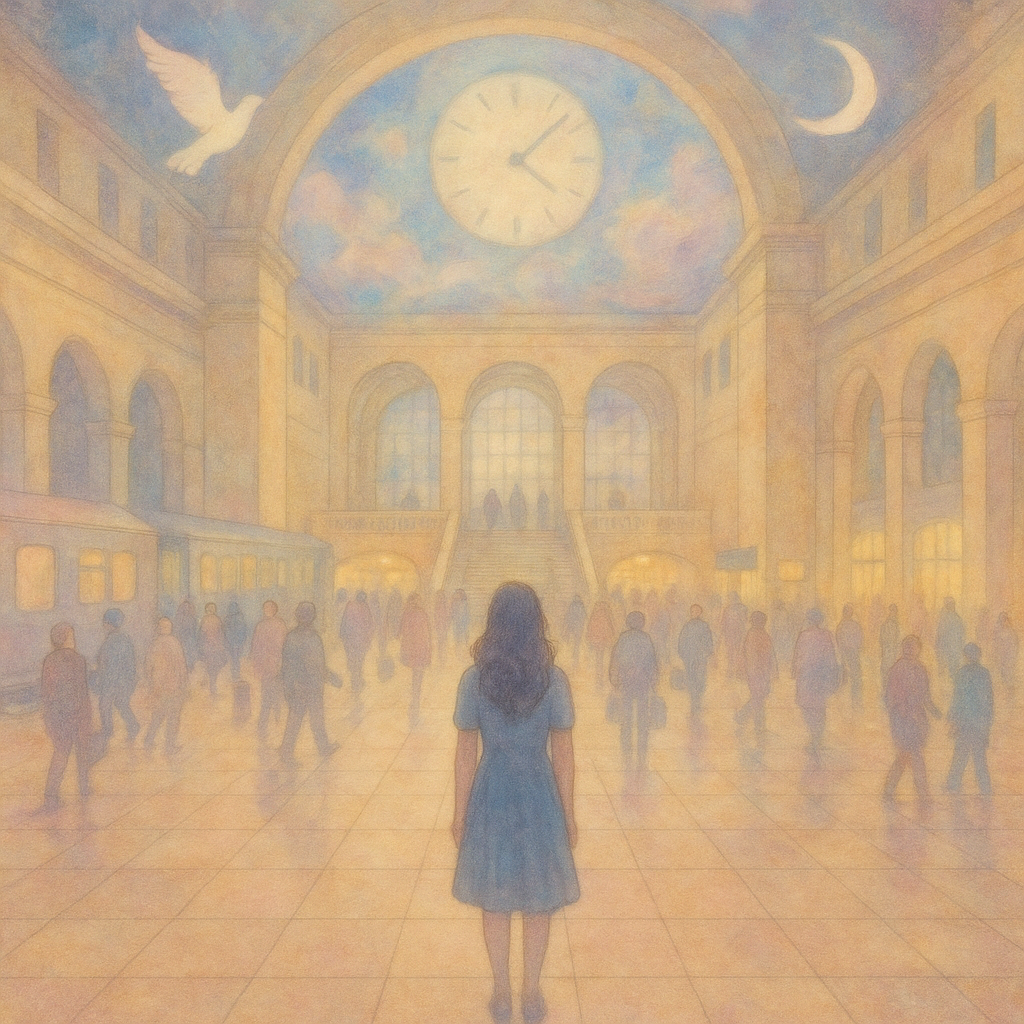
I found myself in a strangely busy train station—maybe it was Union Station in Toronto, but it also kind of looked like the inside of a mall from my childhood. I remember a sort of beige tile everywhere, very shiny under the harsh lighting, and escalators leading up to nowhere I could see. The crowds kept flowing past me, all in coats and boots, and I was clutching my old blue suitcase, the one with the cheap plastic handle that always sticks. I could feel that knot in my stomach you get when you’re running late. I knew, somehow, that I was supposed to make a connection to another city—maybe Montreal? I’d been looking forward to this trip for weeks, but the place was a maze, and every sign was in some language I didn’t quite recognize. At one point, I had to fumble through my pockets for my phone to check the time, but the phone just showed a spinning hourglass and wouldn’t unlock. Frustrated, I set the suitcase down beside a vending machine—one of those old ones with the big metal spirals that push out bags of chips. I decided to get a packet of peanut M&Ms (honestly, I hadn’t had those in ages), but the machine ate my twoonie and flashed some error code. I turned to complain to the attendant, but there was no one at the little glass booth, just an empty coffee cup and a flyer for some band I’d never heard of. When I looked back, the suitcase was gone. My heart dropped; I searched all around the vending machines, under the benches, even down by the sticky floor tiles by the newsstand. People brushed past me, annoyed, like I was in their way. I remember feeling embarrassed, but mostly just frantic and helpless, because all my stuff—my clothes, my charger, my toothbrush—was gone, and I had no idea how I’d get where I was going without it. I woke up feeling weirdly sad and sort of shaky, like I’d actually lost something real.
Your Dream, Revealed
A calm, guided space to explore what this dream may be reflecting back to you.
Dream Overview
This dream unfolds within a hybrid train station—part Union Station, part childhood mall—where the familiar blends uneasily with the unknown. The emotional tone is charged with urgency and nostalgia, as the dreamer is both eager to depart and stymied by confusion and loss. The core tension arises from the need to reach a long-awaited destination, undermined by a labyrinthine setting and uncooperative technology. Key symbols like the blue suitcase, malfunctioning phone, and empty attendant’s booth anchor the dream’s feeling of vulnerability and disconnection. There is a persistent inner conflict between self-sufficiency and the need for help, highlighted by the absent attendant and the vanished suitcase. The crowd’s indifference intensifies the sense of isolation, while the detail of the sticky floor tiles and error-ridden vending machine root the dream in sensory immediacy. What makes this dream distinctive is how it entwines longing for movement with a subtle fear that the means to continue—both practical and emotional—can slip away without warning.
The dream’s opening situates the dreamer in a space that is at once familiar and alien, immediately establishing a tension between comfort and unease. The first phase involves scanning the busy environment, feeling the pressure of the passing crowds and the weight of the suitcase, with physical sensations (the knot in the stomach) underscoring the emotional stakes. As the dreamer attempts to orient themselves—fumbling for a phone that won’t cooperate—the frustration deepens, and the environment becomes more confusing as signs are unreadable and escalators lead to nowhere. The narrative pivots at the vending machine, where a minor setback (machine eats the coin) coincides with the moment the suitcase is set down, creating a vulnerability that is soon realized. The final phase is marked by frantic searching, escalating from embarrassment to helplessness, as the dreamer confronts both the indifference of the crowd and the total loss of their belongings, culminating in an emotional release that lingers upon waking.
Key Findings
• The blending of Union Station and a childhood mall suggests the dreamer is navigating between past comfort and adult responsibility. • The blue suitcase, with its sticky handle, serves as a tangible link to the dreamer’s personal history and vulnerabilities. • The phone’s refusal to unlock at a crucial moment mirrors the dreamer’s anxiety about losing control in unfamiliar situations. • The absent attendant and empty booth highlight a yearning for guidance or reassurance that goes unmet. • The loss of the suitcase crystallizes a fear of being left without essential supports, provoking both embarrassment and helplessness.
Symbol Interpretation
Hybrid Station (Union Station/mall)
This fusion reflects the dreamer’s liminal state—caught between old sources of comfort and the demands of current transitions.
Blue Suitcase with Sticking Handle
The suitcase represents the dreamer’s practical and emotional baggage, including vulnerabilities that hinder smooth progress.
Spinning Hourglass Phone
This faulty phone encapsulates frustration with tools or strategies that fail under pressure, intensifying a sense of being cut off from support.
Vending Machine
The vending machine symbolizes attempts to gain small comforts or rewards that are thwarted, reinforcing the theme of blocked gratification.
Absent Attendant/Empty Booth
The unattended booth highlights the dreamer’s unmet need for assistance, pointing to a deeper sense of abandonment or self-reliance under duress.
Emotional Landscape
The dream’s emotional terrain is defined by a mounting anxiety, first triggered by the fear of being late and intensified by the unfamiliar, labyrinthine setting. Nostalgia appears in the echoes of childhood—a mall, a specific blue suitcase, peanut M&Ms—yet these comforts are undercut by their failure to provide security or satisfaction. Frustration dominates when tools (the phone, the vending machine) fail at critical moments, feeding a sense of powerlessness that is both acute and personal. Embarrassment surfaces as the dreamer is brushed aside by strangers, compounding the pain of public failure with the private ache of feeling out of place. The final emotional note is one of genuine grief—the strange, physical sadness upon waking points to the loss of something deeply valued, not merely material but connected to the dreamer’s sense of capability and belonging.
Psychological Insight
At its heart, the dream traces the dreamer’s struggle to move forward while carrying burdens that are both literal and symbolic. There is a clear desire to reach a new destination, yet the journey is hampered by persistent obstacles and a lack of accessible support. The recurring motif of malfunctioning or absent intermediaries—technology, vending machine, station attendant—reflects an internalized belief that external help is unreliable or unavailable when most needed. The loss of the suitcase, with its practical contents and emotional associations, forces the dreamer to confront the possibility of having to proceed without familiar resources or comforts. This scenario may echo real-life anxieties about change: the longing to progress tempered by the fear that, in the process, something vital may be irretrievably lost.
Spiritual Perspective
Within an Islamic framework, the dream’s setting—a place of transit and passage—can resonate with the concept of life as a journey, where the believer strives to stay on a straight path amid distractions and uncertainties. The inability to read signs or find assistance may reflect spiritual moments where clarity feels out of reach, or where divine guidance is sought but not immediately found. The loss of personal belongings, especially those tied to daily routines (charger, toothbrush), can symbolically echo teachings about detachment from material things and the ultimate reliance on God’s support, especially when worldly tools and helpers fail.
Integrative Insight
This dream weaves together the tension between longing for movement and the fear of losing what anchors you. The hybrid station is both a crossroads and a memory palace, where the familiar offers no guarantee of safety or clarity. Each failed attempt to gain control or comfort—through technology, food, or human help—exposes a vulnerability the dreamer may rarely admit to themselves. In the absence of guidance and possessions, the dreamer is left with only their own resilience and a profound sense of loss, inviting a reconsideration of what is truly essential on their journey. In this nocturnal maze, the dreamer faces the fact that sometimes, the thing you fear losing isn’t just a suitcase—it’s the part of yourself that believes you’ll always find your way.
Reflection Questions
- When you set down your blue suitcase in the dream, what memories or feelings from your real life come to mind about letting go of something important, even temporarily?
- How does the frustration with technology in the dream echo moments in your life when the usual ways of coping or seeking help suddenly failed you?
- In what ways does the absence of guidance in the station—unreadable signs, empty booth—mirror your spiritual or personal experience of seeking direction when none seems available?