A Hindu take on the dream of the childhood backyard
Perspective: hindu
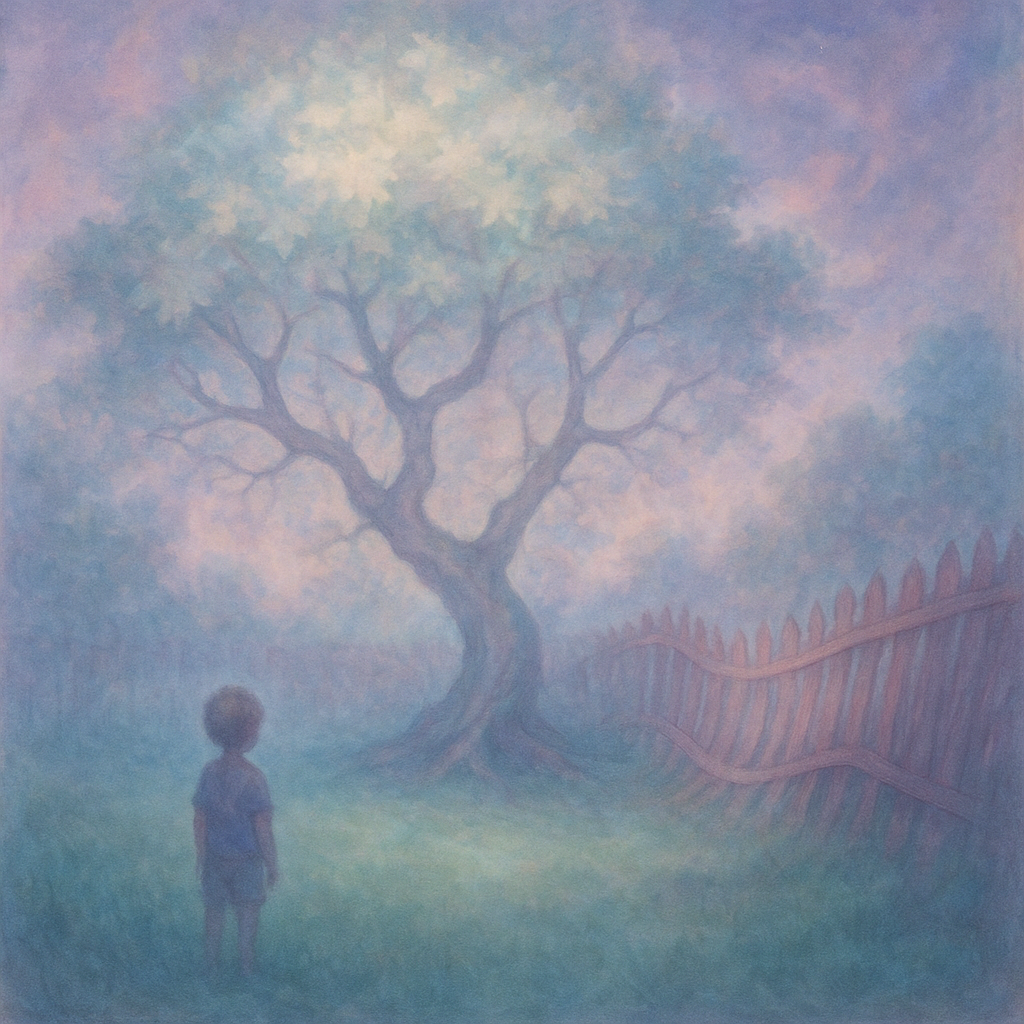
Your Dream
I’m in my childhood backyard, but it’s not quite right. The maple tree is where I remember it, standing hunched and wide-armed, but the fence along the side sags in a way it never did. The grass is wet under my bare feet, not just with dew but almost syrupy, clinging and cold. I’m carrying my school backpack—the old navy blue one with frayed straps—and it feels much too heavy, loaded with something that thuds against my spine whenever I move. I set it down on the splintery picnic table and realize there’s a pile of crayons spilling out from the front pocket, some of them broken and peeling. As I look around, the details shimmer and shift. The garden bed along the fence keeps stretching longer, stuffed with thick, cartoonish marigolds, their oranges too bright to be real. My mother is at the other end, kneeling among the flowers. She’s humming to herself, but the tune is unfamiliar, and I feel a pang of something like guilt because I don’t recognize it. I want to ask her what song it is, but my voice doesn’t seem to work. I try picking up a crayon and draw on the table’s rough wood, but all I can make are worried circles that turn into pale, watery rings. Suddenly, there’s the sound of a phone alarm—my current ringtone, which makes no sense because I never spent time here with a phone. The noise blends with the distant drone of a neighbor mowing their lawn, the scent of fresh-cut grass so sharp it almost stings. I feel an ache in my teeth, like I’ve bitten something too cold. I turn to see if the dog is scratching at the back door, but there’s no door at all—just a wall of tangled vines where the porch should be. I try to remember if I left the laundry out, a silly thought, but somehow it matters. I wake up with my fingers curled, still feeling the sticky grass and the strange weight of the backpack lingering on my shoulders.
Your Dream, Revealed
A calm, guided space to explore what this dream may be reflecting back to you.
Dream Overview
This dream is anchored in a memory-space: the childhood backyard, both familiar and subtly distorted. The emotional tone is a blend of nostalgia and discomfort, sharpened by the off-kilter elements like the sagging fence and syrupy grass. The central tension lies in the interplay between longing for the comfort of the past and the unsettling sense that something essential has shifted or been lost. Key symbols—such as the heavy, overstuffed school backpack, the broken crayons, and the unreachable mother—point to burdens of memory and communication. There is a quiet but persistent inner conflict: the wish to reconnect or understand (the urge to ask about the song) is blocked by voicelessness and guilt. The dream’s distinctive quality is its tactile vividness—the sticky grass, the aching teeth, the physical sensation of weight—which grounds the emotional complexity in the body. The surreality of shifting garden beds and the vanishing back door intensify the sense of instability, making the dreamscape both intimate and estranged. This dreamer is left with a lingering impression of longing and unresolved responsibility.
The dream begins with the dreamer arriving in a childhood scene that is not quite right, establishing an initial sense of disorientation and tension. The backpack’s heaviness and the tactile discomfort of the grass create a sense of burden and unease, while the act of setting the bag down and discovering broken crayons marks a shift from carrying hidden weight to confronting its contents. As the environment becomes more surreal—the garden stretching, marigolds growing exaggeratedly, the mother remaining distant—the dreamer’s attempts at connection slip further out of reach. The inability to speak or draw anything but worried circles signals rising frustration and helplessness. The abrupt intrusion of modern sounds (the ringtone, distant mower) and the physical ache in the teeth signal a transition from the dream’s suspended time to the present, culminating in the realization that familiar pathways (the back door) are now blocked. Each phase peels back another layer of longing, estrangement, and the desire to resolve something that resists resolution.
Key Findings
• The dreamer’s childhood backyard is altered, showing both comfort and unease in revisiting the past. • The school backpack is overly heavy and uncomfortable, suggesting an unresolved burden carried from earlier years. • Communication with the mother is impossible, leaving the dreamer with guilt and a sense of disconnection. • The physical sensations—sticky grass, tooth ache, curled fingers—make emotional weight into bodily experience. • Ordinary tasks (like laundry) become oddly significant, hinting at anxiety over forgotten or unfinished duties.
Symbol Interpretation
Backyard
Represents the dreamer’s foundation or sense of origin, now felt as altered and unreliable.
Maple Tree
A source of continuity and shelter, but its hunched posture hints at endurance under strain.
School Backpack
Symbolizes the weight of unresolved responsibilities or memories that the dreamer still carries from the past.
Crayons
Represents creative potential mixed with disappointment—ideas or expressions that feel damaged or incomplete.
Mother Humming
Embodies both comfort and estrangement; the inability to recognize the tune breeds guilt and longing for connection.
Missing Door
Represents lost access and growing barriers to return or re-entry—an obstacle to reaching comfort or resolution.
Emotional Landscape
A current of nostalgia runs through the dream, colored by sadness as familiar places and objects appear subtly wrong or out of reach. The overwhelming heaviness of the backpack and the clinging grass translate emotional burdens into physical sensations, making anxiety and regret almost palpable. Guilt emerges unexpectedly when the dreamer fails to recognize their mother’s song, suggesting a fear of having drifted too far from important connections. The inability to speak or draw what is intended underscores a deeper frustration with being unable to express needs or repair misunderstandings. In the final moments, the ache in the teeth and the worry about the laundry amplify a background sense of urgency and unfinished business, leaving the dreamer with the sharp aftertaste of unresolved longing.
Psychological Insight
The dreamer’s entry into a distorted childhood backyard points to a deep engagement with memories and the tension between comfort and change; there is a desire to return but also an unconscious recognition that the past can never be fully recovered. The heavy backpack, carried despite its discomfort, reveals an ongoing reluctance to let go of past responsibilities or unresolved issues, even when they have become burdensome. Communication breakdowns—being unable to ask the mother about the song, losing one’s voice—suggest a struggle to bridge the gap between past and present selves, or to reconnect with core relationships that feel faded or altered. The persistent checking for the dog and the concern about laundry, despite their irrelevance to the dream setting, betray a mind preoccupied with duty and the fear of neglecting something important. The interplay of these elements hints at a quiet resistance to accepting what has changed, and a longing to reclaim lost connections even as they slip further away.
Spiritual Perspective
From a Hindu perspective, the dream’s setting in a transformed childhood home can be seen as a reflection of samsara—the cycle of change, impermanence, and the subtle loss that accompanies growth. The mother’s distant presence and unfamiliar song suggest the shifting roles and relationships of family across lifetimes, evoking the Hindu understanding that connections are both precious and ever-changing. The tangled vines replacing the door evoke maya, the veiling of reality, where familiar pathways to comfort and belonging become obscured, requiring acceptance rather than resistance. While not overtly spiritual, the dream’s undertone of longing and the inability to return fully to the past align with the Hindu ethos of relinquishing attachment and embracing change.
Integrative Insight
This dream weaves together the ache of memory with the discomfort of change, showing how the longing for home can become tangled with the fear of what has been lost or outgrown. The physical sensations—the sticky grass, the heavy backpack, the ache in the teeth—make it impossible to ignore the weight the dreamer still carries, both emotionally and somatically. Attempts to reconnect or express creativity are hampered by guilt, lost voice, and the sheer strangeness of the once-familiar, suggesting that true reconciliation with the past demands both acceptance and release. There is a gentle but necessary challenge here: to acknowledge that some doors cannot be reopened, and that the burdens of memory can be set down. In the end, this dream leaves a single truth humming in the background: the ache of longing is real, but it need not become the shape of your days.
Reflection Questions
- What is the true nature of the weight you carry in your 'old navy blue backpack,' and whose expectations or memories fill it?
- When you reach for your mother and find your voice missing, what unspoken feelings or regrets might you be holding back in waking life?
- How does the sensation of sticky, syrupy grass underfoot mirror the ways you find yourself stuck or slowed by the past?