A dream of the lost suitcase, seen from a Spiritual view
Perspective: spiritual
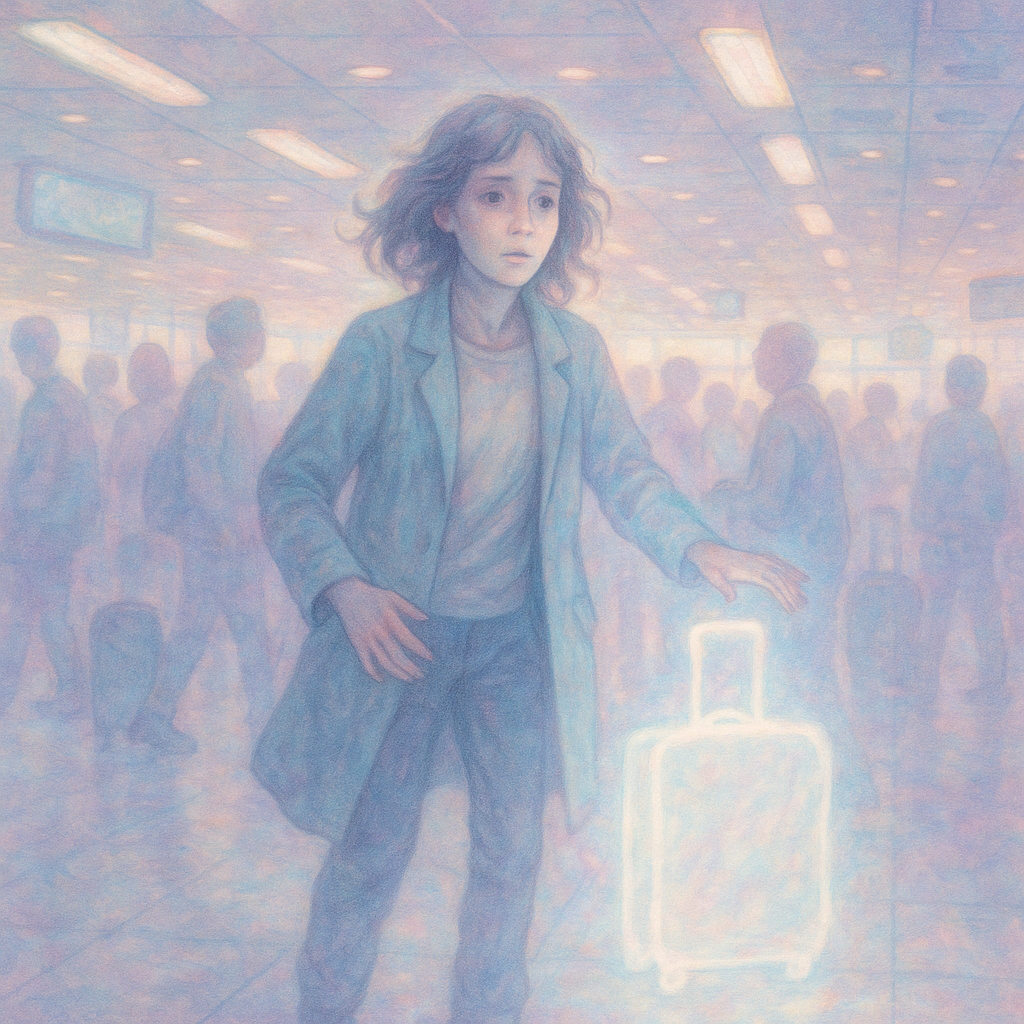
Your Dream
I’m in a crowded airport, the kind with harsh overhead lights and that constant murmur of tired travelers. My hands keep patting at my sides, searching—my suitcase is gone. I remember setting it down by a row of cracked vinyl seats while I checked the departures board, but now the seats are empty, and my suitcase has vanished. I’m suddenly sure it’s the old navy one, the zipper a little stuck; inside are my favorite jeans, the green toothbrush I always travel with, the paperback I bought at the last minute. I wander from gate to gate, trying to ask for help, but the announcements drown out my words. The place smells faintly of burnt coffee and melted gum. My phone won’t connect to the airport Wi-Fi, despite the cheerful “Welcome!” sign. I keep picturing that suitcase with the little airline tag, turning slowly on some far-off carousel, waiting for me—just out of reach.
Your Dream, Revealed
A calm, guided space to explore what this dream may be reflecting back to you.
Dream Overview
This dream unfolds in a liminal space—the crowded airport, saturated with harsh light and the restless energy of transience—where the dreamer's sense of self is tested by the sudden loss of their suitcase. The emotional current is one of simmering anxiety, tinged with longing and helplessness as familiar belongings vanish amidst the impersonal bustle. The central tension arises from the conflict between the urge to find and reclaim what is lost, and the overwhelming, almost indifferent environment that thwarts these efforts. Key symbols—such as the navy suitcase, the cracked vinyl seats, and the malfunctioning phone—anchor the dream in sensory detail, heightening the dreamer's vulnerability. The inner conflict is not just about misplaced objects, but about the fragile tether to identity and comfort in a world that feels both public and isolating. The inability to connect, both literally (Wi-Fi) and figuratively (being drowned out by announcements), deepens the sense of disconnection. This dream is distinctive in its layering of mundane detail with emotional resonance, turning an ordinary travel mishap into a meditation on belonging and agency. The dream lingers on the image of the suitcase—personal and distant—summoning both hope and resignation.
The dream begins with a sense of routine—navigating a crowded airport, surrounded by the predictable discomforts of harsh lighting and tired travelers. This apparent normalcy is quickly disrupted when the dreamer realizes their suitcase is missing, transforming the atmosphere from merely hectic to personally destabilizing. As the dreamer retraces their steps to the now-empty vinyl seats, the scene shifts from crowded anonymity to a more acute sense of personal absence, signaling a transition from collective to individual crisis.
The next phase centers on the search: moving from gate to gate, the dreamer attempts to enlist help, only to find their voice drowned out by impersonal announcements. This repeated thwarting of communication escalates the frustration, reinforcing a feeling of being lost in the crowd. The sensory landscape—burnt coffee, melted gum—serves as a constant, gritty reminder of the surrounding reality, preventing escape into abstraction.
Attempts to bridge the gap using technology—trying to connect to Wi-Fi—fail, despite superficial reassurances. The contrast between the 'Welcome!' sign and the inaccessibility of connection heightens the irony and sense of being out of sync with the environment. The final phase is marked by a haunting image: the suitcase, imagined turning on a distant carousel, just out of reach, encapsulating the unresolved longing and the enduring sense of separation.
Key Findings
• The suitcase, with its specific contents, represents a tangible link to comfort and selfhood, now rendered inaccessible. • The overpowering airport noise and failed attempts at communication highlight feelings of invisibility or being unheard. • The empty, cracked vinyl seats mark a transition from presence to absence, emphasizing loss and uncertainty. • The persistent technical failure (Wi-Fi) mirrors internal barriers to connection or clarity. • The sensory backdrop—burnt coffee, melted gum—grounds the dream in gritty reality, contrasting with the dreamer's inner turmoil.
Symbol Interpretation
Navy Suitcase
This suitcase encapsulates the dreamer's sense of continuity, carrying cherished and personal items that define comfort and preparedness.
Cracked Vinyl Seats
These seats serve as a fragile anchor point, their cracked surface echoing vulnerability and the impermanence of safe spaces.
Overhead Announcements
The announcements embody external chaos and a sense of being silenced or overlooked, reflecting the dreamer's struggle to assert their needs.
Airport Wi-Fi/Phone
The malfunctioning connection represents an unmet desire for reassurance or contact, highlighting a gap between appearances and reality.
Burnt Coffee and Melted Gum
These mundane, slightly unpleasant scents ground the emotional experience in a tactile reality, underscoring discomfort and fatigue.
Emotional Landscape
The initial emotional layer is mild anxiety, set by the harsh lights and ambient noise of the airport—a background stress that many would recognize but here serves as the stage for deeper unease. This quickly shifts to a sharper, more personal distress as the dreamer discovers the loss of their suitcase, which contains items tied to comfort and identity. The emotional weight intensifies as attempts to seek help are repeatedly thwarted, giving rise to a mix of helplessness and frustration, as if the dreamer's needs are being systematically erased by the environment.
The failure to connect to Wi-Fi, despite welcoming signs, adds a subtle but piercing sense of exclusion or being tricked by false promises. This moment evokes a quiet, internalized disappointment, distinct from the earlier, more public frustration. The lingering image of the suitcase, paired with the realization that it is both familiar and unreachable, evokes a poignant blend of nostalgia and resignation. There is a touch of hope—perhaps the suitcase is still out there—but it is tinged with the ache of distance and delayed reunion.
Embedded in these emotions is a gentle but persistent question: what is left of one's sense of self when the familiar is stripped away in a place that offers no refuge?
Psychological Insight
At the heart of this dream is a drive to reclaim what feels essential—the suitcase, symbolizing not just possessions but a sense of readiness and continuity. The detailed inventory of items inside the suitcase suggests the dreamer’s need for tangible reminders of selfhood during transitions. The inability to find the suitcase, or to effectively communicate with others, points to a deeper fear: that efforts to maintain identity or security may go unrecognized or unsupported in chaotic environments.
The recurring failures—being drowned out by announcements, the Wi-Fi not connecting—signal psychological barriers to connection and agency. There is a tension between the desire to assert control (by searching, by asking for help) and the repeated experience of being thwarted. This may mirror a real-life struggle with feeling overlooked or unable to bridge an internal gap, especially in social or transitional contexts.
The vivid sensory details suggest an avoidance of outright panic, instead channeling discomfort into the textures and smells of the environment. There is a reluctance to collapse into despair; instead, the dreamer remains in motion, searching, refusing to accept loss as final. The dream’s most confronting insight is its suggestion that longing is not passive, but a kind of active, ongoing negotiation with what is missing.
Spiritual Perspective
From a spiritual perspective, the dream’s airport setting can be seen as a metaphorical threshold—an in-between space where familiar anchors are stripped away, and the soul is confronted with its own vulnerability. The lost suitcase, with its personal contents, may signal a spiritual longing for wholeness or for the return of parts of the self that feel temporarily out of reach. The persistent search, despite obstacles, reflects a spiritual resilience—an unwillingness to accept disconnection as the final state.
The inability to connect to Wi-Fi, despite the cheerful welcome, could evoke questions about the nature of spiritual connection: what does it mean to seek guidance or belonging when the channels appear open, yet remain inaccessible? The dream does not offer easy answers, but its ending image—the suitcase, waiting somewhere—carries a quiet faith that what has been lost is not gone forever, only delayed in its return. There is a spiritual challenge here: to trust in reunion, even when meaning feels just out of reach.
Integrative Insight
Synthesizing these insights, this dream becomes a study in how we navigate loss and longing within environments that seem indifferent to our needs. The suitcase is not merely missing; it represents a part of the dreamer’s identity that feels both essential and elusive in times of transition. The persistent, almost stubborn search, despite repeated frustrations, reveals a core strength: the refusal to relinquish hope or self-definition, even when the world is noisy and unwelcoming.
There is a gentle confrontation here—this dream asks whether the search for comfort or self can be fulfilled by external recovery, or whether the true task is to carry that sense of belonging within, independent of circumstance. The most memorable truth is this: sometimes, what we think is lost is simply waiting for us to recognize the voice that calls us home, even through the din.
Reflection Questions
- What aspects of yourself do you associate with the specific items in your suitcase, and how might their absence in the dream reflect shifts in your waking identity?
- When have you recently felt drowned out or overlooked, either by others or by circumstances, as you were by the airport announcements in the dream?
- How do you respond when external promises of connection or support (like the 'Welcome!' Wi-Fi sign) fail to materialize, and what does this reveal about your own sources of resilience?