A dream of the flooded subway station, seen from a Hindu view
Perspective: hindu
Your Dream
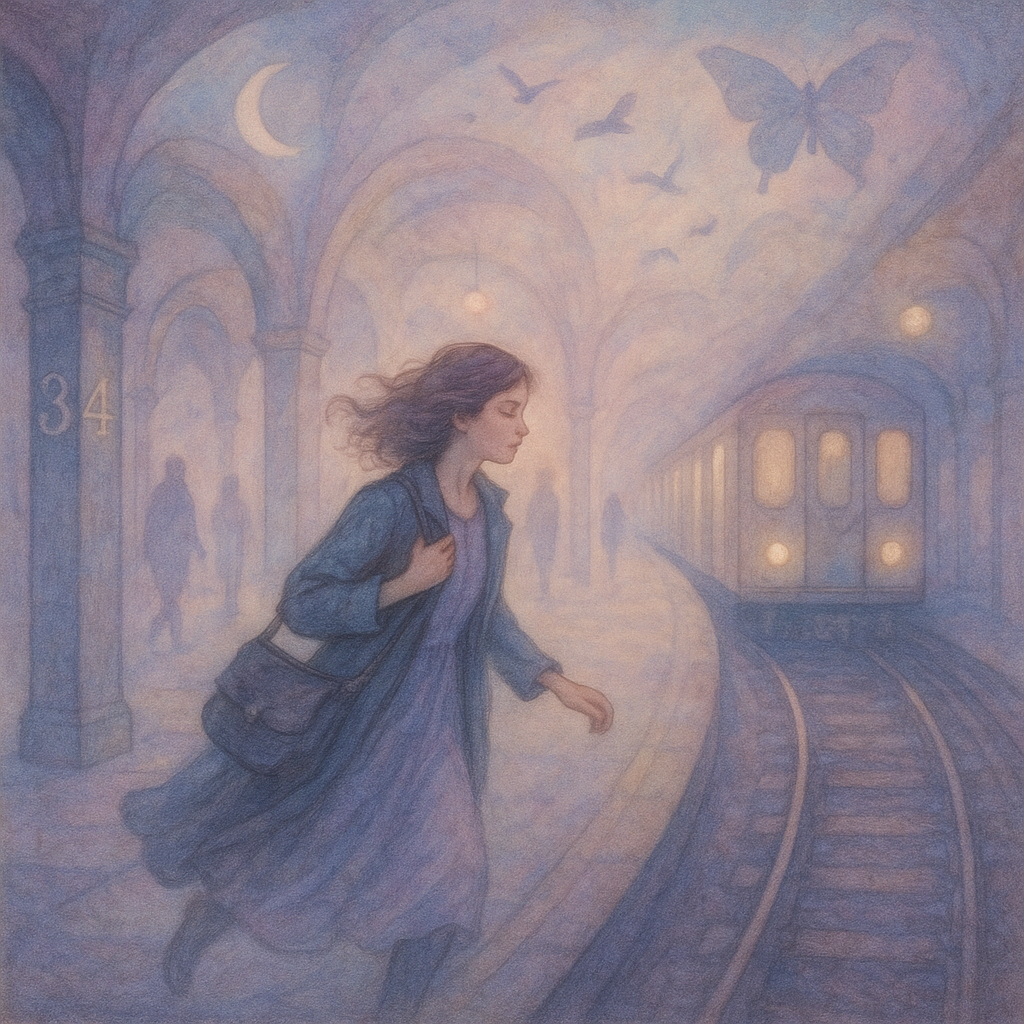
I dreamed I was hurrying through a subway station—one I half-recognized, like some combination of the 34th Street stop and the dingy old platforms from when I lived in Boston. There were the usual sounds: the flickering overhead lights, those warped metallic announcements echoing off the tiles, and the soft shuffle of too many shoes. But it was strangely humid, and when I glanced down the stairs to the platform, the first thing I noticed was the water. It pooled at the bottom like a dark, dirty lake, and people were standing knee-deep, shoes ruined, trousers rolled up but still soaked. No one seemed particularly bothered by it. I hesitated at the top, looking for another way down—there was a vague anxiety about my phone getting wet, which felt as important and immediate as anything else. I remember checking my coat pocket, feeling for it, and noticing the receipt from dinner last night (the Chinese place on 6th Ave—I think I ordered the dumplings, but everything is hazy). The water was rising, impossibly fast, and I could hear it slapping against the mosaic walls. The colored tiles were brighter under the water somehow, like the way things look underwater in a pool, and I was weirdly tempted to just jump in. I thought about how cold it would be, or if the rats would be swimming there too, but the other commuters looked utterly unbothered—some even chatting, one man eating a bagel as the water climbed up his shins. Finally, I tried to step down, balancing on the handrail, but the water surged up all at once, warm and gritty. My socks were instantly soaked. I felt a pulse of dread and reached for my phone again, convinced I’d lost something important. Then someone laughed behind me, and I turned, but woke up with the shape of their face already slipping away.
Your Dream, Revealed
A calm, guided space to explore what this dream may be reflecting back to you.
Dream Overview
This dream unfolds in a subway station that blurs memories of two real places, creating a liminal space shaped by both recognition and distortion. The air is heavy, and the familiar is rendered unsettling by the rising floodwaters and the eerie indifference of the crowd. At its heart is a tension between urgency and paralysis: the dreamer hurries yet hesitates, caught between the drive to move forward and the fear of loss. Everyday objects—the phone, a coat pocket, a dinner receipt—anchor the dream in recent lived experience, but each is threatened or rendered unstable by the encroaching water. The water itself is not just an obstacle, but a force transforming the mundane, making even the colored tiles shimmer with unfamiliar clarity. The dreamer’s anxiety about their phone and a persistent sense of losing something important reflect a deeper worry about connection and control. What sets this dream apart is the subtle pressure to conform to the crowd’s nonchalance, even as private dread pulses underneath, and the way small, almost trivial details (a bagel, a laugh, a dinner receipt) seem to take on disproportionate weight in the moment of crisis.
The dream opens in a rush, with the dreamer moving quickly through a subway station that is both known and unknown, establishing a sense of dislocation and urgency. This momentum is arrested at the top of the stairs, where the sight of water pooling below forces a pause and a shift from movement to hesitation. The focus narrows onto small, tactile actions—checking for a phone, feeling a dinner receipt—revealing a search for reassurance in the face of growing anxiety. As the water rises and the environment becomes more surreal, the dreamer is increasingly aware of both the indifference of others and their own private dread, creating a widening gap between inner and outer worlds. The climax comes as the dreamer attempts to balance on the handrail and is finally engulfed, the warmth and grit of the water marking a surrender that is both physical and emotional, punctuated by the ambiguous laughter and the sense of something slipping away.
Key Findings
• The merging of two subway stations signals a blending of past and present anxieties. • The rising water, described as dirty and warm, amplifies a sense of encroaching discomfort and threat. • The dreamer’s repeated checking for their phone underlines a fixation on remaining connected or retaining something vital. • The commuters’ calm, even as the water rises, highlights a tension between the dreamer’s private worry and social indifference. • The fleeting memory of a dinner receipt suggests a struggle to hold onto details of daily life amid larger anxieties.
Symbol Interpretation
Subway Station
This station encapsulates a moment of transition, not just physically but psychologically—a threshold between old and new phases.
Rising Water
The water represents an overwhelming force threatening to erode boundaries of safety and order, echoing the dreamer’s unease about losing control.
Phone
The phone embodies a desire for continuity, connection, and the preservation of identity or memory.
Dinner Receipt
The receipt is a fragile thread to recent memory and routine, symbolizing the effort to retain meaning amid confusion.
Commuters
The crowd’s apathy exposes the dreamer’s isolation and highlights the tension between personal distress and collective indifference.
Handrail
The handrail represents a last attempt at control or avoidance before surrendering to the inevitable.
Emotional Landscape
The dream’s emotional core is a quietly mounting dread, first sparked by the sight of water and intensified by the impossibility of keeping important things dry and safe. There is a subtle but persistent fear of losing something essential—most immediately the phone, but more broadly, a sense of order or connection to the world. The crowd’s indifference injects a layer of loneliness, as the dreamer’s anxiety exists in stark contrast to the commuters’ nonchalance, making private distress feel almost invisible. The small details—the dinner receipt, the coat pocket, the bagel—carry unexpected emotional weight, anchoring the dreamer in the mundane even as crisis looms. The laughter at the end, faceless and fleeting, brings a final, disorienting emotional twist: a reminder of how quickly meaning and connection can dissolve.
Psychological Insight
The dreamer’s urgency to move forward through the station is countered by an instinctive hesitation when faced with the rising water, reflecting a deep internal conflict between action and avoidance. Repeated checking for the phone suggests a heightened preoccupation with staying connected or not losing touch with something vital, possibly mirroring waking anxieties about control and relevance. The dinner receipt’s appearance as a half-remembered relic hints at a struggle to keep recent experiences clear and meaningful, even as life threatens to overwhelm with new pressures. The attempt to balance on the handrail, rather than simply wade in, exposes a desire to manage risk without full commitment, but the inevitability of getting soaked points to the limits of such strategies. The laughter behind the dreamer, just before waking, raises the unsettling possibility that efforts to maintain composure or control may be more transparent—and vulnerable—than realized.
Spiritual Perspective
Within a Hindu context, the interplay between water and the subway’s subterranean passage could be seen as a metaphor for navigating samsara—the cycles of everyday existence and unconscious habit. The dream’s emphasis on losing and holding onto small tokens (the phone, the receipt) echoes the human tendency to cling to attachments, even as circumstances shift beyond one’s control. The crowd’s indifference may challenge the dreamer’s sense of dharma, inviting reflection on how to maintain personal integrity and presence amid collective inertia or apathy.
Integrative Insight
This dream brings together the pressures of memory, attachment, and the unpredictability of change, all concentrated in a single, immersive moment. The dreamer’s struggle is not just with the rising water, but with the urge to preserve identity and meaning when the world becomes unstable and familiar anchors start to dissolve. The tension between wanting to avoid the flood and the ultimate surrender to it reveals a deeper process: the necessity of letting go, even when the crowd appears untroubled and the urge to cling is strongest. It’s not the water that leaves the deepest mark, but the realization that even in the crowd, the most important battles are quietly, privately fought. Sometimes, the most jarring shift is recognizing that what you most fear losing may already be slipping from your grasp.
Reflection Questions
- How do you relate to the crowd’s indifference as you face your own anxieties—do you feel pressured to hide your discomfort, or do you yearn for someone to notice?
- When you checked your pocket for the phone and found the dinner receipt, what did those small details mean to you in the moment—do they connect to anything you’re afraid of losing in your waking life?
- As you stepped onto the handrail, balancing above the water, did you sense a line between caution and avoidance—where in your life are you trying to stay dry when you might need to wade in?